
AC Maintenance in Charleston, SC
A spring visit catches the weak capacitor and the slow drain before they turn into a July breakdown. Here is what we check and what we quote separately.
- 4.9★ on Google (16 reviews)
- Open 24 hours, 7 days
- Clear, upfront quotes
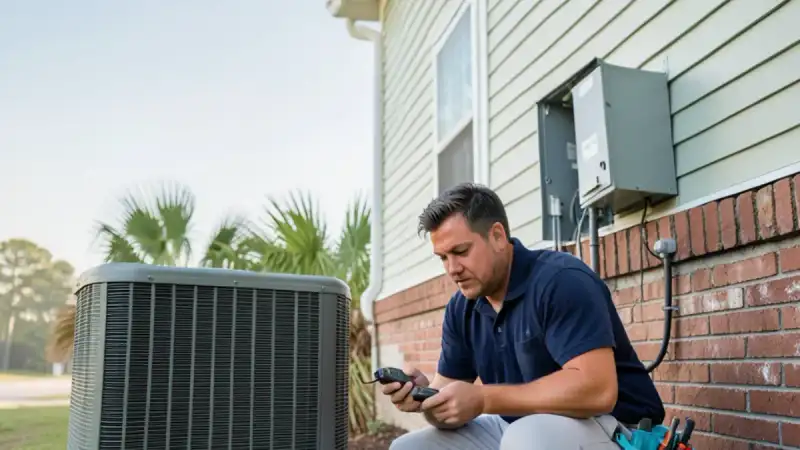
AC maintenance in Charleston is one planned visit that checks the parts most likely to quit in a heat wave. Aero Air Techs rinses the outdoor coil, clears the condensate drain, tests the electrical parts and measures how well the system cools. You get a plain summary of what we found and a quote for anything that needs repair.
Our summers justify the visit. North Charleston logged 71 days at or above 90°F in 2025, according to NWS Charleston, and those hours pile up on every motor and capacitor in the system.
What an AC tune up covers
Each visit runs through the outdoor unit, the indoor unit and the controls.
| Area | What we do |
|---|---|
| Outdoor coil | Inspect the fins and give the coil a rinse |
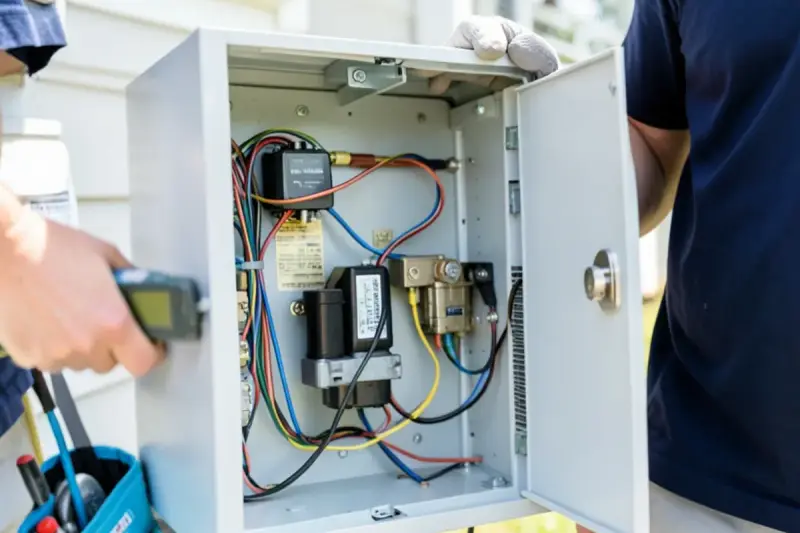
| Electrical | Test the capacitor, contactor, wiring and disconnect |
| Fan and motor | Check the condenser fan, blade and motor amp draw |
| Refrigerant side | Read pressures and look for oily spots at joints |
| Indoor coil and blower | Inspect what we can reach for dirt and restriction |
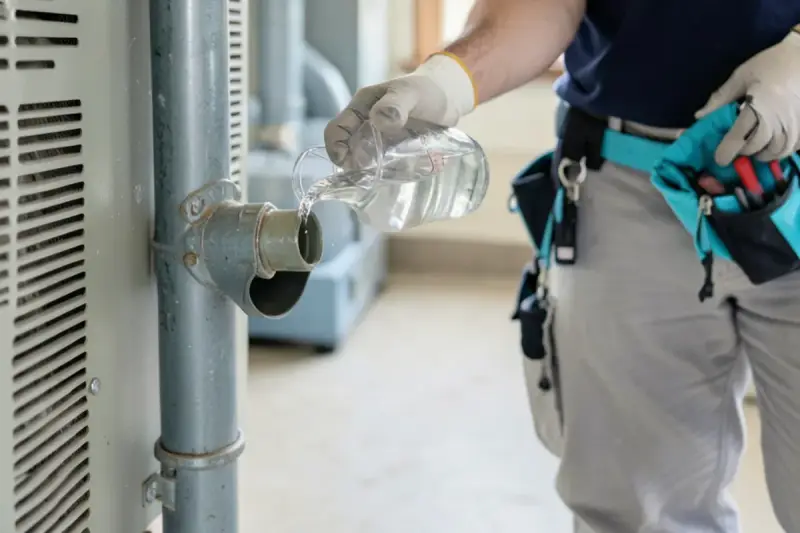
| Drain | Clear the condensate line and test the float switch |
| Filter | Check it and tell you the size you need |
| Thermostat | Confirm it calls for cooling and shuts off correctly |
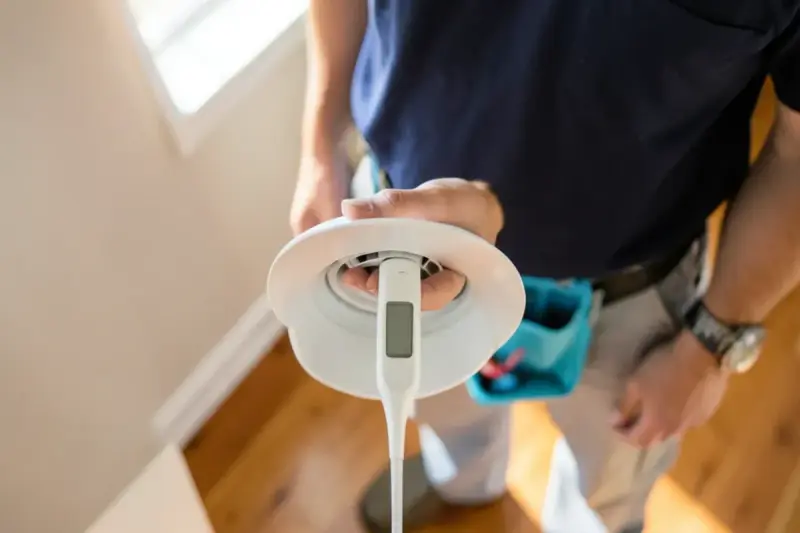
| Performance | Measure the temperature drop across the system |
When is the right time for a seasonal AC check?
Book in spring, before the system runs every day. Of the 64 days a year that reach 90°F at Charleston International Airport, about 52 fall from June through August, based on NOAA's 1991 to 2020 normals. March and April leave room to order a part and make a repair before that stretch begins.
Fall is worth a look too if you have a heat pump, since that system works through the winter as well.
Why the coil and the drain get extra attention here
These two items cause a large share of avoidable summer trouble in the Lowcountry.
AC coil cleaning and the coil rinse
Pollen, grass clippings and salt film settle on the condenser fins and trap heat. A gentle rinse clears loose buildup. Heavier fouling calls for a coil cleaner, applied with the power off and rinsed away. Pressure washers have no place here, because they fold the fins flat.

Drain care
Your AC pulls a steady flow of water from humid air, and algae grows in that line. When it plugs, water rises in the pan until a float switch shuts the system down or a ceiling starts to stain. We flush the line and check the slope and trap. A DOE measure guideline adds that plugged condensate drains can lead to mold growth, which is one more reason to keep the line open.
Request a quote
Calling is the fastest way to reach us: (831) 461-3437. If you would rather write it down, send the details here.
One visit or recurring visits?
You have two simple choices.
- A single tune-up. Call when you want one. This suits a newer system in a typical home.
- Recurring visits. We do not publish a maintenance plan with set terms. Ask when you call and we will tell you what we can arrange for spring or fall visits.
Waterfront homes may also want extra coil rinses between visits, and our coastal corrosion page covers that schedule. Between visits, follow our spring maintenance checklist and filter guide.
What regular service gets you
Maintenance lowers risk. It cannot promise a perfect summer, but it pays off in four ways.
- Fewer surprises. A weak capacitor or pitted contactor is cheaper to replace on a calm spring day.
- Lower energy use. DOE's Energy Saver guide says routine filter cleaning or replacement can cut an air conditioner's energy use by 5 to 15 percent.
- Drier ceilings. A clear drain keeps water in the pipe and out of the drywall.
- A paper trail. Dated invoices help if a manufacturer asks for proof of service.
What a maintenance visit does not include
A tune-up finds problems. Fixing them is separate work, and we quote it before we start.
- Replacement parts such as capacitors, contactors or fan motors
- Refrigerant, and finding or repairing a leak
- AC repair beyond routine adjustment
- Pulling the indoor coil for a deep cleaning
- Air duct cleaning or duct repair
- Corrosion repair or coil coating
Federal rules under EPA Section 608 require any technician who handles refrigerant to be certified and bar venting it, so ask any contractor about that before refrigerant work begins.
Routine service rarely touches a permit, since cleaning and testing change nothing about the installed system. That shifts when a visit turns up a failed unit. City of Charleston's Form 5.1 lists a Change Out Condenser and/or Air Handler inspection, and other towns run their own offices. In a flood zone, any replacement also has to meet the local height rule, so ask before a swap gets quoted.
How a visit runs and what it costs
The process is simple.
- Call or send the form. Tell us about your system and any recent trouble.
- Walk the system. We note what you have noticed, then start outdoors.
- Check and clean. We work through the list above.
- Report. You hear what we found in plain language.
- Quote. If something needs repair, you see the price first.
Price depends on how many systems you have, how hard they are to reach, how dirty the coil is and whether extra rinses are part of the visit. A raised platform or tight attic takes longer. Ask what is included when you call.
Why book with Aero Air Techs?
Here is what our reviews and listing show.
- 4.9 on Google from 16 reviews, checked in October 2026.
- Careful work. One customer wrote that the visit "Paid attention to detail."
- Clear answers. Another called the technician "communicative, transparent, knowledgeable, and punctual."
- Open 24 hours, according to our Google Business Profile.
“Pleasantly on-time. Professional individual service. Paid attention to detail. Highly recommend 👌 price were as quoted.”
“We called Cris and he came right over. He was knowledgeable about our unit and fixed it in a matter of minutes. His professionalism was top notch and we will be calling him for any AC issues moving forward. Highly recommended. I wish I could give more than 5 stars!”
“These guys are very reliable and trustworthy. Had issues with my AC not cooling and called Aero. They came out super quick and fixed my problem AND they were really affordable. I recommend them for all your HVAC needs!”
4.9 out of 5 from 16 Google reviews (checked October 2026). Read more reviews · Leave a review
We are based in Charleston and serve the surrounding areas, including Mount Pleasant, Awendaw and Ravenel. Give us your address and we will look for a date that works.
Timing and focus shift with the address.
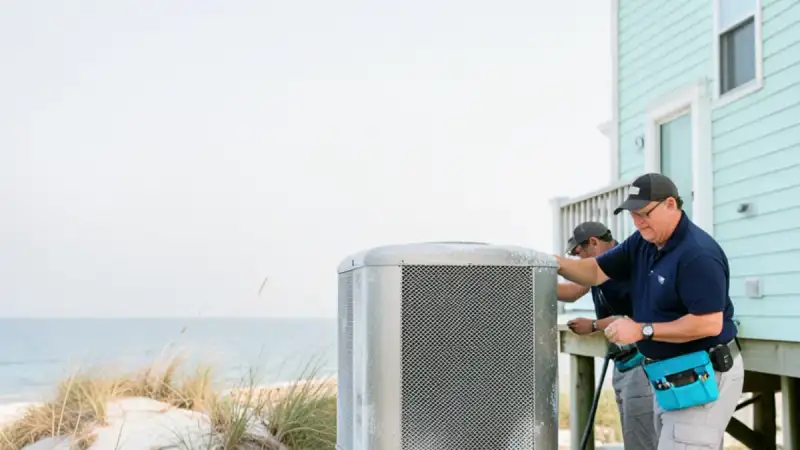
Sullivan's Island: oceanfront salt makes the coil the first item, and it may need rinsing between visits.
Folly Beach: empty weeks leave drains and filters unwatched, so check both before renters arrive.
Isle of Palms: book around changeover days, when a rental can be reached.
Seabrook Island: closed-up villas gather moisture, so a visit before the owner returns earns its keep.
Mount Pleasant: two-system homes need both units checked, and the upstairs one usually works harder.
Summerville: spring pollen and pine straw foul condensers before salt ever could.
Awendaw: pine straw collects around units on forest-edge lots, so clear the base first.
Ravenel: spring pollen on open lots calls for a look at the coil.
James Island: marsh humidity keeps the condensate line busy, so ask for a drain check.
Bluffton: attic drains in boom-era homes deserve a check before the first long heat wave.
Orangeburg: far from salt, so the coil cleaning and electrical test lead the list.
Sumter: at two hours by road, one spring date should cover cooling and heating together.
Questions about this service
When should I book AC maintenance in Charleston?
Aim for spring, before daily cooling starts. NOAA's normals for Charleston International Airport put most 90-degree days between June and August, so a visit in March or April leaves time to order parts. A heat pump works in both seasons, so a second visit in fall is worth considering.
How often does an AC need a tune up?
Once a year suits most homes. Homes near salt water, rental properties and systems running hard all year can benefit from more attention, such as an extra coil rinse. Tell us how the house is used when you call, and we can talk through what makes sense for your system.
Do you offer an AC maintenance plan?
We do not publish a plan with set terms or pricing. If you would like recurring spring or fall visits, ask when you call and we will tell you what we can arrange. Any contractor's plan is worth reading closely, so check what is included and what is billed separately.
Will a tune-up fix a refrigerant leak?
No. A tune-up can show the signs of a leak, such as low pressures or an oily spot at a joint, but finding and repairing it is separate work. Topping off without a repair only lets the refrigerant escape again. We quote the repair first, so the choice stays yours.
Can I rinse my own outdoor unit?
Yes, with care. Turn off the power at the disconnect, then use a garden hose on a gentle spray and work across the fins. Skip the pressure washer, since it flattens fins. Leave the indoor coil, the electrical parts and the refrigerant side to a technician.
Does maintenance affect my manufacturer warranty?
It can. Some manufacturers ask for proof of regular service before they honor a parts claim, so read the terms for your model. Keep your invoices with the model and serial numbers. Ask the manufacturer directly if the wording is unclear.