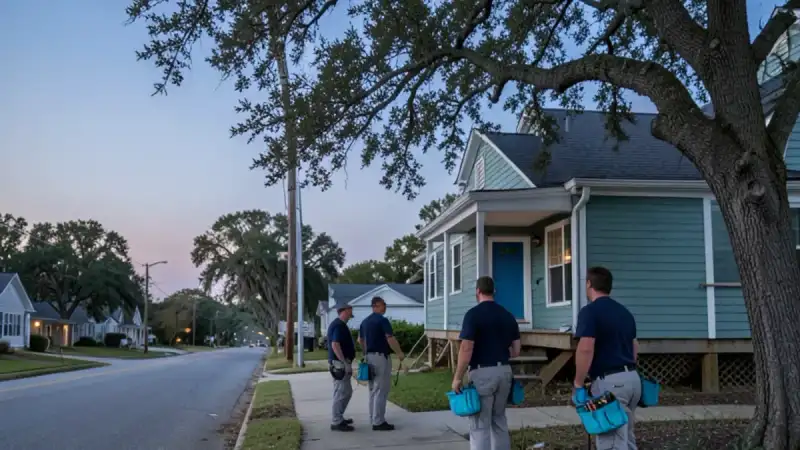
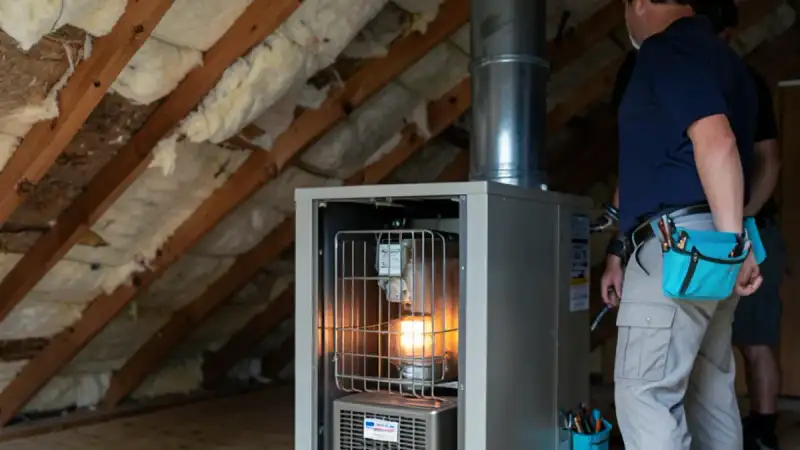
Furnace Repair in Charleston, SC
No heat, cold air from the vents or a burner that lights and quits? Tell us what the furnace is doing and we will talk through the safe next step.
- 4.9★ on Google (16 reviews)
- Open 24 hours, 7 days
- Clear, upfront quotes
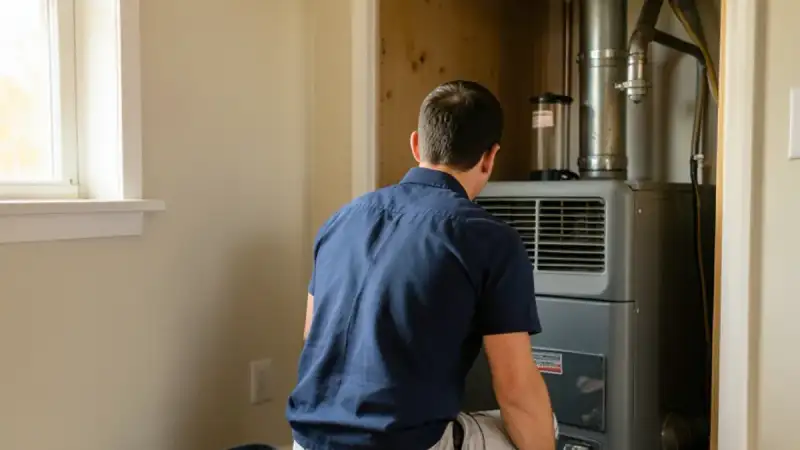
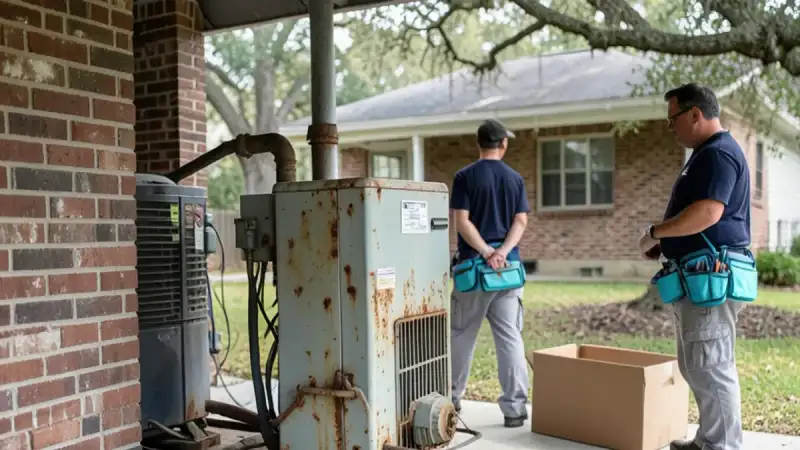
Furnace repair in Charleston starts with one question: is this furnace safe to run? Once that is settled, Aero Air Techs tests the ignition, airflow and controls, explains the fault in plain English and gives you a clear, upfront quote before any repair begins.
Check what you own first. EIA's 2023 state data shows about 23% of South Carolina households heat with natural gas and about 71% with electricity, so many homes here have no furnace burner at all. If your outdoor unit runs through the winter, you probably want heat pump repair instead.
Smell gas or hear a CO alarm? Start here
Stop troubleshooting and get out. These situations come before any repair, and before any call to us.
- Gas smell. Leave the house without touching switches or appliances. From outside, call your gas utility's emergency line or 911. Our guide on what to do if you smell gas covers what comes next.
- Carbon monoxide alarm. Get everyone outside and call 911, as CPSC directs. Carbon monoxide has no smell, so a normal-smelling house proves nothing.
- Flu-like symptoms with the heat on. CPSC describes early CO poisoning as resembling the flu without a fever, with headache, fatigue, shortness of breath, nausea and dizziness. Treat several people feeling this way as you would an alarm.
Call a technician only after emergency responders or the utility say the house is clear. Then the job is finding out why it happened.
What does a furnace not working usually mean?
Symptoms narrow the list quickly. Use this table to decide what to do while you wait.
| What you notice | Likely cause | What to do now |
|---|---|---|
| No heat, and the thermostat is calling for it | Tripped breaker, furnace switch off, dead thermostat batteries, failed igniter | Check the breaker, the switch and the batteries |
| Furnace blowing cold air | Fan set to ON, failed ignition or a tripped limit switch | Set the fan to AUTO and check the filter |
| Burners light, then quit within seconds | Dirty flame sensor | Leave it off after one reset, then call |
| Short, repeated run cycles | Clogged filter or overheating at the limit switch | Change the filter |
| Bang at startup | Delayed ignition from dirty burners or a gas pressure fault | Turn it off and call |
| Squeal, rumble or grinding | Blower motor, bearing or wheel | Turn it off before the motor burns out |
| Soot or a lazy yellow flame | Combustion or venting problem | Turn it off, check your CO alarm and call |
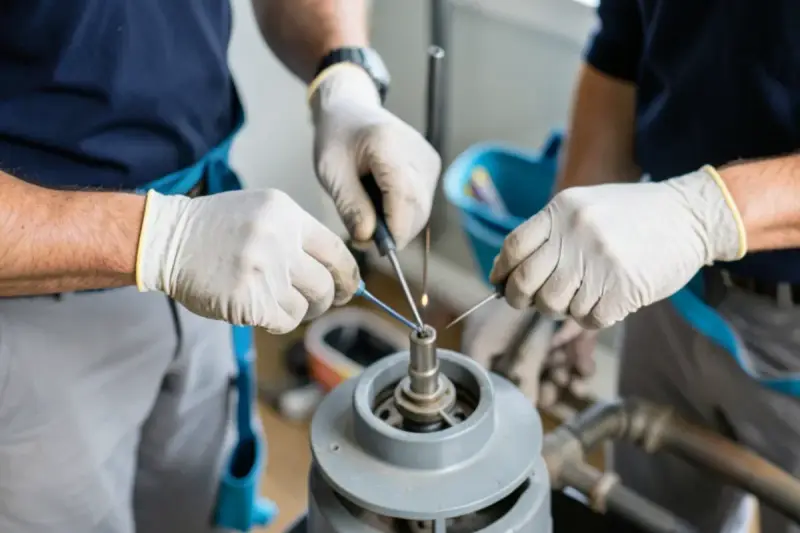
Local habits shape these failures. A furnace here may burn gas for only part of a short winter, then sit in a humid attic or closet for months. Burners collect rust flakes and dust, flame sensors film over, and the first cold night finds the weak part. The blower is the opposite story. It carries your air conditioning, so its motor can log heavy hours long before the first freeze.
Furnace repair in Charleston: how we track down the fault
Testing beats guessing, because several different faults leave you with the same cold house. Here is the order we work in.
- Hear the story. When it started, what it sounded like and whether anything else tripped all narrow the search.
- Check the basics. Thermostat, power, filter and the door safety switch come first.
- Read the control board. Most boards store or blink a fault code.
- Watch a full start. Inducer, pressure switch, igniter, gas valve, flame and blower should come on in order. The step that fails points to the part.
- Check combustion and venting. We look at the flame, the flue and the heat exchanger areas we can reach.
- Show you and quote. You see what failed and hear the options.
- Repair and retest. With your approval, we make the repair and run a complete heating cycle.
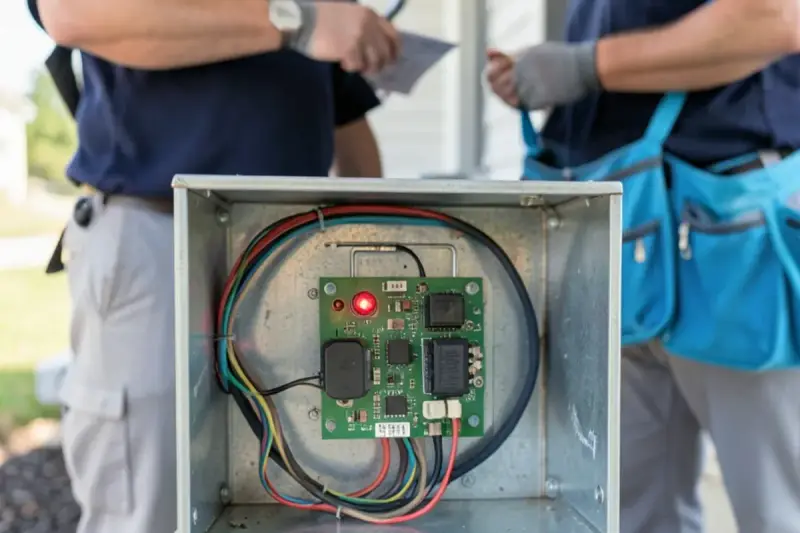
Each diagnostic visit should leave you with four things: the fault named in plain terms, the failed part shown to you, a line-itemed quote and a clear answer on whether the furnace is safe to use. Common parts can often be replaced on the first visit if the part is on hand. Rarer parts can mean a second trip, and you will hear that up front.
Request a quote
Calling is the fastest way to reach us: (831) 461-3437. If you would rather write it down, send the details here.
Which furnace repairs are worth making?
Most are, on a sound furnace. The heat exchanger is the main exception.
Igniter replacement and flame sensors
These are the small jobs that bring a lot of cold houses back. Hot surface igniters are brittle and wear out with use. A flame sensor often needs cleaning rather than replacing.
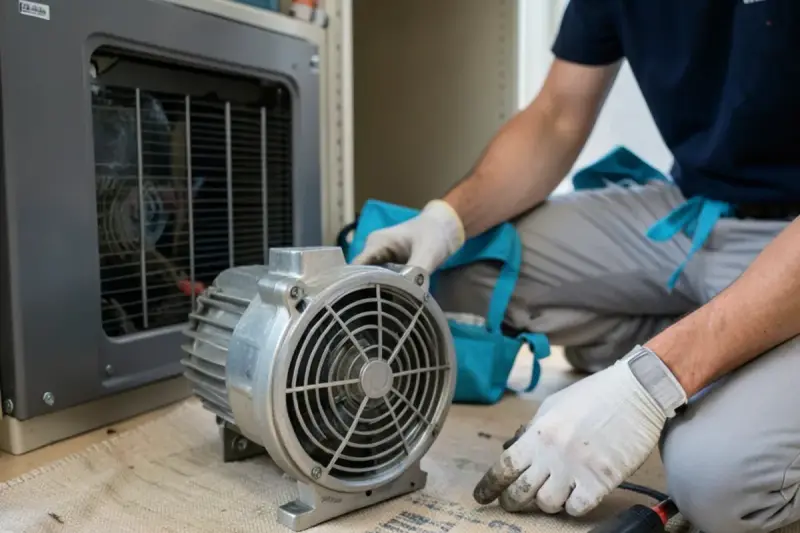
Blower motor repair
Sometimes the fix is the capacitor, not the motor, so we test before we quote a motor. Weigh a full motor against the age of the furnace and the AC that shares it.
Gas valves, inducers and control boards
These cost more and take longer, but they are ordinary repairs on a furnace with a healthy heat exchanger. Ask whether a manufacturer's parts warranty still applies before you approve one.
Cracked heat exchangers
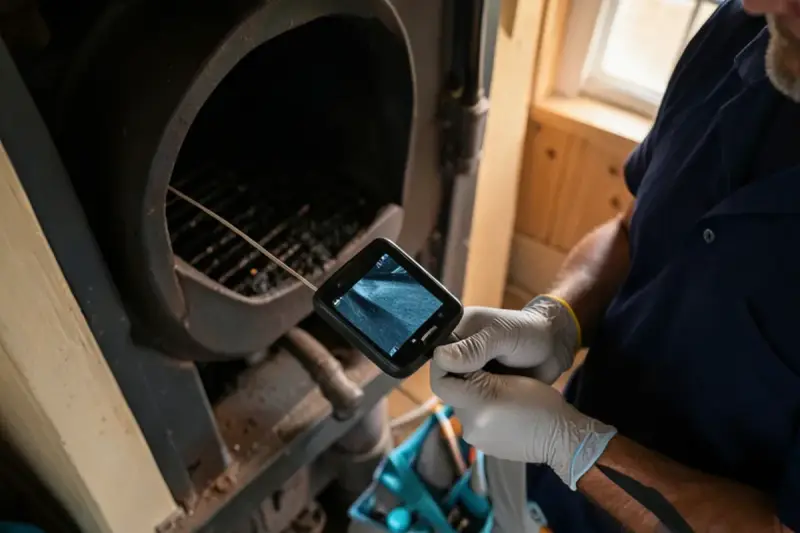
Slow down on this one, because this part separates fire from the air you breathe. A crack calls for shutting the furnace down, and it often turns the conversation toward furnace replacement. Ask to see the evidence. A real crack can be shown on a camera or in a photo.
What changes the price of a heater repair?
Four things move the number most.
- The part. A flame sensor cleaning and a gas valve are very different jobs.
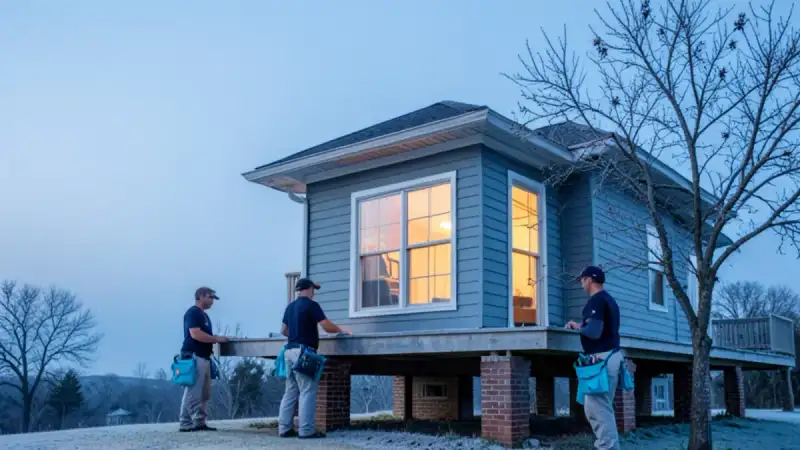
- Access. Attic platforms, tight closets and crawl spaces under raised homes all add labor.
- Timing. Find out before you book whether a night call prices differently.
- Hidden causes. A limit switch that keeps tripping may trace back to restricted ducts, which adds work.
Furnace age matters less than most people expect. A single igniter on an older furnace is usually still worth doing. We quote the work up front, and you decide.
Who sets the rules for furnace work here?
Several bodies do, and none of them tests your furnace for you. CPSC urges homeowners to have fuel-burning heat professionally inspected every year, and it wants a CO alarm placed in the hallway outside bedrooms. Our furnace maintenance page covers that visit.
Permits sit with each town or county, so ask your local office whether a repair needs one, particularly if gas piping changes. In the City of Charleston, that means the Permit Center. South Carolina's LLR oversees contractors, so request a license number from anyone working on your gas equipment and verify it on the SC LLR lookup.
Why call Aero Air Techs when the heat is out?
Judge us on what customers wrote and what you see on the visit.
- 4.9 on Google. That is 16 reviews, as of October 2026.
- Heating and cooling work. One customer wrote that "cold and heat work amazing."
- Plain explanations. Another customer said they "explained everything that needed to be done."
- Numbers that hold. One review reads "price were as quoted."
- Reachable at any hour. Our Google hours read open 24 hours, every day of the week.
“We called Cris and he came right over. He was knowledgeable about our unit and fixed it in a matter of minutes. His professionalism was top notch and we will be calling him for any AC issues moving forward. Highly recommended. I wish I could give more than 5 stars!”
“These guys are very reliable and trustworthy. Had issues with my AC not cooling and called Aero. They came out super quick and fixed my problem AND they were really affordable. I recommend them for all your HVAC needs!”
“Chris came out to check out my ac unit And found the problem in 5 min and fixed It now I'm back cool, price was affordable He's my guy from now on, Thanks Chris”
4.9 out of 5 from 16 Google reviews (checked October 2026). Read more reviews · Leave a review
Furnace service around the Charleston area
With a base in Charleston, we take furnace calls across the surrounding areas, including Summerville, Goose Creek, Hanahan and Ladson. If the house is cold after dark, our emergency furnace repair page explains what to do while you wait. Call with your address and the symptom, and we will sort out the next step.
Tell us the town when you call, because the likely fault and the wait can differ.
- Summerville: early frost means furnaces here often start weeks before the coast, so heating faults show up first.
- Goose Creek: many owners inherit a system after a Navy move, so ask for the age from the data plate.
- Hanahan: closet units in brick ranches can trip limits when a return is undersized.
- Ladson: about 26 minutes, and your county line sets any permit path.
- Moncks Corner: about 39 minutes, with colder nights than the peninsula.
- North Charleston: older cottages may have long flue runs that deserve a look.
- James Island: damp crawlspaces can rust burners and connections faster.
- Mount Pleasant: an attic furnace serving upstairs takes longer to reach, so mention the location.
Questions about this service
Why is my furnace blowing cold air?
Check the thermostat fan setting first, because ON runs the blower with no heat. If it is set to AUTO, the usual causes are a failed igniter, a dirty flame sensor or a limit switch tripped by a clogged filter. A furnace that has sat idle since last winter often has a dirty sensor. Our post on furnace cold air causes walks through each one.
Is it safe to run a furnace with a cracked heat exchanger?
No. Turn it off and leave it off until the crack is confirmed or ruled out. A crack can let combustion gases into the air your blower sends through the house, and those gases can include carbon monoxide. Ask to see the crack on a camera or in a photo, and keep a working CO alarm in the hallway near your bedrooms.
Can someone come out tonight if the heat is out?
Phone us and ask. We are listed on Google as open 24 hours, but timing depends on calls already booked and how far you are from Charleston. We will give you a plain answer on the phone. If it is freezing and you have anyone at risk at home, tell us that first.
Should I keep resetting my furnace when it shuts off?
No. One reset is reasonable, but a furnace that locks out again is telling you something. Repeated attempts can leave unburned gas in the burner area, and that raises the risk of a hard, delayed ignition. Leave it off, note how long it ran before it quit and pass that along when you call.
How much does furnace repair cost in Charleston?
The price depends on the part, the access and the time of day. An igniter in a hallway closet is a small job, while a blower motor on an attic platform takes longer. We keep no flat price list. You get a clear, upfront quote after diagnosis, so it reflects your furnace. If it is late, ask what after-hours work adds.
Do you repair electric furnaces as well as gas?
Yes. Electric furnaces have no burner or flue, so the work centers on heating elements, sequencers, limit switches and the blower. Plenty of homes around Charleston have no gas line at all, so tell us what fuel your system uses. If an outdoor unit runs in winter, you may have a heat pump instead.