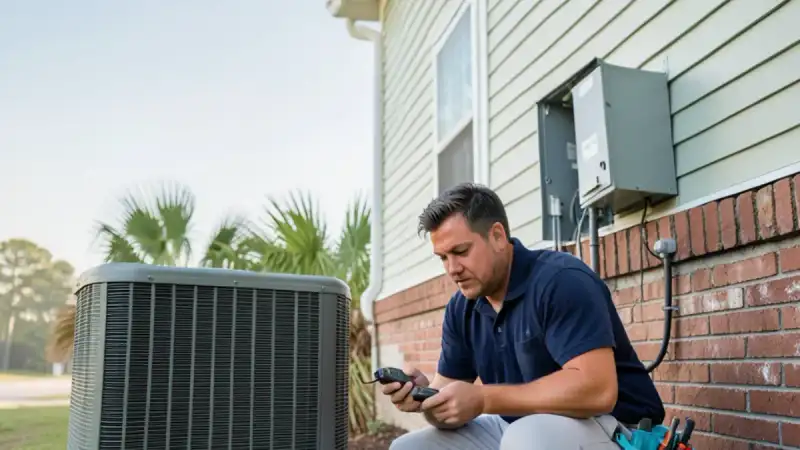
AC Repair in Charleston, SC
Warm air, water at the air handler or a unit that keeps cycling? Tell us the symptom and we will talk you through the next step, then send a technician.
- 4.9★ on Google (16 reviews)
- Open 24 hours, 7 days
- Clear, upfront quotes
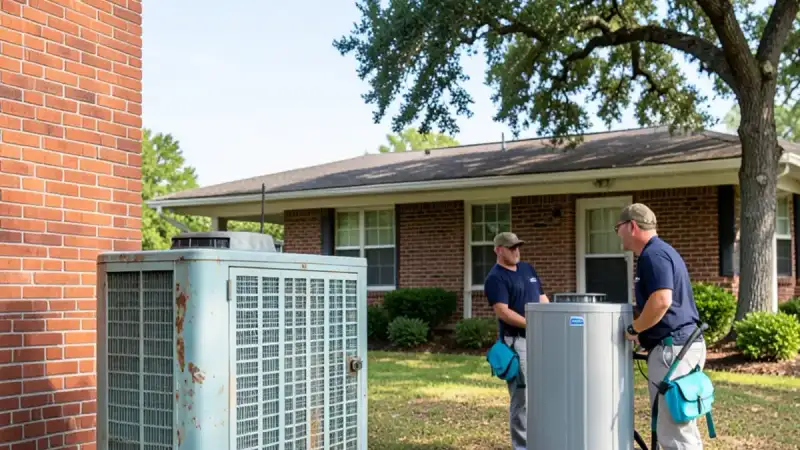
AC repair in Charleston means finding the part that failed and fixing it, ideally before a small fault becomes a compressor job. Aero Air Techs repairs central air conditioners and heat pumps in homes and small businesses around Charleston, and we explain what we find before any work starts.
Here, a cooling system has little time off. NOAA's 1991 to 2020 normals for Charleston International Airport show about 64 days a year at or above 90°F, with most of them between June and August. That run time wears capacitors, contactors and fan motors, and our humidity keeps the condensate drain working hard.
What are the signs your AC needs repair?
Most calls start with one of six symptoms. Each one points us toward a short list of parts.
| What you notice | What it usually means | What to do now |
|---|---|---|
| Warm air from the vents | Failed capacitor, low refrigerant or a failing compressor | Turn the system off at the thermostat |
| Outdoor unit hums, fan not spinning | Capacitor or condenser fan motor | Shut it off so the compressor does not overheat |
| Clicking when the unit tries to start | Worn contactor or a control fault | Leave it off and call |
| Water at the air handler or a ceiling stain | Clogged condensate line or full drain pan | Turn it off and catch the water |
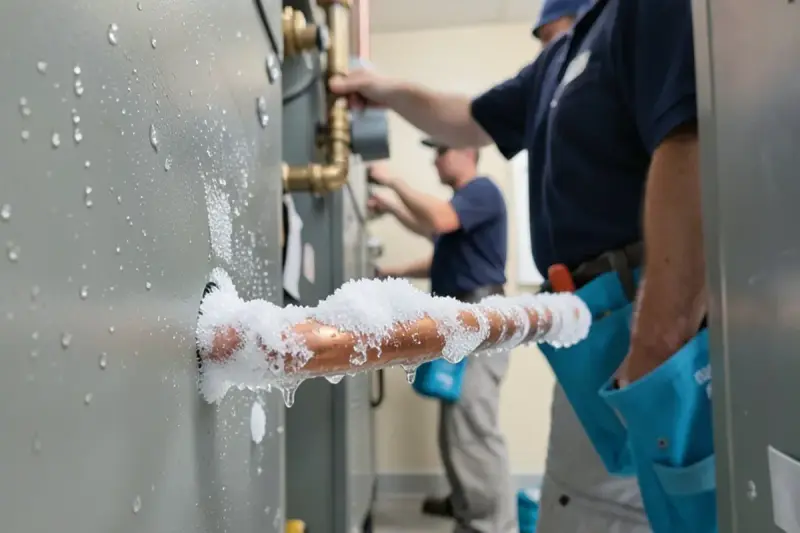
| Ice on the copper line | Restricted airflow or low refrigerant | Turn it off and let it thaw |
| Short, frequent cycles | Dirty filter, iced coil, oversized system or thermostat fault | Check the filter, then call |
Why do ACs break down in the Lowcountry?
Heat is only part of it. Three local conditions wear on systems here faster than they would inland.
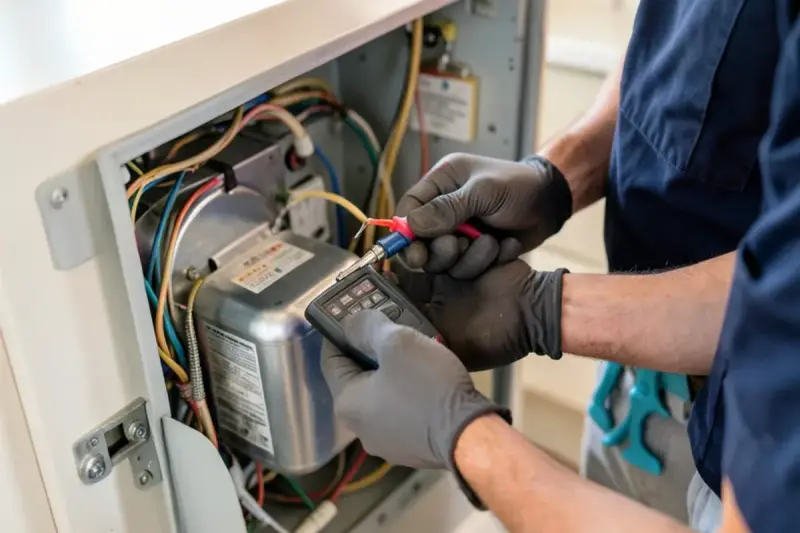
- Long cooling seasons. Compressors and motors stack up run hours from spring through fall, so a weak capacitor rarely lasts another summer.
- Heavy humidity. The evaporator coil pulls a steady stream of water from the air. Algae in that water can plug the condensate line and shut the system down on its float switch.
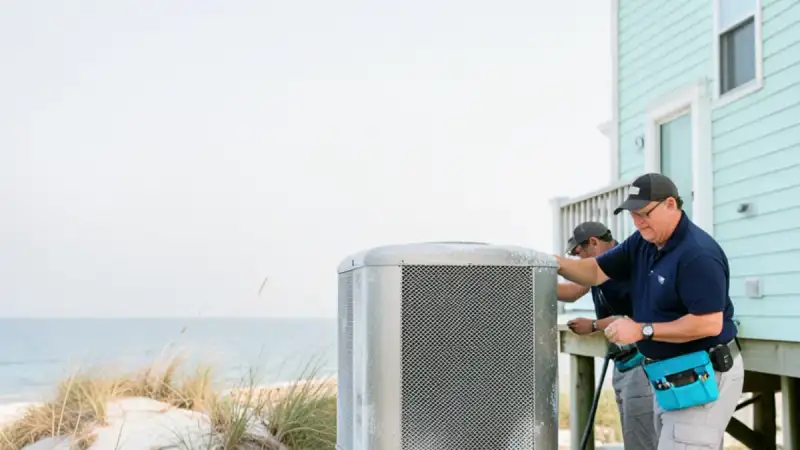
- Salt air near the water. Close to the harbor and on the barrier islands, salt film corrodes coil fins and electrical contacts. If you see white or green crust, read about our coastal corrosion AC repair.
How we find the problem
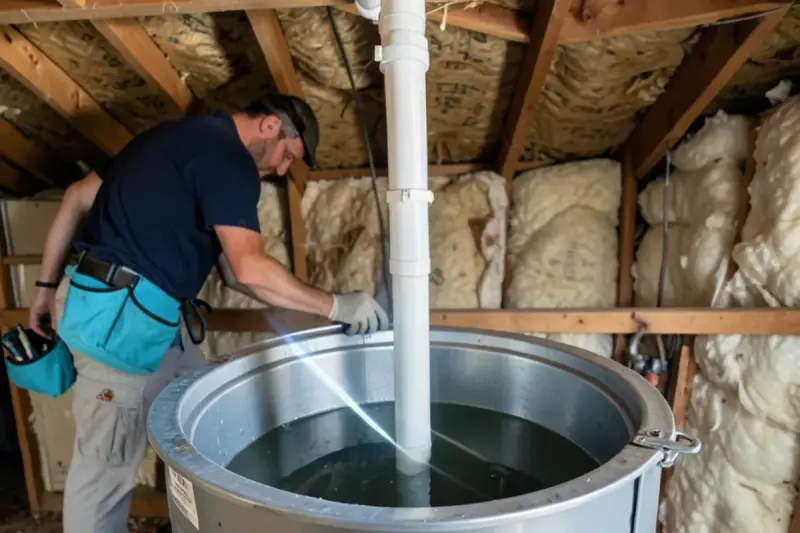
A good repair starts with testing rather than guessing. We check the things that fail most often and work outward from there. That order matters, because a system can show the same warm air for very different reasons, and swapping parts until the air turns cold is an expensive way to find out which one it was.
- We start with your description. When it started, what it sounds like and whether a breaker tripped all narrow the list.
- We check airflow first. A clogged filter or dirty coil can mimic a refrigerant problem.
- We test the electrical parts. The capacitor, contactor and fan motor get measured, not eyeballed.
- We check refrigerant pressures and the drain. If refrigerant is low, there is a leak somewhere, because refrigerant does not get used up.
- We show you what we found. You see the failed part and hear the options before we go further.
Request a quote
Calling is the fastest way to reach us: (831) 461-3437. If you would rather write it down, send the details here.
Which repair is the right repair?
Some faults have one answer. Others give you a choice, and the trade-offs are worth hearing out loud.
Refrigerant leaks. Adding refrigerant without fixing the leak is a stopgap, because it will escape again. Finding and repairing the leak costs more up front and lasts longer. On an older R-410A system with a leaking coil, compare the repair against replacing the AC before you spend the money.
Electrical parts. Capacitors and contactors are small parts with a big effect. Replacing a failed one quickly matters, since running a unit with a bad capacitor can overheat the compressor.
Fan motors. A motor swap is a clean fix on a sound unit. On a heavily corroded cabinet, it is worth checking the coil first so you do not pay to fix one part of a tired system.
Drain problems. Clearing a clogged condensate line solves the leak today. Adding a cleanout, or treating the drain during maintenance, keeps algae from sealing it again by August. If the float switch shut the system off, it was doing its job, so we check why the water backed up before we reset anything.
Compressors. This is the repair to think hardest about. A compressor is the heart of the system and the most expensive single part in it. Ask whether the unit is still under a manufacturer's warranty, then weigh the repair against the age of the rest of the equipment.
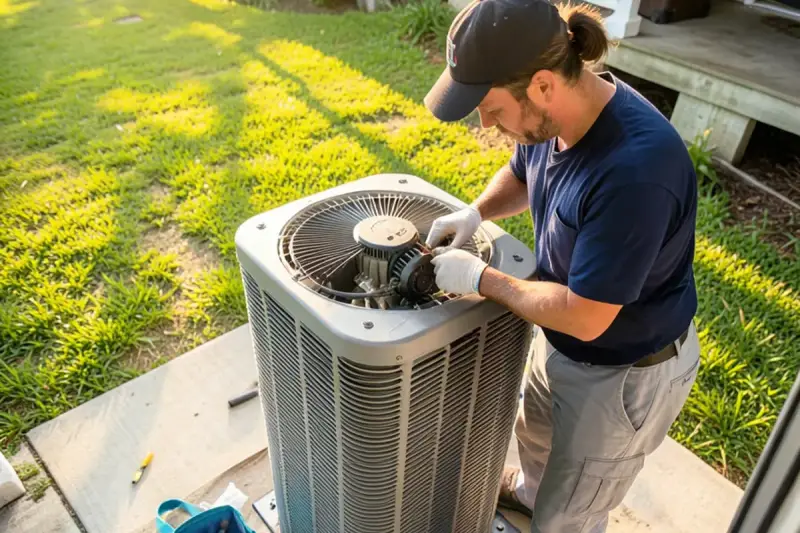
Rules that touch an AC repair
Federal rules reach the refrigerant side. Under EPA Section 608, anyone who handles refrigerant must be certified, and venting it is banned. Existing R-410A systems can still be serviced, so a repair does not force a change of refrigerant.
Local rules start where repair ends. Replacing a capacitor or motor is ordinary service, while a condenser or air handler change-out appears on the City of Charleston's Form 5.1 as an inspection type. Sources conflict on same-size swaps, so call the Permit Center at (843) 577-5550 before assuming one is exempt. South Carolina's LLR lets you look up any contractor on its license lookup, and that check takes a minute.
What happens during the repair visit
You will know what is going on at each step. One reviewer wrote that the crew "clearly explained the necessary work," and another noted that "price were as quoted."
- We confirm the symptom and take a look at the system.
- We diagnose the fault and explain it in plain English.
- We give you a clear quote before any repair work begins.
- With your approval, we make the repair.
- We run the system and confirm it is cooling before we leave.
Many common repairs can be finished on the first visit when the part is on hand. Less common parts may need a return trip, and we will tell you if that is the case.
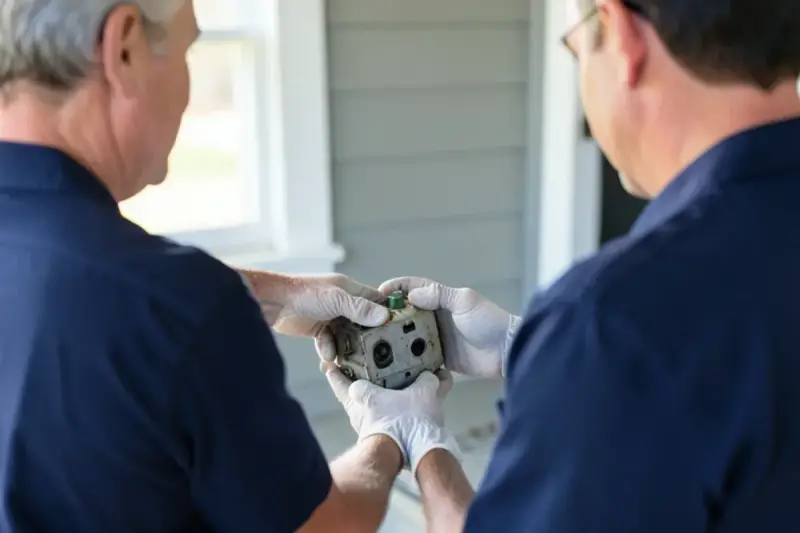
What affects the cost of an AC repair?
Four things move the price more than anything else.
- The failed part. A capacitor and a compressor are very different jobs.
- Refrigerant. The type and amount needed, and whether a leak has to be found first.
- Access. A tight attic or a roof-mounted unit takes longer than a ground-level condenser.
- Timing. Ask about after-hours pricing when you call so there are no surprises.
Age matters too, though less than people expect. A ten-year-old unit with a failed capacitor is usually a simple repair. The same unit with a leaking coil and a corroded cabinet is a different conversation, and we will say so.
We quote the work up front. For typical local ranges, see our guide to what AC repair costs in Charleston.
How to prevent the next breakdown
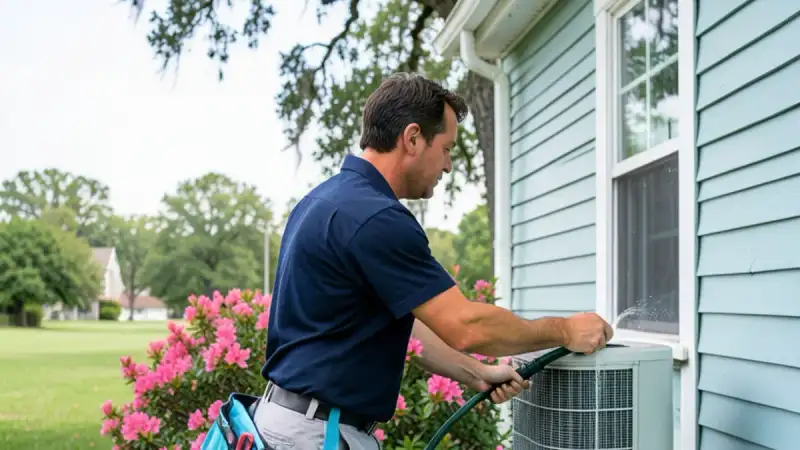
A breakdown you avoid costs nothing. Change filters on schedule, keep plants a couple of feet back from the condenser and rinse the coil gently if you live near salt water. A spring AC tune-up catches weak capacitors and slow drains before the first long heat wave.
Why call Aero Air Techs for AC repair?
We would rather you judge us by what customers say than by what we say about ourselves.
- 4.9 stars on Google from 16 reviews, checked October 2026.
- Open 24 hours, 7 days a week, according to our Google Business Profile.
- Prompt arrivals. One customer wrote, "They came out super quick and fixed my problem."
- Plain explanations. Reviewers mention being told what was wrong and what it would take.
- Pricing you can check. One customer's note: "price were as quoted."
“We called Cris and he came right over. He was knowledgeable about our unit and fixed it in a matter of minutes. His professionalism was top notch and we will be calling him for any AC issues moving forward. Highly recommended. I wish I could give more than 5 stars!”
“These guys are very reliable and trustworthy. Had issues with my AC not cooling and called Aero. They came out super quick and fixed my problem AND they were really affordable. I recommend them for all your HVAC needs!”
“Chris came out to check out my ac unit And found the problem in 5 min and fixed It now I'm back cool, price was affordable He's my guy from now on, Thanks Chris”
4.9 out of 5 from 16 Google reviews (checked October 2026). Read more reviews · Leave a review
AC repair around Charleston
We are based in Charleston and work across the surrounding areas, including North Charleston, Mount Pleasant, James Island and Johns Island. See every place on our service areas page, or call with your address and we will tell you when we can be there.
Common repairs differ by place, and these are what we ask about first.
- North Charleston: how old is the house? A 1920s cottage near Park Circle and new infill fail in different ways.
- Mount Pleasant: which system quit? The upstairs unit fights roof heat and tends to show trouble first.
- James Island: is the condenser near the marsh? Damp air speeds up corrosion on contacts.
- Johns Island: how new is the system? A young unit may still have parts coverage.
- Hanahan: is the unit on a brick ranch slab or in a newer build? Older equipment often needs electrical parts first.
- Goose Creek: did you inherit the system? Navy moves mean many owners have no service history.
- Summerville: is pine straw packed around the base? Clearing it can restore airflow.
- Folly Beach: is there white or green crust on the fins? Salt may be the real fault.
- Sullivan's Island: has the coil been rinsed this season? Ocean salt reaches contacts quickly.
Questions about this service
Why is my AC running but not cooling the house?
A running system that does not cool usually has low refrigerant, a dirty coil, a failed capacitor at the condenser or restricted airflow. Check the filter and the breaker first. If the air at the vents is still warm, turn the system off so the compressor does not overheat, and call us.
Is my AC leaking water an emergency?
Treat it as urgent, because water can stain ceilings and ruin drywall under an attic air handler. In Charleston's humidity the system pulls a lot of water out of the air, and a clogged condensate line is the usual cause. Turn the system off and put a pan under the leak until a technician clears it.
Why does my AC keep turning on and off?
Short cycling usually comes from a dirty filter, an iced coil, an oversized system or a failing thermostat or capacitor. Each start stresses the compressor, so it is worth fixing soon. Tell us how long each run lasts when you call, because that detail narrows the cause quickly.
Can you get to me the same day?
Our Google hours show open 24 hours, and past customers describe quick arrivals, but timing depends on the day's calls and where you are. Call and we will give you a straight answer on when a technician can reach your address in Charleston or nearby.
Should I repair an old AC or replace it?
Repair usually makes sense for one failed part on a sound system. Replacement starts to make sense when the compressor fails on an older unit or salt has eaten the coil. We will show you what failed and lay out both paths in writing so you can compare them.
How much does AC repair cost in Charleston?
The price depends on the failed part, the refrigerant involved and how hard the unit is to reach. We give you a clear quote before work begins. Our AC repair cost guide covers typical local ranges reported by homeowners, so you can judge any quote.