Coastal Corrosion AC Repair in Charleston, SC
White crust on the fins, rust at the base or green lugs in the panel? We check how far the salt has gone and tell you what can be saved.
- 4.9★ on Google (16 reviews)
- Open 24 hours, 7 days
- Clear, upfront quotes
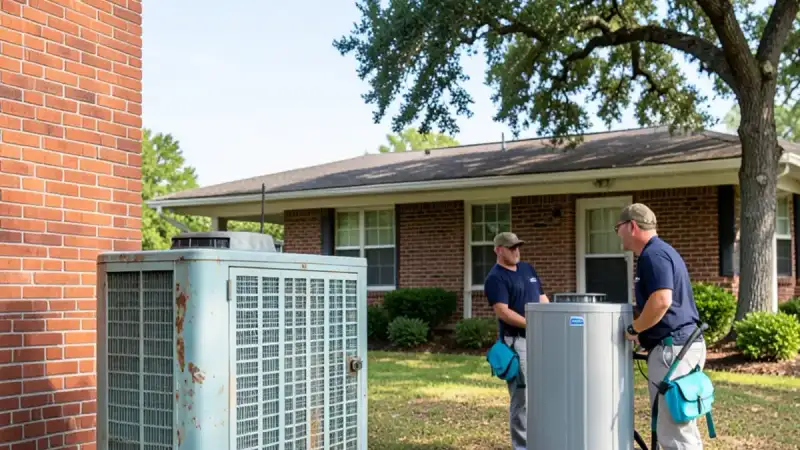
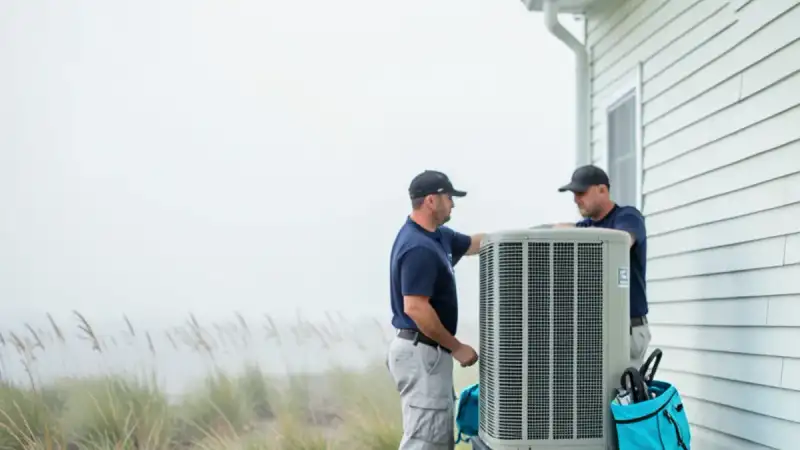
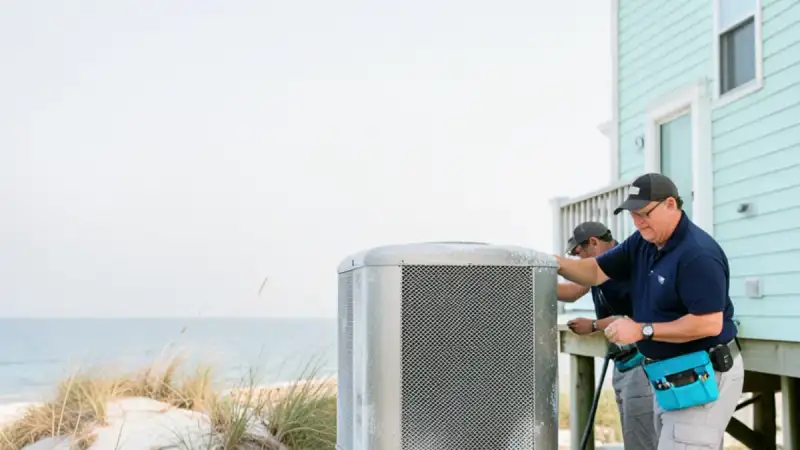
Coastal corrosion AC repair in Charleston starts with one question: how much sound metal is left? Salt air eats condenser coils, cabinets and electrical contacts on homes near the harbor, the marsh and the barrier islands, and the right fix depends on how far the damage has gone.
Aero Air Techs inspects the unit, tells you what can be saved and quotes before any work begins.
Some coastal units need a cleaning and a few new parts. Others are past that point, and spending on them would be a waste. You will hear which one you have.
What does salt air AC damage look like?
Corrosion shows up outside first, then in the numbers. Walk around your unit and look for these signs.
| On the unit | Likely cause | Why it matters |
|---|---|---|
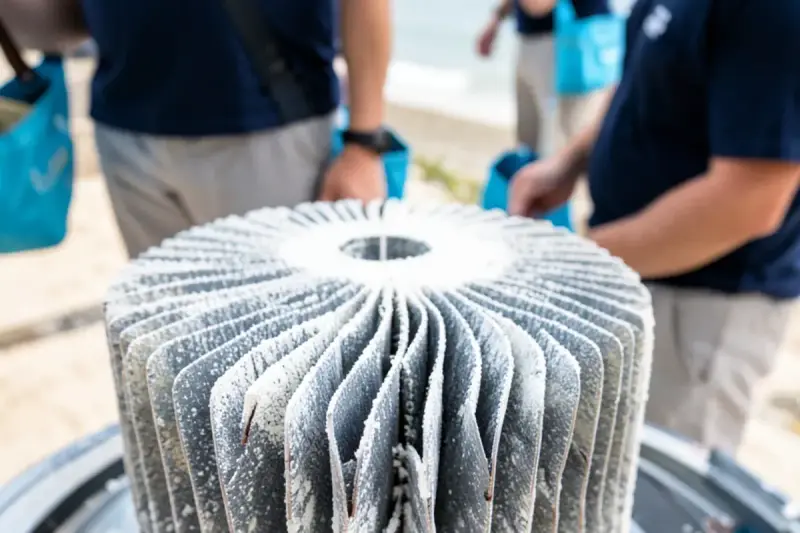
| White powder or crust on the fins | Aluminum is corroding | The coil sheds less heat |
| Fins that crumble when brushed | Advanced fin loss | Cleaning will not bring them back |
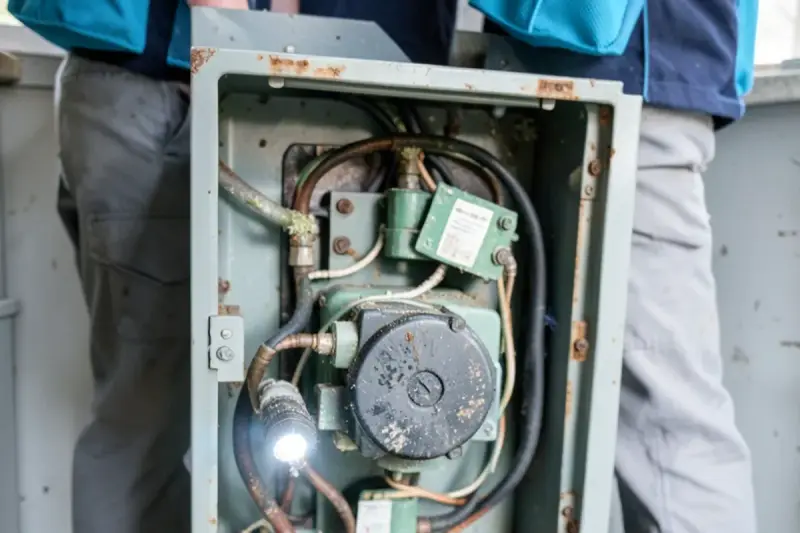
| Rust at the base pan or cabinet screws | Steel parts are failing | Panels loosen and hardware seizes |
| Green or white crust on wire lugs | Corroded connections | Heat builds and contacts fail |
| Longer run times and warmer air on hot days | The coil cannot shed heat | Compressor runs hotter and works harder |
| Refrigerant low again after a recharge | A leak, often at weakened tubing | The problem repeats until it is found |
Coastal corrosion AC repair in Charleston begins with the chemistry
Three different processes wear on equipment here, and only two of them involve salt. Telling them apart decides the fix.
Salt on aluminum fins
Sea spray leaves a film of salt on every surface. Salt pulls moisture from humid air, so the film stays damp through our long, sticky nights. The chloride in that film breaks through the thin oxide layer that normally protects aluminum, and the metal starts to pit. A coil has a huge fin surface, which gives salt plenty to work on.
Galvanic corrosion
Two different metals in contact with a salty, wet film behave like a weak battery. The more active metal gives itself up to protect the other. In most coils, that means aluminum fins corrode where they touch copper tubes. The fins can look fine while the bond to the tube fails, and once that bond goes, heat stops moving from the tube into the fin. The same thing happens where steel screws meet aluminum or copper lugs meet steel.
Formicary corrosion
This one happens indoors and has nothing to do with salt. Formicary corrosion needs copper, moisture, oxygen and organic acids, which can come from household chemicals, adhesives and building materials. It bores microscopic tunnels through the copper tube wall, usually on the indoor evaporator coil. You will not see crust. What you get is a repeat refrigerant leak with no obvious source. An all-aluminum coil avoids it, though aluminum is still exposed to salt outdoors.
What we check on a coastal unit
A corrosion inspection looks at the whole system, not only the part that failed.
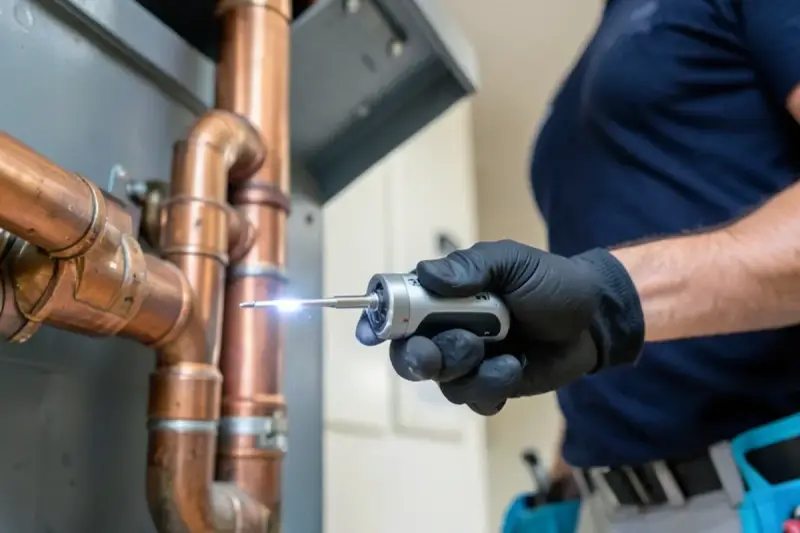
- Coil fins. Condition, thickness and how firmly they grip the tubes
- Copper tubes and joints. Oil stains, weak spots and leaks
- Cabinet and base pan. Rust, seized screws and drainage
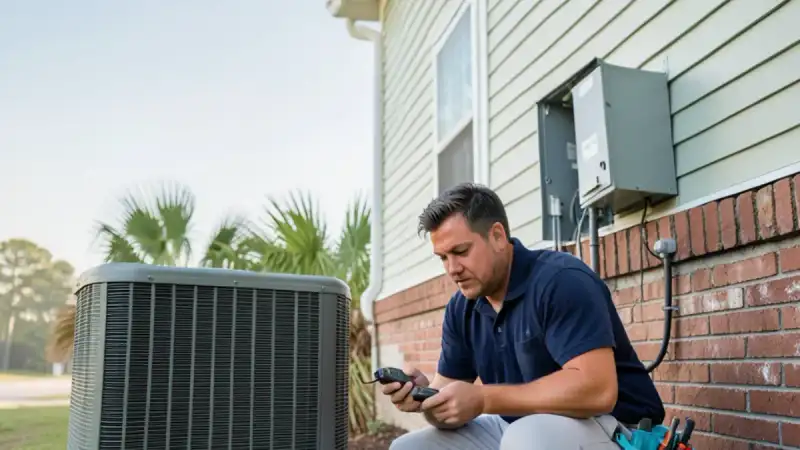
- Electrical panel. Contactor, capacitor, lugs and wire insulation
- Fan motor. Bearings, shaft and blade
- Mounting. Stand, platform and any tie-down hardware
- Pressures and temperatures. How well the system is shedding heat
- Indoor coil. A leak search if refrigerant keeps dropping
Request a quote
Calling is the fastest way to reach us: (831) 461-3437. If you would rather write it down, send the details here.
Clean, coat, repair or replace?
Each option fits a different stage of damage, and each has a catch.
| Option | Helps when | The trade-off |
|---|---|---|
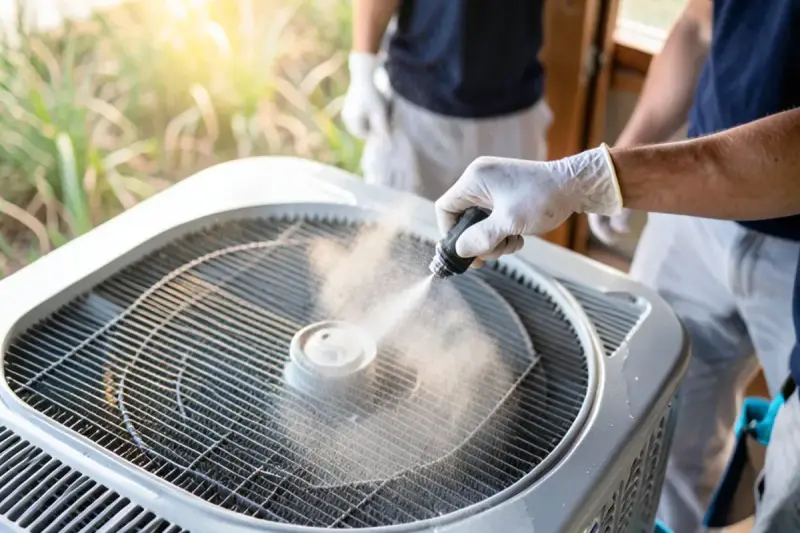
| Coil cleaning and rinse | Salt film and light surface corrosion | Slows the damage but restores no lost metal |
| Coil coating | Clean coil with sound fins | Needs careful prep and a touch-up routine |
| Part replacement | Corroded contactor, capacitor, lugs or motor | Simple fix, unless the coil is failing too |
| New condenser coil | Coil is gone but the rest is sound | Parts can be hard to find on older models |
| Full AC replacement | Coil, cabinet and compressor are all worn | Highest cost, and the longest fix |
Coatings deserve a closer look. Trade sources describe coastal air as the most documented case for coil coatings, but quality varies, and the common benchmark is a salt-fog test under ASTM B117. Ask for test data. Surface prep is everything, because a coating over trapped salt seals the problem in. Factory-coated coils are usually applied more evenly than anything done in the field, so raise them when you buy a new coastal AC unit.
Corrosion means replacement when the fins crumble, the coil leaks in more than one spot, the base pan has rusted through or the compressor has been running hot for a long time. Stopping there beats paying for a coil that goes into a rotten cabinet.
How a corrosion visit runs
- Tell us what you see. Photos of the fins and panel help us plan.
- Inspect and test. We work through the list above, with the power off where needed.
- Show you the damage. You see it for yourself and hear what it means.
- Quote the options. You get a clear, upfront quote, often with more than one path.
- Do the approved work. Refrigerant handling follows EPA Section 608, which bars venting and requires technicians to be certified.
- Confirm cooling. We run the system and check the temperature drop.
How long it takes
Cleaning and electrical repairs can often finish on the first visit if the parts are on hand. Coils usually take longer, because many are ordered by model, and coatings need a clean, dry surface. We will give you the likely sequence when we quote.
What drives the price
Cost depends on the damage. The main factors are how much of the coil is affected, whether parts are still available, the refrigerant involved, the climb to a raised stand and whether the work goes on a rental between guests. If you hear a compressor or coil price, weigh it against the age of the equipment before you approve it.
A rinse schedule for coastal units
Fresh water is cheap protection. No agency publishes a rinse schedule, so use this as a starting point and adjust to what you see on the fins.
| Location | Suggested rinse |
|---|---|
| Oceanfront or first row on the islands | Monthly in cooling season |
| Harbor or marsh-front homes | Every two or three months |
| A mile or more inland | At spring and fall tune-ups |
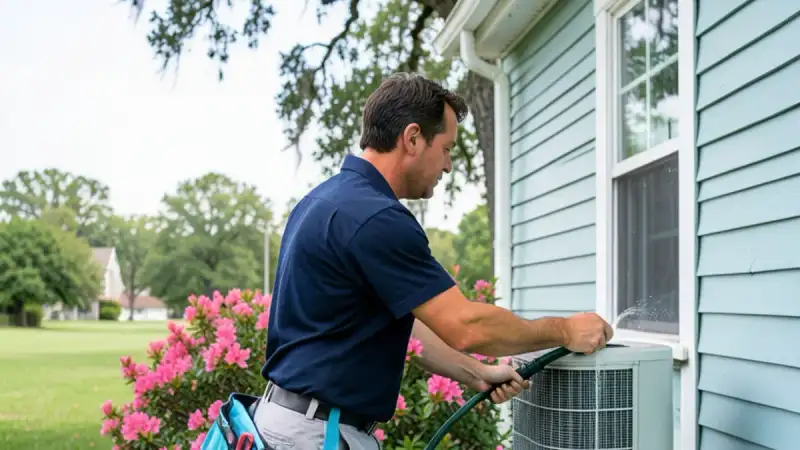
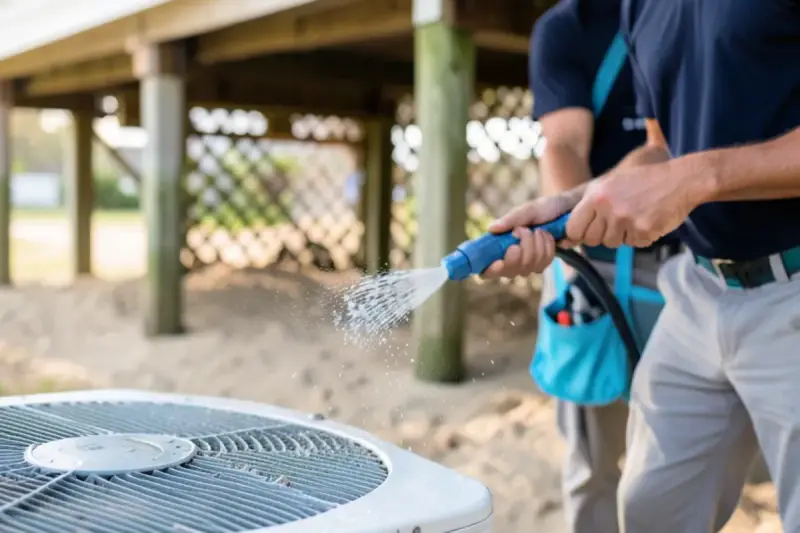
To rinse, turn the power off at the disconnect, then use a garden hose on a gentle setting. Work across the fins and let the unit dry before you restore power. Never use a pressure washer, and do not use a cleaner the manufacturer has not approved. Add a rinse after any onshore storm. Atlantic hurricane season runs June 1 to November 30, according to NOAA, and our hurricane prep guide covers the rest. Pair the rinses with a yearly AC tune-up, and read how long units last on the coast.
Rules start when a repair turns into new equipment. City of Charleston guidance says machinery in the Special Flood Hazard Area must sit at the Design Flood Elevation, and Charleston County publishes its own height rule for replacement units. A coil coating needs no permit that we know of, but a condenser change-out is listed on the City's Form 5.1. Ask your local office before a salt-worn unit gets swapped.
Why call Aero Air Techs about salt damage?
- Rated 4.9 on Google, with 16 reviews as of October 2026.
- A quote before the work, so you can weigh every option first.
- Plain talk. One customer described the technician as "knowledgeable about our unit."
- Around the clock. Google lists us as open 24 hours, 7 days a week.
“We called Cris and he came right over. He was knowledgeable about our unit and fixed it in a matter of minutes. His professionalism was top notch and we will be calling him for any AC issues moving forward. Highly recommended. I wish I could give more than 5 stars!”
“These guys are very reliable and trustworthy. Had issues with my AC not cooling and called Aero. They came out super quick and fixed my problem AND they were really affordable. I recommend them for all your HVAC needs!”
“Chris came out to check out my ac unit And found the problem in 5 min and fixed It now I'm back cool, price was affordable He's my guy from now on, Thanks Chris”
4.9 out of 5 from 16 Google reviews (checked October 2026). Read more reviews · Leave a review
We are based in Charleston and serve the coast and surrounding areas, including Folly Beach, Sullivan's Island, Isle of Palms and Awendaw. Give us your address and we will talk through timing for your stretch of coast. For faults that have nothing to do with salt, see AC repair.
Salt exposure is not the same at every address.
Folly Beach: ocean on one side and river marsh on the other, so wind brings spray or damp air either way.
Sullivan's Island: treat coil protection as the first decision, then Town design review.
Isle of Palms: rental units need rinses scheduled around changeovers.
Awendaw: Bulls Bay homes get salt, while forest-edge lots get pine straw instead.
Kiawah Island: condensers on stands need a plan that fits the regime's approvals.
Seabrook Island: closed villas can go a season with no one noticing crust.
James Island: marsh air works on contacts more slowly than ocean spray, but it never stops.
Mount Pleasant: homes near the harbor end can have salt on both condensers.
Georgetown County: Waccamaw Neck homes sit between the river and the ocean, so plan a long trip around a full inspection.
Beaufort: river damp joins the salt, and old frames add humidity, so bring photos before we plan the drive.
Hilton Head Island: planned work only at this distance, so book coil checks well ahead of the rental season.
Myrtle Beach: condo condensers often share a roof, which suits one planned visit for several units.
Questions about this service
How close to the ocean does salt damage start?
There is no fixed line. Oceanfront and barrier island homes take the most salt, but wind, storms and open marsh can carry it well inland. Units facing the water usually get the worst of it. If you are on Folly Beach or near the harbor, check the fins every few months and watch for white powder.
Can a corroded condenser coil be repaired?
Light corrosion can often be cleaned, rinsed and protected. Once fins crumble or the tubes leak, a patch rarely lasts, because the metal around the leak is just as weak. At that point the choice is a new coil or a new unit. We will show you the damage and quote the options.
Is a coil coating worth it?
It can be, when the coil is clean and sound. A coating adds a barrier between the metal and the salt film, which can slow new corrosion. It will not fix fins or tubes already damaged. On a new unit near the water, ask about a factory-coated coil first, then compare it with a field-applied coating.
How often should I rinse a beach house AC?
Monthly during cooling season is a sensible rule for oceanfront homes, and after any storm with onshore wind. Marsh-front homes can usually go longer. No agency sets a schedule, so judge by what you see on the fins. Rental owners can add it to the turnover list so it does not get skipped.
Does salt air cause formicary corrosion?
No. Formicary corrosion comes from organic acids, moisture and oxygen acting on copper tubing, usually on the indoor coil. Salt attacks the outdoor unit instead. The two can show up in the same house, which is why repeat refrigerant leaks deserve a real leak search and not another top-off.
Will the manufacturer warranty cover salt corrosion?
Do not assume it will. Terms differ by manufacturer, and some limit coverage in corrosive environments or after unapproved products are used on the coil. Ask the manufacturer in writing before coating a coil or filing a claim, and keep your rinse records and invoices with the model and serial numbers.