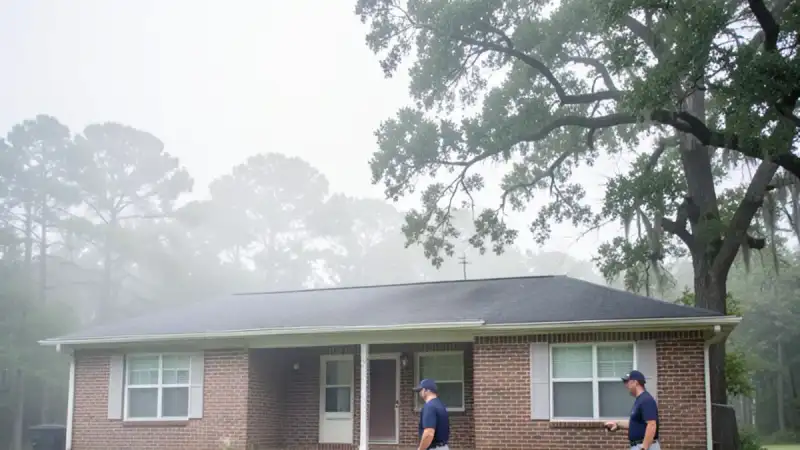

Whole Home Dehumidifiers in Charleston, SC
If the house feels clammy while the thermostat looks fine, your AC may be cooling without drying. We find out why first, then size a dehumidifier if you still need one.
- 4.9★ on Google (16 reviews)
- Open 24 hours, 7 days
- Clear, upfront quotes
Whole home dehumidifiers in Charleston remove the moisture an air conditioner leaves behind. A ducted unit connects to your duct system and runs on its own humidity control, so it can keep drying the house when the thermostat is satisfied and the AC is off.
Aero Air Techs checks why the house is humid before we suggest one, because a duct leak or an oversized AC can be the real cause.
North Charleston logged 2,598 cooling degree days in 2025 against a 2,434 normal, according to NWS Charleston. That figure measures heat, and it only tells part of the story. Moisture is the part that makes a 75-degree room feel clammy.
Why does a house stay sticky with the AC running?
Most sticky houses have one of four problems, and only one of them calls for new equipment right away.
The AC is oversized. A DOE Building America guide explains that an oversized system reaches the temperature quickly and shuts off before much water condenses and drains from the coil. Some of that moisture can evaporate back into the air. DOE's Energy Saver guide also says an oversized unit performs less efficiently and effectively than one sized correctly.
Mild, muggy days give the AC no reason to run. The same guide points to spring and fall, when humidity can be high and temperatures are moderate. The thermostat is happy, the coil stays off and the air stays damp. Charleston gets plenty of those days.
Ducts are pulling in humid air. DOE notes that unconditioned air can be drawn into return ducts through unsealed joints. In an attic or crawl space here, that air carries a heavy moisture load, and duct repair may solve more than you expect.
The house takes on water from below. A vented crawl space under a raised home can stay damp through summer, and bare soil adds more. That moisture rises through floors and gaps.
Our post on why Charleston homes feel humid goes through these causes in more depth.
Do you need a dehumidifier, or a different fix first?
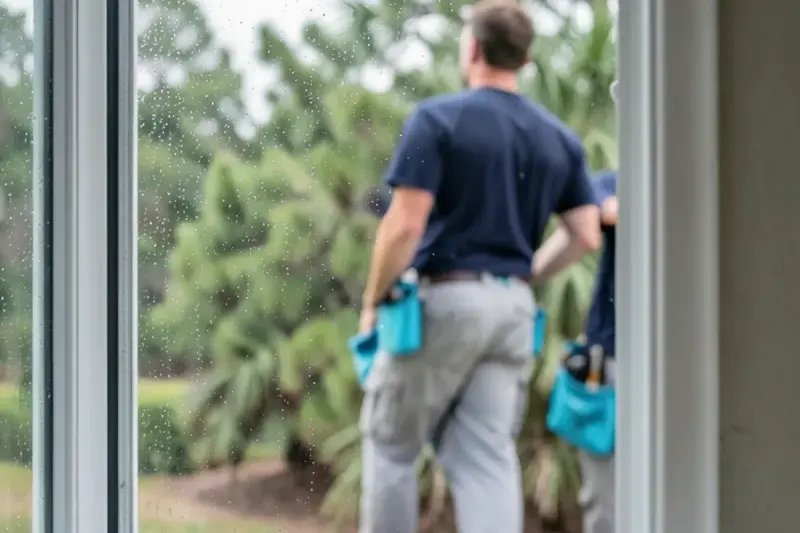
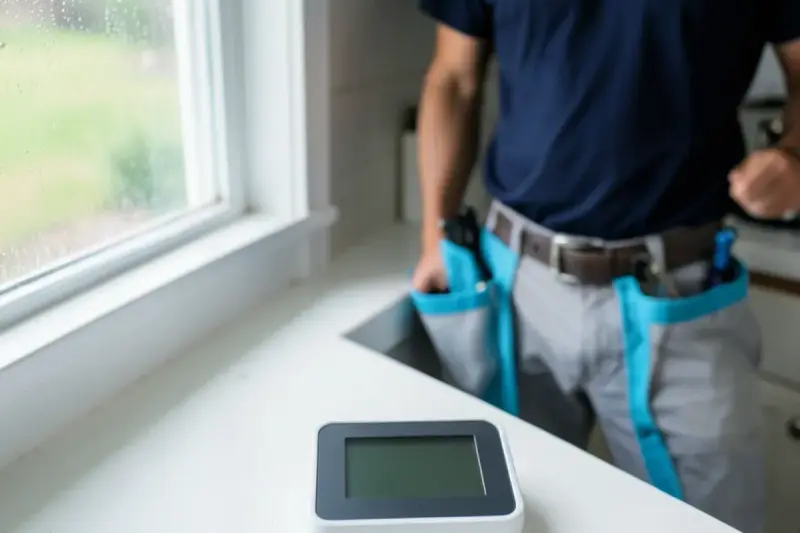
Measure before you spend. A hygrometer is a small meter that reads humidity, and it costs far less than a guess. EPA says to keep indoor humidity below 60 percent if possible, and ideally between 30 and 50 percent, so use 60 as your first line.
| What your readings and the system show | Likely next step |
|---|---|
| Above 60 percent and the AC runs in short bursts | Check sizing and airflow before adding equipment |
| Above 60 percent with long run times | Check the coil, refrigerant, airflow and ducts |
| Fine in summer, damp in spring and fall | A dehumidifier is a strong candidate |
| One area is damp, such as the floors over a crawl space | Look at the crawl space first |
| Fine indoors, but a musty smell lingers | Hunt for a water source |
| New high-efficiency AC and still damp | Ask about dehumidify settings, then a ducted unit |
If the AC itself is the problem, weigh AC replacement sized for the house against adding a second machine. A correctly sized system that runs longer may solve it alone.
“My experience with Aero Air Techs has been excellent! Cris was communicative, transparent, knowledgeable, and punctual. I couldn't recommend them enough!”
“We have used Rodriquez Washington and the company several times and he does an awesome job! He is honest and takes his time with us. We will continue to use him at Abyssinia Baptist Church.”
“They arrived promptly, clearly explained the necessary work, and completed everything efficiently. Extremely professional—I highly recommend them!”
4.9 out of 5 from 16 Google reviews (checked October 2026). Read more reviews · Leave a review
Request a quote
Calling is the fastest way to reach us: (831) 461-3437. If you would rather write it down, send the details here.
Whole home dehumidifiers in Charleston: ducted, crawl space or portable?
Each type has a place. Choose by how much of the house has the problem.
Ducted whole home unit
This is the choice for a house that is damp all over. It draws air from a return or a dedicated intake, dries it and sends it back through the supply ducts. It needs a space near the air handler, a drain and a power connection. It controls humidity on its own, so it can run in spring and fall when the AC has little work.
Crawl space dehumidifier
This suits a sealed or partly sealed crawl space. It needs a vapor barrier, a drain and a place above any standing water. A unit in an open, vented crawl space is trying to dry the outdoors, so air sealing has to come first.
Check the flood rules before you put anything under a house. City of Charleston flood guidance says machinery and equipment in the Special Flood Hazard Area must be raised to the Design Flood Elevation, and it names HVAC units and ductwork. A crawl space unit in one of those zones may need a different location, and storm water can reach it there. Other towns set their own rules, so ask your local building department.
Portable unit
This fits one room or a short-term problem. It is an inexpensive way to test whether drier air helps. It also needs emptying or a drain, and it gives off heat into the room.
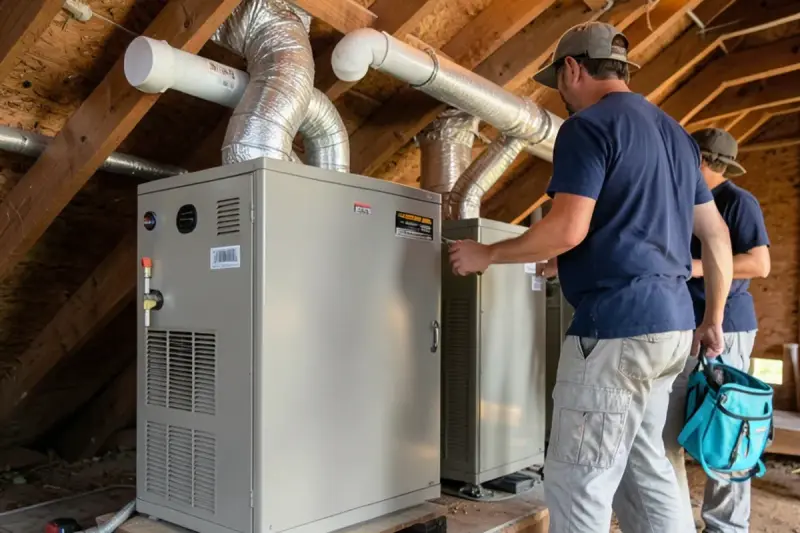
What dehumidifier installation includes
A ducted install has more parts than most people expect.
- A humidity and load review of the house before anything is ordered
- A platform, mount or hanger, in an attic or closet or above the crawl space floor
- Duct connections, sealed and insulated where they run through unconditioned space
- A condensate drain with a trap, plus a safety pan where the location needs one
- A power connection for the unit
- A humidistat, or a thermostat with humidity control if your system supports one
- A test run with the readings explained
Controls matter here. A thermostat that reads humidity can make the whole setup easier to manage.
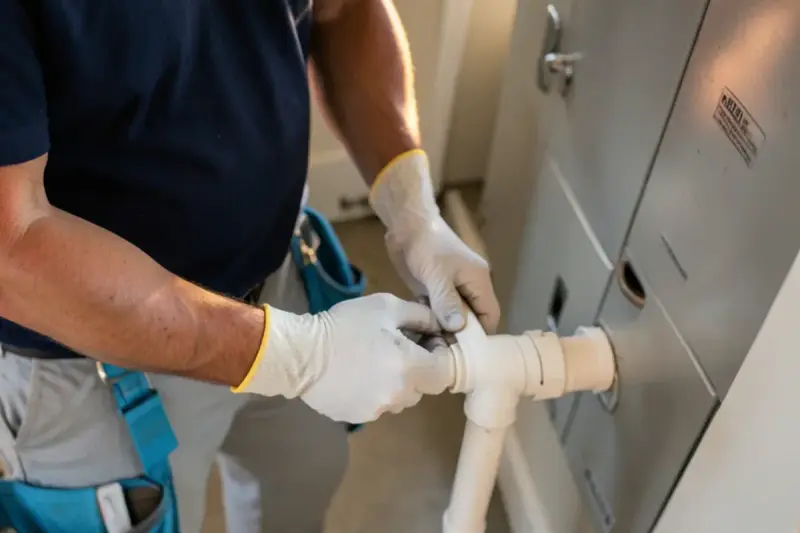
How a dehumidifier gets sized and installed
Sizing starts with the house, not the box. Capacity is rated in pints of water removed per day, and the right number depends on how leaky the house is, what sits under it and how you use it.
- Share your readings. A week of hygrometer numbers helps a great deal.
- Inspect. We look at the AC, the ducts and any crawl space or attic space involved.
- Rule out the cheaper fix. If a duct repair or drain fix should come first, you will hear that.
- Quote. You get a clear, upfront quote before work begins.
- Install. The unit goes in with its ducts, drain and controls.
- Set the target. We start at a sensible humidity setting and show you how to adjust it.
- Follow up with your readings. Keep the hygrometer out and call us if the numbers do not settle.
Mold prevention and HVAC: what humidity control can and cannot do
Humidity control lowers the risk, and it is not a cure. EPA says moisture control is the key to mold control, and that condensation can be a sign of high humidity. A dehumidifier helps with damp air. It does nothing for a roof leak, a wet wall or a plumbing drip, and EPA says that if the water problem stays, mold is likely to come back.
We do not offer mold remediation. If you see growth, EPA says you can often handle an area under about 10 square feet yourself, and that larger areas call for its remediation guidance. A dehumidifier also will not clean air, and EPA says air cleaners and HVAC filters do not address the cause of mold and musty odors.
We also make no claims about allergies, asthma or other health conditions. Your doctor is the right person for those questions.
After a storm, speed matters. EPA says to dry water-damaged areas and items within 24 to 48 hours to help prevent mold growth. Dry out first and fix the source, then look at long-term humidity.
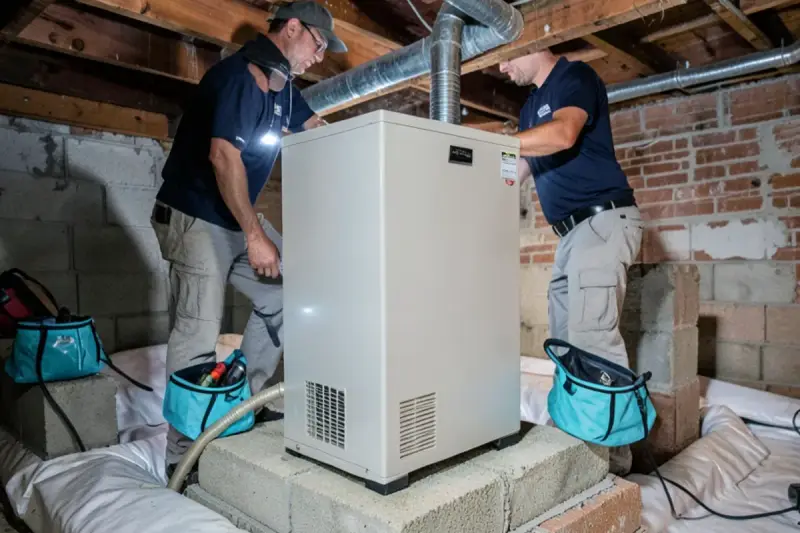
What sets the price of a dehumidifier?
Four things move the price.
- Unit type and capacity. A ducted unit and a crawl space unit are different purchases.
- Location. Attic, closet and crawl space installs each take different work.
- Duct and drain routing. Long runs and hard-to-reach drains add labor.
- Controls and power. A new humidistat or circuit adds to the job.
Ask what the unit needs in yearly filter changes too. Manufacturer warranties vary, so read the terms and ask the manufacturer directly.
Why call Aero Air Techs about humidity?
You will hear the cheaper fix first if there is one.
- 4.9 on Google, with 16 reviews on the profile in October 2026.
- Plain answers. One reviewer said the team was "communicative, transparent, knowledgeable, and punctual."
- Prompt visits. Another mentioned "Great customer service and prompt arrival."
- Quotes up front, so you can compare a dehumidifier against any other fix.
Before you hire anyone, our guide on choosing an HVAC contractor in Charleston lists the questions to ask. We are based in Charleston and serve the surrounding areas, including Hanahan, Summerville and Ravenel. Call with your readings and we will talk through the next step.
Damp houses have different causes around the area, so we ask about the setting first.
- Hanahan: homes near the reservoir and Goose Creek deal with damp ground outdoors.
- Summerville: older houses leak air, so sealing may come before any equipment.
- Ravenel: new tight homes can hold moisture after the AC shuts off.
- Folly Beach: more than half the homes counted vacant in 2020, and closed houses need humidity control.
- Isle of Palms: 58.1 percent of units counted vacant, so a rental may sit damp between bookings.
- Seabrook Island: most owners are not full time, which makes a set humidity limit useful.
- James Island: marsh air and crawlspaces can raise indoor readings.
- Sullivan's Island: ocean air raises the moisture load on every raised cottage.
Questions about this service
What humidity should I keep my Charleston home at?
EPA says to keep indoor humidity below 60 percent if possible, and ideally between 30 and 50 percent. The low end of that range is hard to reach in a Lowcountry summer. Put a hygrometer in a main room for a week, then call us with the numbers you see.
Will a dehumidifier prevent mold?
It can lower one of the conditions mold needs, and that is all we can say. EPA says moisture control is the key to mold control, but a dehumidifier does not remove mold that is already there, and it cannot stop a roof or plumbing leak. We do not offer mold remediation.
Do I need a crawl space dehumidifier?
Maybe, but look at the crawl space itself first. Vents, bare soil and standing water all feed moisture into the space, and a unit alone will struggle against them. If the crawl space has a sealed vapor barrier and stays damp, a dedicated unit makes more sense. We can check the HVAC side.
Why is my house humid when the AC runs all the time?
Long run times with high humidity point to a leak, a dirty coil, low airflow or a system that cannot keep up. Short run times point to an oversized system. Tell us which you see when you call, since each path leads to a different fix, and only some need a dehumidifier.
Can a dehumidifier replace my AC?
No. It removes moisture and gives off some heat as it runs, so it works alongside your AC. It helps most on mild, muggy days when the AC does not run long enough to dry the house, which Charleston sees in spring and fall.
Can I just use a portable dehumidifier?
Yes, for one room or a small problem. Portable units need emptying or a drain, they take floor space and they can be noisy. A ducted unit treats the whole house and drains on its own. Try a portable first if you are unsure, then compare the results.
How do you size a whole home dehumidifier?
We look at the square footage, how leaky the house is, the crawl space or attic setup and your readings. Capacity is rated in pints of water removed per day. Bigger is not automatically better, because the goal is steady control. The fix for the source of the moisture comes first.
Sources
Related services
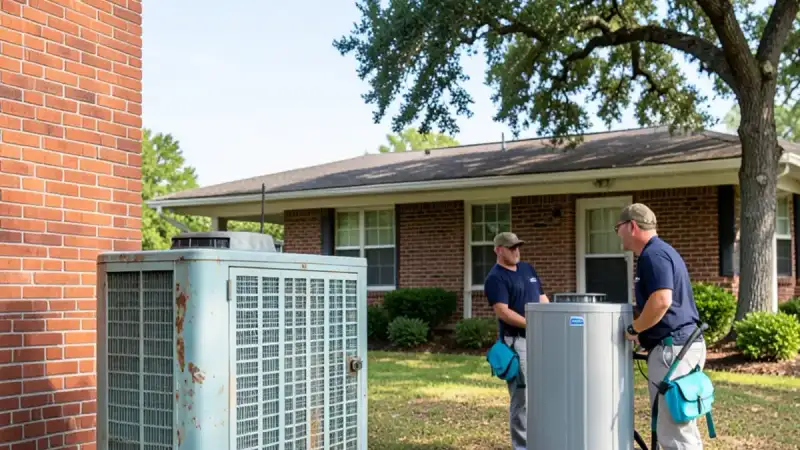
AC Replacement
Repair-or-replace advice, a matched system and a line-itemed quote to compare.
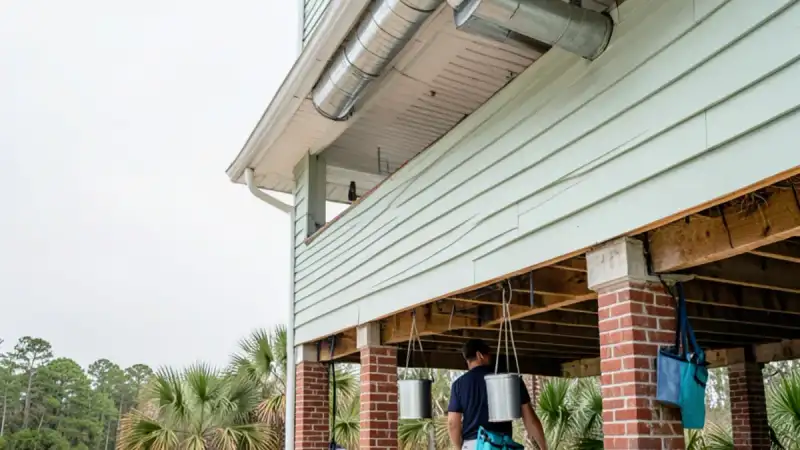
Duct Repair and Replacement
Leaks sealed and failed runs rebuilt in attics and crawl spaces, with airflow checked.
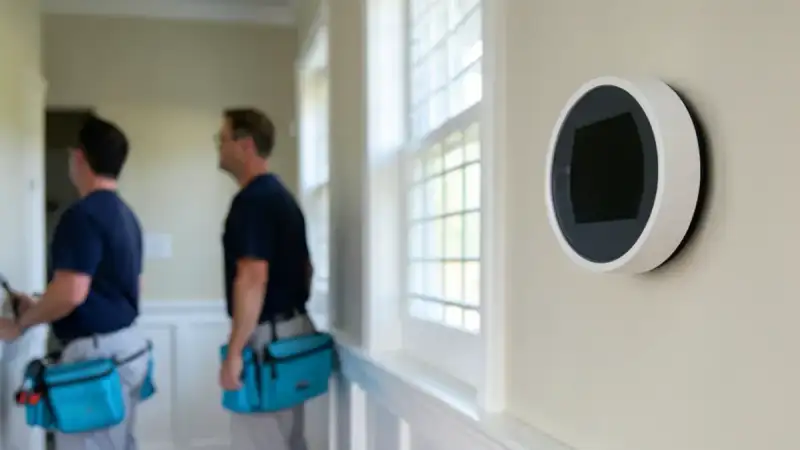
Thermostat Installation
Smart and programmable thermostats wired, set up and tested in heating and cooling.