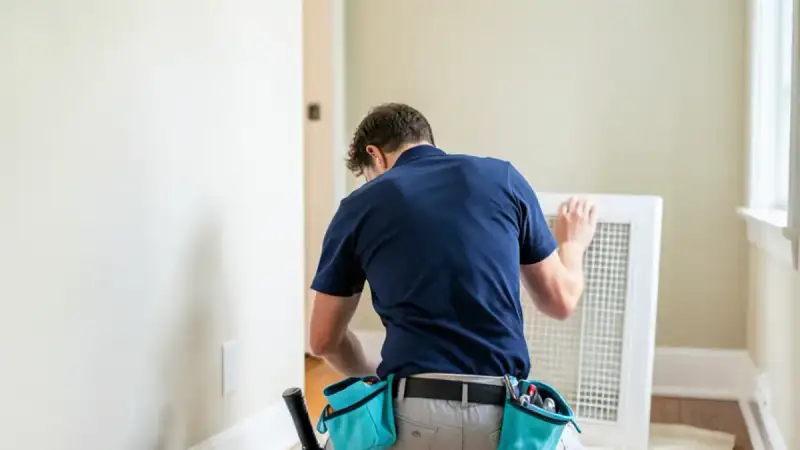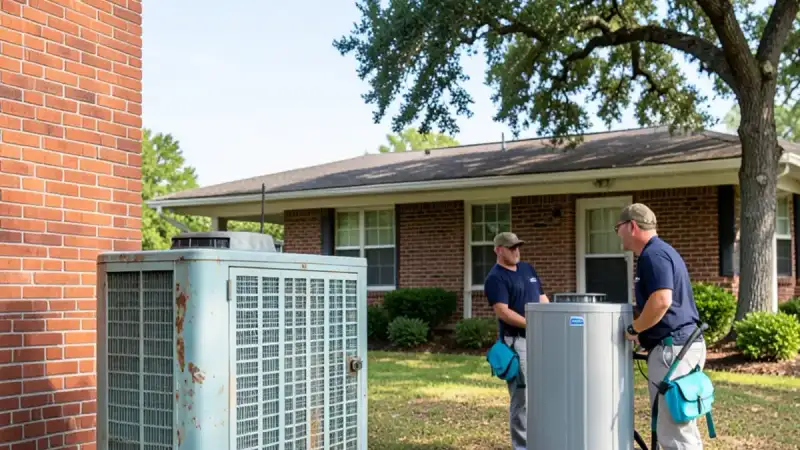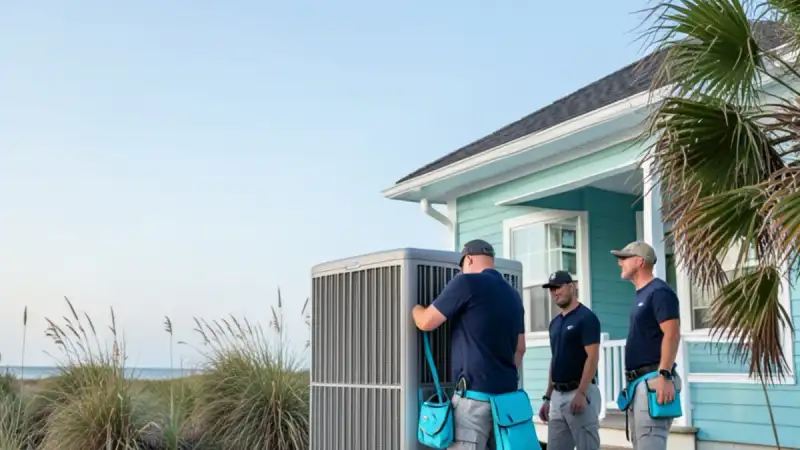
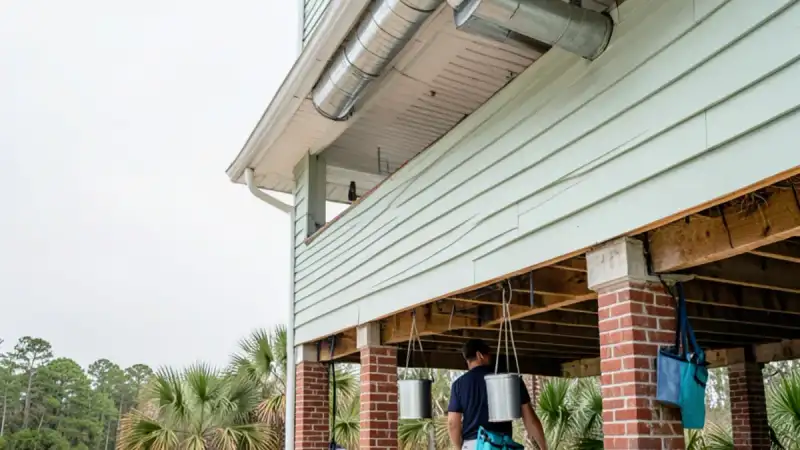
Duct Repair and Replacement in Charleston, SC
Hot rooms, high bills and a sticky house can all trace back to the ducts. We find the leaks, seal or rebuild what has failed and check the airflow afterward.
- 4.9★ on Google (16 reviews)
- Open 24 hours, 7 days
- Clear, upfront quotes
Duct repair and replacement in Charleston starts with finding out where your air is going. ENERGY STAR estimates that about 20 to 30 percent of the air moving through a typical home's ducts is lost to leaks, holes and poor connections.
Aero Air Techs traces those losses, seals or rebuilds the failed sections and checks the airflow afterward, with a clear, upfront quote before work begins.
Leaks do double damage here. A supply leak dumps cooled air into an attic or crawl space. A return leak draws air from those same spaces into the system, and in a Lowcountry summer that air is hot and humid. Your AC then has to cool and dry it all over again.
How do leaky ducts show up in a Lowcountry home?
Your house usually tells you before anyone opens a panel. Match what you notice to the likely cause.
| What you notice | Likely duct problem | Where to look first |
|---|---|---|
| A room that never cools | Crushed, kinked or disconnected flex | The run feeding that room |
| Summer bills climbing with no new usage | Leaks at joints and collars | Attic or crawl space trunk |
| Sticky air with the AC running | Return leak pulling in humid air | Return drop and filter cabinet |
| Extra dust near the returns | Return leak in a dusty space | Boots and return connections |
| Whistling at the registers | Undersized ducts or closed dampers | Trunk sizing and damper positions |
| Water on or under a duct | Torn jacket and sweating | Insulation on the cold section |
Our post on the signs of leaking ductwork walks through a simple check you can do at home.
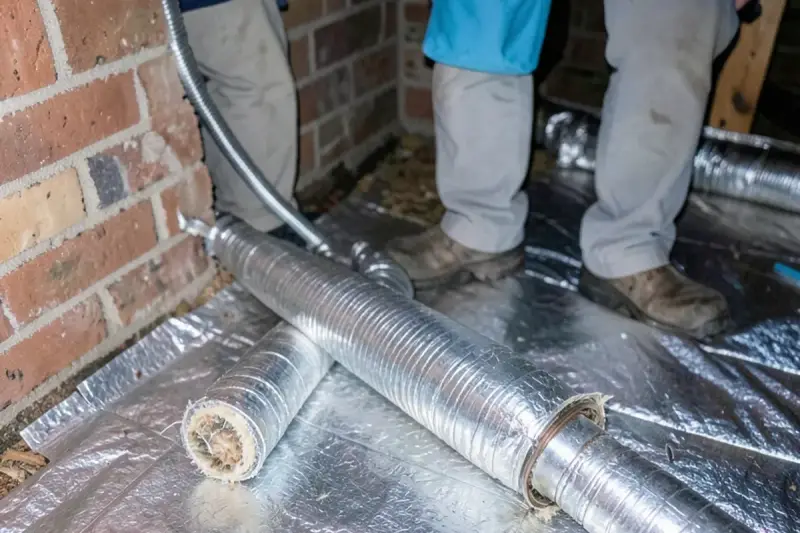
Why duct repair and replacement in Charleston often starts under the house
Location decides how ducts fail here. ENERGY STAR lists ducts in attics, crawl spaces and garages as a warning sign in themselves, and that describes a lot of homes around Charleston.
Crawl spaces and raised homes
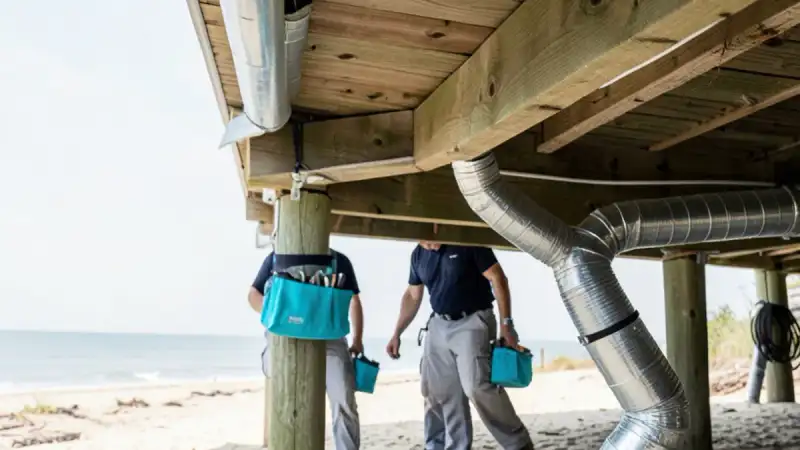
Raised homes and brick ranches often run ducts under the floor, where moisture sits around them for months. Rodents tear the jackets, straps let go and flex sags onto the ground. Where a house sits on open piers, the ducts also take on weather from the yard.
Attics in slab homes
Many subdivision homes on slabs put the whole system overhead. Summer attic heat works on tape and flex jackets, and people walking through an attic for storage or repairs can crush a run without knowing it.
Older homes with added ducts
Homes that gained central air after they were built tend to have whatever route fit at the time. Long runs, sharp bends and undersized returns are common. Sealing helps, but it cannot make a small duct carry more air.
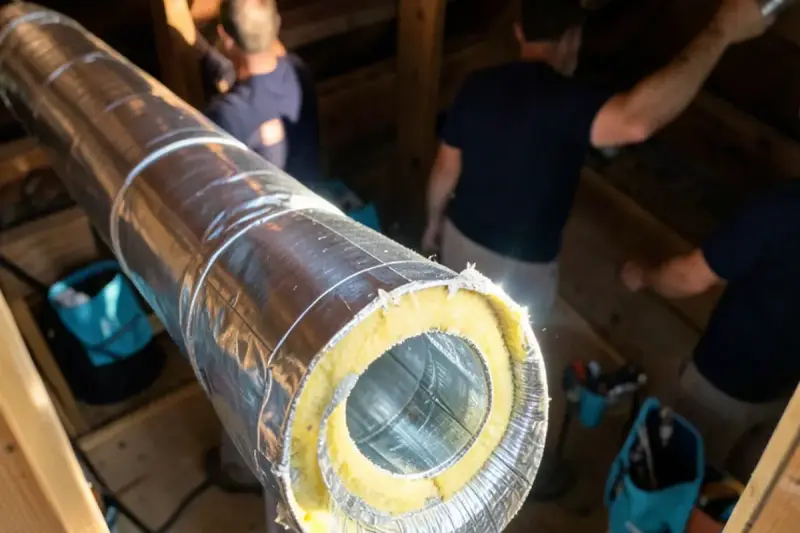
Seal, repair or replace?
Pick the smallest job that solves the problem. Here is how we think about it.
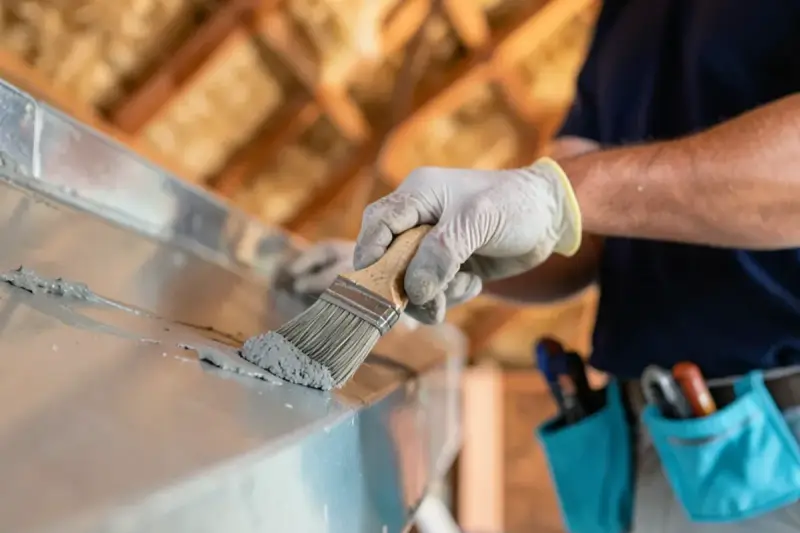
Duct sealing. This suits sound ducts with leaky joints. Mastic or metal tape goes on the seams, and ENERGY STAR warns that ordinary duct tape does not last.
Section repair. This suits a torn jacket, a crushed run or a collar that pulled loose. We replace that run and leave the rest alone.
Full replacement. This fits ducts that are wet, rodent-damaged throughout, badly undersized or near the end of their life. New ductwork also gives you the chance to shorten runs and fix the layout.
Resizing. If the rooms are starving for air, the duct design itself may be the fault. Manual D is the trade's method for sizing ducts from the airflow each room needs, and it is worth asking for before any full replacement. Pairing new ducts with AC replacement can make sense too, since a new system depends on the ducts it feeds.
Wet or moldy insulated duct is its own case. EPA says it cannot be effectively cleaned and should be removed and replaced. We do not offer mold remediation, so we replace the duct and point you to a specialist for anything beyond it.
“We called Cris and he came right over. He was knowledgeable about our unit and fixed it in a matter of minutes. His professionalism was top notch and we will be calling him for any AC issues moving forward. Highly recommended. I wish I could give more than 5 stars!”
“These guys are very reliable and trustworthy. Had issues with my AC not cooling and called Aero. They came out super quick and fixed my problem AND they were really affordable. I recommend them for all your HVAC needs!”
“Chris came out to check out my ac unit And found the problem in 5 min and fixed It now I'm back cool, price was affordable He's my guy from now on, Thanks Chris”
4.9 out of 5 from 16 Google reviews (checked October 2026). Read more reviews · Leave a review
Request a quote
Calling is the fastest way to reach us: (831) 461-3437. If you would rather write it down, send the details here.
What the job includes
Every duct job gets the same core items, scaled to its size.
- A walk of the trunks, branches, boots and returns you have, in the attic or crawl space
- Leak finding at the seams, collars and the filter cabinet
- Mastic or metal tape on joints, with no ordinary duct tape
- New runs, collars or boots where the old ones failed
- Insulation on ducts in unconditioned spaces, which DOE says is usually very cost effective alongside sealing
- Straps and supports so flex stays off the ground and away from sharp bends
- An airflow check at the registers when the work is done
DOE adds one point worth asking any contractor about. All duct sealing should be tested by a qualified professional for combustion safety and airflow, which matters most in a home with gas appliances, since tighter ducts can change the pressures around them.
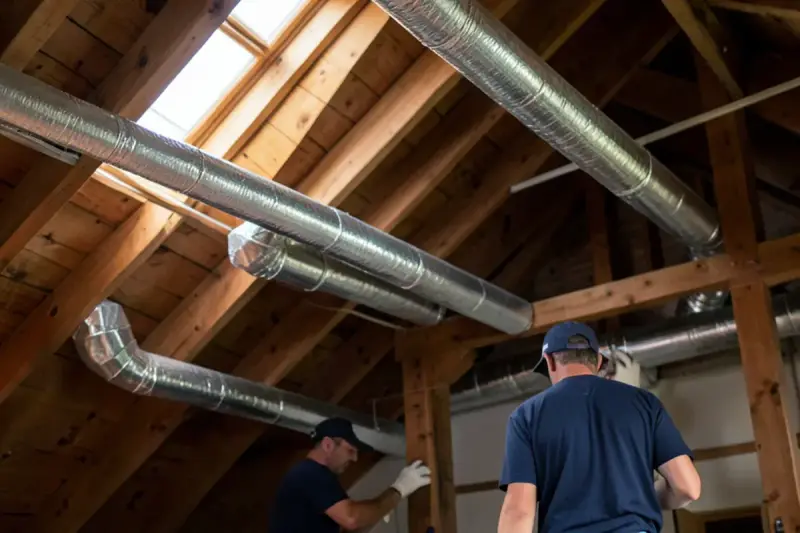
From first crawl to final airflow check
- Describe the problem. Tell us which rooms suffer and when it started.
- Inspect the ducts. We get into the attic or crawl space and take photos you can see.
- Lay out the options. You hear what to seal, repair or replace, and what can wait.
- Quote. You see the scope and the price before anything starts.
- Do the work. We protect the house, repair or rebuild and close up what we opened.
- Check the airflow. We run the system and read the registers we worked on.
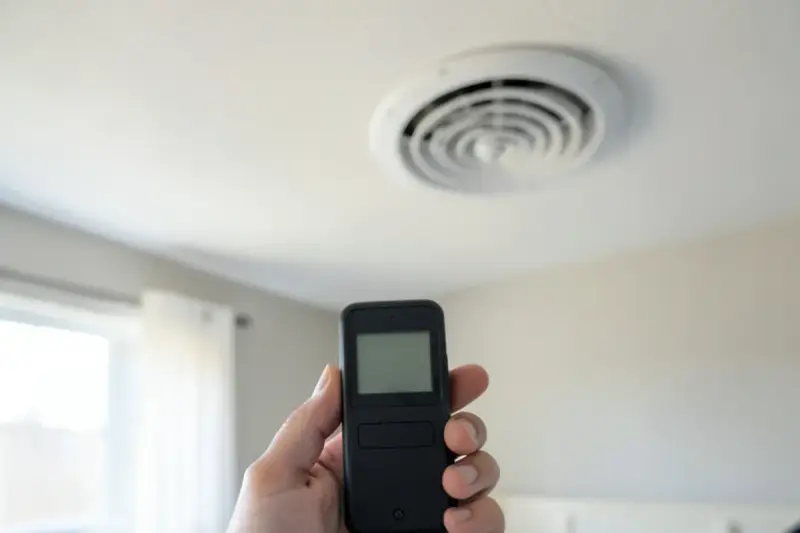
Flood rules, permits and a reported rebate
Three outside rules can shape a duct job here.
Flood zones. City of Charleston flood guidance says machinery and equipment in the Special Flood Hazard Area must be raised to the Design Flood Elevation, and it names HVAC units and ductwork. Moving a run may matter on a raised home in those zones. Other towns set their own rules, so check with yours.
Permits and licensing. Each town and county runs its own permits, so ask yours what applies to duct work. SC LLR oversees contractors, and you can check any contractor's license on the LLR lookup.
Rebates. Dominion Energy South Carolina's rebate list includes ductwork improvements in existing homes, reported at up to $300 by EnergyWise Shop and aggregators in 2026, a figure not read from Dominion's own page. The program is reported to require a licensed contractor, an invoice and an application within 90 days, and DIY work does not qualify. Confirm every detail on Dominion's rebate page before you count on it, including whether your contractor qualifies, and read our SC rebate guide for the wider picture.
What drives duct replacement cost?
Four things set the price.
- Scope. One torn run and a whole new system are very different jobs.
- Access. A tight crawl space or low attic slows everything down.
- Materials. Sheet metal trunks, flex and duct board each cost and install differently.
- Design changes. Adding a return or resizing a trunk adds labor and material.
We quote it line by line so you can see what each part costs. Ask whether any new materials carry a manufacturer's warranty, and read those terms. If a dirty system is the worry, read about air duct cleaning first, because EPA says it is only worth considering in specific cases. If moisture is still the problem after the repair, a whole home dehumidifier may be the next step.
Why call Aero Air Techs about your ducts?
You see what we saw, and you choose the scope.
- 4.9 on Google, the score across our 16 reviews in October 2026.
- Plain explanations. One customer wrote that the crew "clearly explained the necessary work."
- Careful work. Another said the visit "Paid attention to detail."
- A quote before work begins, so the scope and the number are on the table first.
We are based in Charleston and serve the surrounding areas, including North Charleston, James Island, Folly Beach and Summerville. Tell us where the ducts run and we will plan the visit from there.
Where the ducts run depends a lot on where the house sits.
- North Charleston: older frame cottages often hide runs in tight crawlspaces.
- James Island: post-war crawlspaces and tide-wet ground are hard on insulation.
- Folly Beach: ducts under a raised floor take the weather, and nothing may hang from breakaway walls.
- Summerville: old houses near the historic core may need duct routes planned around the structure.
- Mount Pleasant: an upstairs system with attic ducts takes the most roof heat.
- Johns Island: long, narrow attic runs in newer homes can hide crushed flex.
- Moncks Corner: older in-town ducts are often the first thing to check after a new system disappoints.
- Sullivan's Island: straps and hangers under raised cottages rust along with the unit.
Questions about this service
How do I know if my ducts are leaking?
Look for rooms that never catch up, summer bills that climb without a reason and dust around the returns. Then check any ducts you can see in the attic or crawl space for loose joints, torn jackets and tangled flex. ENERGY STAR lists those same signs. A measured leakage test gives you a firmer answer.
Can I seal my own ducts?
You can seal joints you can reach, using mastic or metal tape, as ENERGY STAR advises. Skip ordinary duct tape, since it does not last. In a gas-heated home, DOE says all duct sealing should be tested by a qualified professional for combustion safety and airflow, so have that part checked.
What is the duct replacement cost for a Charleston home?
It depends on how many runs need replacing, how much crawl space or attic room we have to work in and whether the sizing changes. A single run and a full system are very different jobs. We quote before work begins and break the price down so you can compare.
Is there a rebate for duct work?
Possibly. Dominion Energy South Carolina is reported to offer up to $300 toward ductwork improvements in existing homes, according to EnergyWise Shop and aggregators in 2026, which is not a figure read from Dominion's page. Confirm the amount, the rules and your eligibility on Dominion's page before you plan around it.
Do ducts need replacing after flood water gets under the house?
Often, yes. EPA says wet or moldy duct insulation cannot be effectively cleaned and should be removed and replaced, and that is the usual state of flex after storm water reaches it. Take photos for your insurer first, then have the runs checked before you start the system again.
Will sealing the ducts fix my humid house?
It can help, and it is a sensible first step. A leaky return draws unconditioned air from an attic or crawl space, which gives the AC more moisture to remove. Sealing will not fix an oversized system, though. If the house stays sticky, read about whole home dehumidifiers next.
Do you handle ductwork installation for additions?
Yes, ask us about it. An addition may tie into an existing trunk if the system has capacity to spare, or it may need its own zone or a ductless unit. We look at the size of the room, the route for the run and what the current system can carry before we quote.