Furnace Blowing Cold Air: Causes and Fixes
Most cold-air complaints trace back to a fan setting, a dirty filter or a burner shutting itself off. Here is how to tell which one you have.
- 4.9★ on Google (16 reviews)
- Open 24 hours, 7 days
- Clear, upfront quotes
By the Aero Air Techs team. Published October 30, 2026, updated October 31, 2026.
A furnace blowing cold air usually comes down to one of three things: the thermostat fan is set to On, the filter is clogged, or the burners are shutting off on a safety. Set the fan to Auto, change the filter and watch one full heat cycle.
If the air still runs cold, the remaining causes sit around the burners and gas controls, and those belong to a technician.
Also make sure you really have a furnace. Many Charleston area homes heat with a heat pump, and that air behaves differently. We cover that below.
Furnace blowing cold air? Four checks before you call
These take about ten minutes and need no tools.
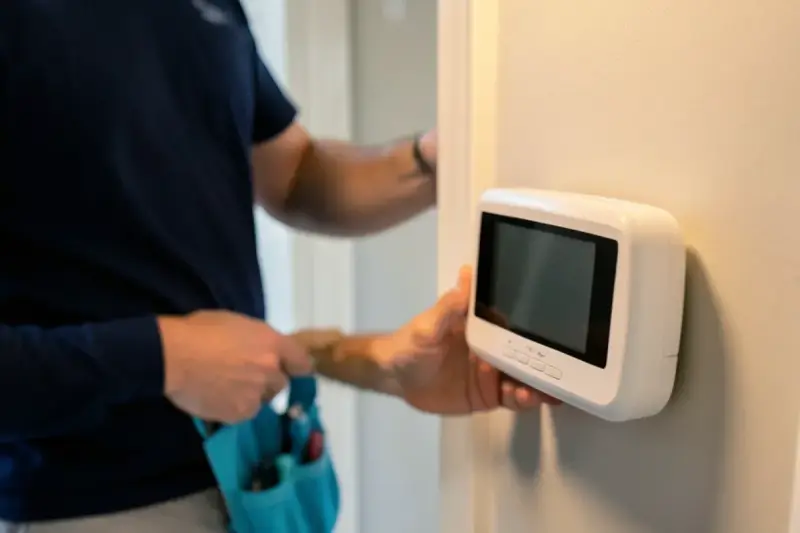
- Set the thermostat fan to Auto. On keeps the blower running between cycles, so you feel unheated air even when nothing is wrong.
- Wait out the first few minutes. Air sitting in the ducts cools between cycles, so a short cool burst at startup is normal.
- Replace the filter. A blocked filter overheats the furnace, and it can shut the burners off while the blower keeps going. ENERGY STAR advises inspecting filters once a month.
- Confirm power and fuel. Make sure the switch on or near the furnace is on and the door panel is fully seated. If your home runs on propane, read the tank gauge.
Which pattern matches your furnace?
Stand near the furnace for one heat cycle and listen. The timing tells you more than the temperature does.
| What you notice | Likely cause | Who fixes it |
|---|---|---|
| Blower runs nonstop, air never warms | Fan set to On | You |
| Warm for a few minutes, then cold, then it repeats | Overheating and a tripped limit switch, often from a dirty filter | You for the filter, a technician if it repeats |
| Burners light, then go out within seconds | Dirty or failing flame sensor | Technician |
| Clicking and repeated tries, no flame | Igniter or gas supply problem | Technician |
| Water near the furnace and a shutdown | Blocked condensate drain | Technician |
| Warm at some vents, cold at others | Loose, leaking or crushed duct | Technician |
What does each repair involve?
Limit switch trips
The limit switch shuts the burners off when the furnace runs too hot, and the blower keeps going to cool it down. That is the warm-then-cold pattern. The real fix is restoring airflow: a clean filter, open registers, a clean blower. If the trips continue after a new filter, a technician needs to find out why, because repeated overheating is hard on the heat exchanger.
Flame sensor
This thin metal rod proves to the control board that the burners have lit. Grime on the rod makes the board think there is no flame, so it closes the gas valve. On a service call, a technician cleans or replaces it and checks the wiring and ground around it.
Igniter and gas supply
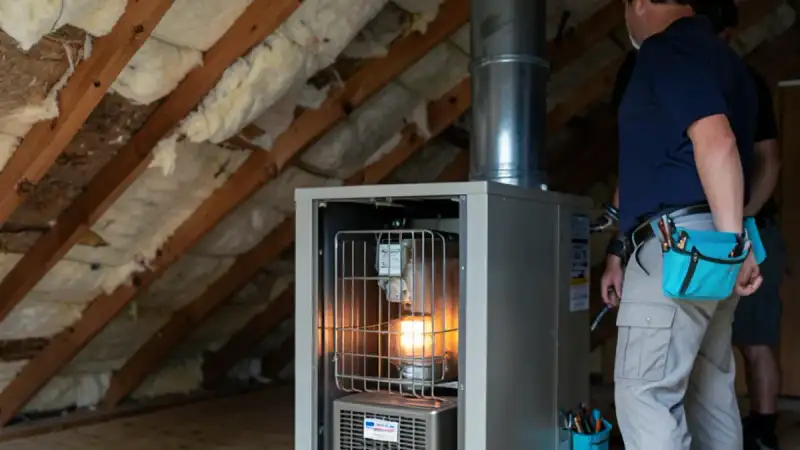
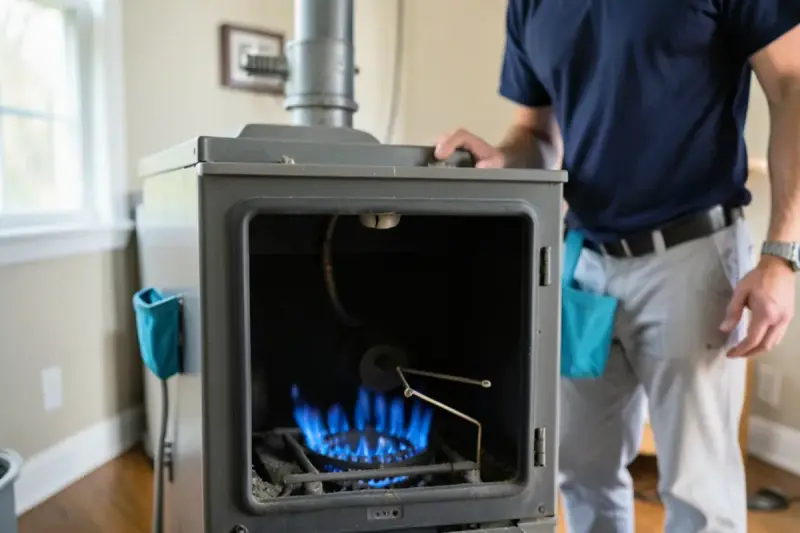
Most modern furnaces use a hot surface igniter that glows before the gas opens. It is brittle, and it wears out. If the igniter glows and nothing lights, the trouble may be the gas valve or the gas supply. Do not touch the gas parts yourself. Furnace repair at this level means testing, measuring and confirming safe operation before the panel goes back on.
Condensate drain
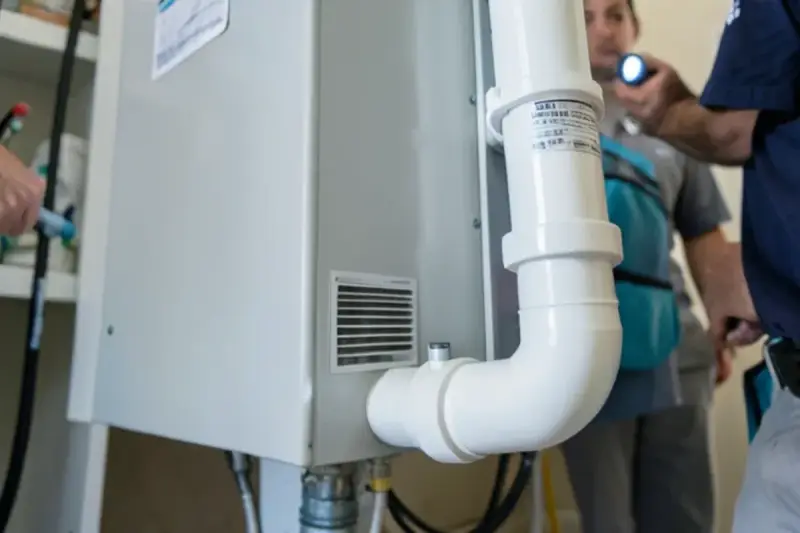
High-efficiency furnaces pull so much heat from the exhaust that water forms inside them. That water leaves through a small drain. When the drain clogs, a safety switch stops the furnace from heating.
Ductwork
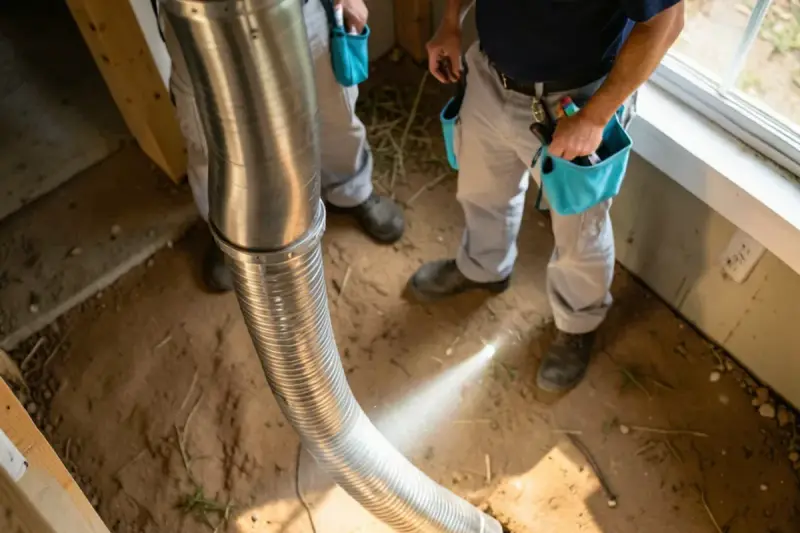
If the furnace is making heat but one end of the house stays cold, look at the ducts. A section that has pulled loose in a crawl space or attic can send warm air under the house and pull cold air into the return.
How do you read the blinking light on a furnace?
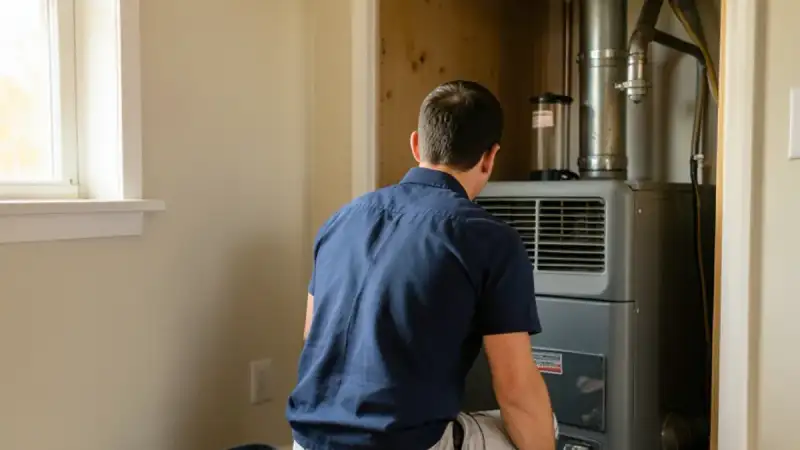
Most furnaces made in recent decades can tell you what stopped them. A small LED on the control board blinks a code, and a chart on the inside of the door explains it.
- Look through the sight glass first. Many doors have a small window, so you can read the light without removing a panel.
- Count the blinks before you touch anything. Cutting the power clears many stored codes, and that loses the most useful clue you have.
- Take a phone video. A 20-second clip captures the pattern and saves you from counting twice.
- Check it against the door chart. Codes vary by maker, so a chart from another brand will mislead you.
- Share the code when you call. It helps a technician decide which parts to bring.
How warm should the air actually be?
Warm air from a furnace should feel clearly hot at a nearby register. Every furnace label lists a temperature rise range, which is how much the unit should heat the air passing through it. A technician measures the air going in and the air coming out, then compares that number with the label.
A low rise can mean the burners are short of gas, or that a stage is not firing. A high rise usually means the furnace is short of air, which points back to the filter, the blower or the ducts. A cheap kitchen thermometer held at a register gives you a rough idea, though it cannot replace the measurement at the cabinet.
Ducts in a crawl space or attic can cool the air before it reaches you, so a far bedroom will always read lower than a nearby hall vent. Compare two registers before you worry about one.
When is cold air a reason to replace?
Rarely on its own. Most of these faults are small parts on a sound furnace. The harder conversation starts with a cracked heat exchanger, a failed blower motor on an older unit or repeated limit trips caused by ducts that were never big enough. Get the finding in writing and ask to see it, then compare the repair with a new system before you pay for anything.
Could it be a heat pump and not a furnace?
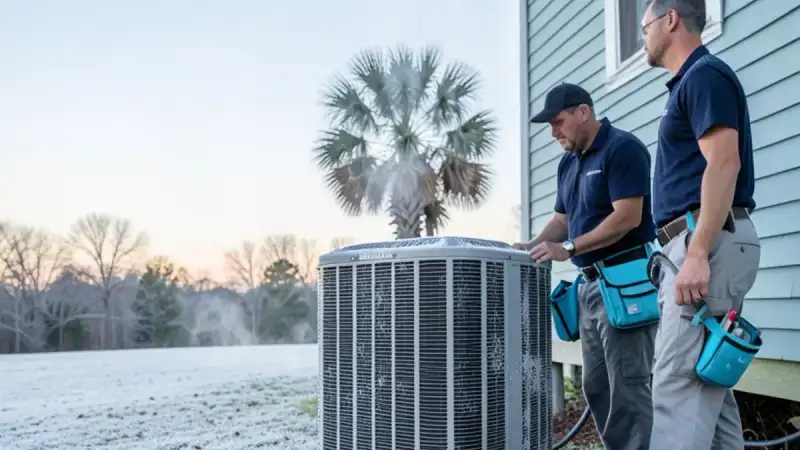
Go outside while the heat is on. If a large outdoor unit is running, you likely have a heat pump. Its air often feels cooler at the vent than furnace air does, even while it is heating the house normally. It also runs short defrost cycles on cold, damp mornings, when the vents can feel cool for several minutes.
If that sounds like your system, the fix list is different, and a heat pump repair visit is the right call.
Johns Island adds its own wrinkle, since the area has added many new homes alongside older rural ones. In a new home, construction dust can load a filter quickly in the first months, so check it sooner than you would expect. Also pull out your builder paperwork before you pay for a repair, and ask what the builder and the manufacturer warranties cover. In an older rural home, look at the crawl space ducts and, if you use propane, the fuel level.
Where does the homeowner part stop?
Stop at the filter door and the thermostat. Past that point, leave these alone:
- Burner compartment. Do not remove panels or try to light anything by hand on a modern furnace.
- Safety switches. Never bypass a limit switch, door switch or pressure switch to get heat back. They shut the furnace off for a reason.
- Repeat resets. One reset is a test. Cycling the power again and again can push an overheated furnace harder.
- Gas smell. Leave the house first. Our guide on smelling gas near a furnace gives the steps in order.
- Carbon monoxide alarm. CPSC says never to ignore one. Get outside and call 911.
ENERGY STAR lists gas connections, gas pressure, burner combustion and the heat exchanger as part of a contractor's check, because a dirty burner or a cracked heat exchanger affects safe operation. Those are not homeowner items.
Our phone advice for a furnace blowing cold
Before you call, jot down three things: what the air does in a full cycle, what any light on the furnace is blinking, and how old the system is. A phone picture of the blink chart inside the door helps too, since it shows a technician where to start.
Be wary of the quick reset that seems to fix everything. A furnace that restarts after a power cycle has often just cleared a fault, and the cause is still there. If it comes back within a day or two, have it looked at before the next cold front.
From our Charleston base we serve Johns Island and the surrounding areas, and we quote before work begins. If the furnace has given you trouble more than once, a fall furnace maintenance visit is a calmer way to deal with it than a call on the coldest night of the year.
Related questions
Why does my furnace blow cold air and then warm air?
A short burst of cool air at the start is usually normal. Air sitting in the ducts cools down between cycles, and many furnaces start the blower soon after the burners light. If the air stays cold for more than a few minutes, or turns warm and then cold again, that points to a real fault.
Can I clean the flame sensor myself?
We advise leaving it to a technician. The sensor sits beside the burners, so the job means cutting power and gas and opening the burner compartment. A cleaned sensor can also hide a wiring or ground problem. If the burners light and drop out within seconds, note how often it happens and call.
Is a furnace blowing cold air dangerous?
Usually it is a comfort problem and not a safety one, and the furnace has shut itself off as designed. It becomes a safety issue if you smell gas or a carbon monoxide alarm sounds. In either case get outside, then call your gas utility or 911 from there before you call anyone about the furnace.