Elevated Homes and Flood Zones: Protecting Your HVAC
Find your flood zone, find out who sets the rule for your address, then set the equipment at the height that rule requires.
- 4.9★ on Google (16 reviews)
- Open 24 hours, 7 days
- Clear, upfront quotes
By the Aero Air Techs team. Published October 30, 2026, updated October 31, 2026.
For HVAC in a Charleston flood zone, start with the map and the rule, not the equipment. Look up your FEMA flood zone, find out which office governs your address, and set the outdoor unit and ductwork at the height that office requires.
Do this before you order a new system. The height changes the stand, the line set, the wiring and the quote. It also matters whether the house sits on piers near the marsh or on a slab on a low lot miles inland. Water finds both.
Which HVAC flood zone rules apply around Charleston?
It depends on where the property sits. These are the rules as each authority states them. They change, so confirm yours before you rely on this table.
| Where the address is | The rule | Whose rule |
|---|---|---|
| Charleston County, flood zones A, AE, AH, AO and A99 | Replacement HVAC must sit at or above the existing finished floor or the design flood elevation, whichever is lower | Charleston County |
| Same zones, on a Substantial Improvement | Two feet above base flood elevation | Charleston County |
| City of Charleston, Special Flood Hazard Area | Machinery and equipment, HVAC units and ductwork included, must be elevated to the Design Flood Elevation | City of Charleston |
| City of Charleston, Coastal A Zones | The City says it has enforced Coastal A Zone requirements since January 1, 2023 | City of Charleston |
| Incorporated towns | Each sets its own rule | Your town's building or floodplain office |
Two terms come up often. Base flood elevation is the height FEMA maps for a major flood. Design flood elevation is the height your local rule requires, which can be higher. Substantial Improvement is a floodplain term for work that is large compared with the building's value. Ask the floodplain office how it applies to your project.
What about inland homes in Ladson?
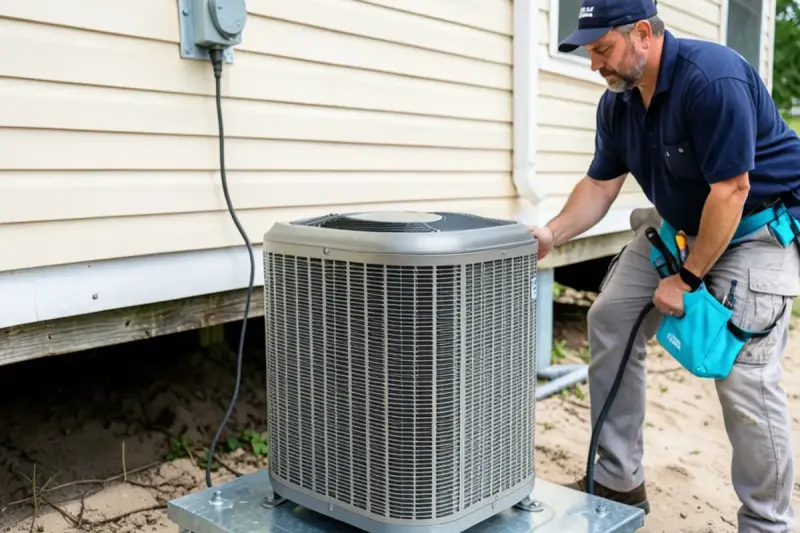
Do not assume either way. Ladson is well inland, so the first questions there are about rain, low spots and creeks, not waves.
Wikipedia describes Ladson as a census-designated place spread across Berkeley, Charleston and Dorchester counties, and it lists an elevation of 39 feet. That is one number for a whole community. It tells you nothing about your lot. On the Dorchester side, the county's flood information names the Ashley River, Coosaw Creek, Eagle Creek and Dorchester Creek as waterways that can overflow during high tides and heavy rain. Whether any of them matters to your address is a question for the map.
We have not mapped Ladson street by street, and we will not tell you a neighborhood is safe or risky by name. Here is how to find out for yourself:
- Enter your address on FEMA's Flood Map Service Center.
- Confirm which county your parcel is in, and whether it falls inside any city limit. That decides whose rule applies.
- Call that floodplain office if the map puts any part of the lot in a mapped flood zone.
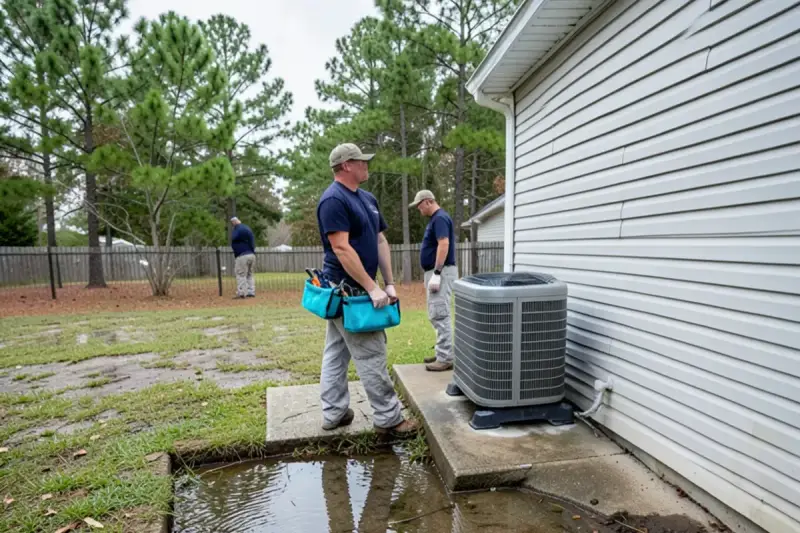
- Walk the lot after a heavy rain and note where water stands, even if the map shows low risk.
Where should equipment sit on a raised home?
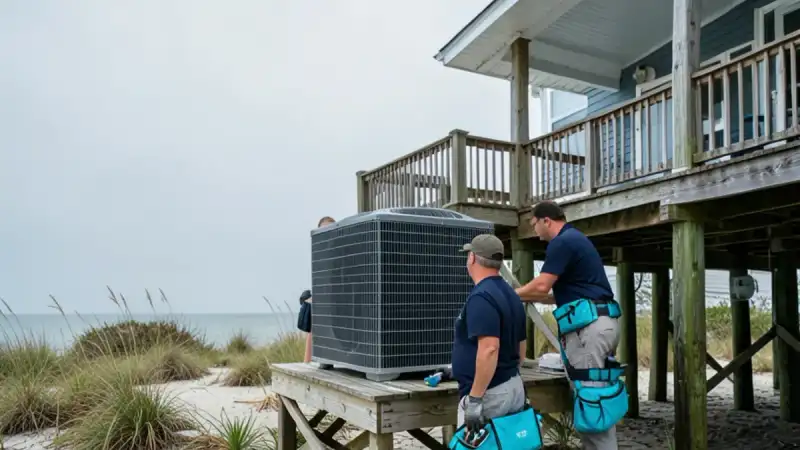
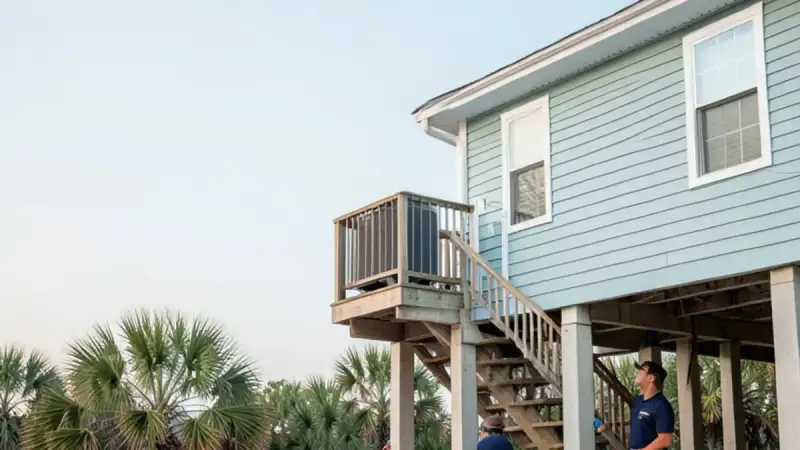
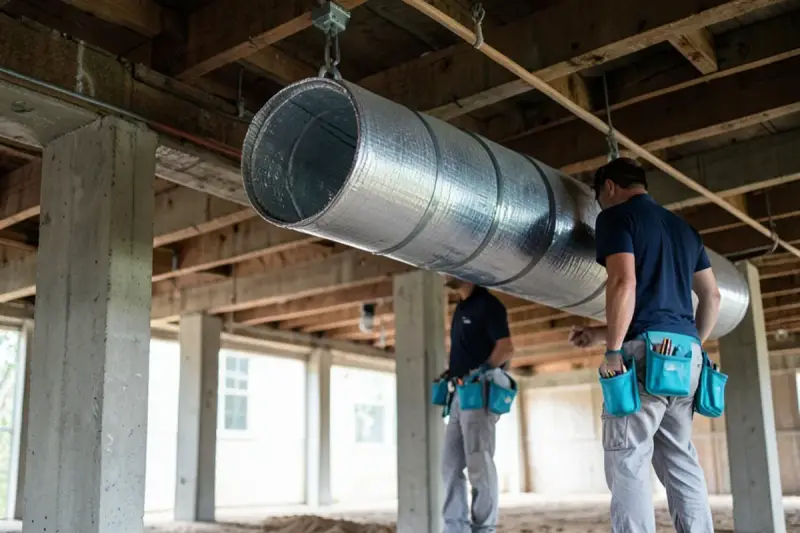
Put everything that holds electricity or refrigerant above the flood height, and anchor it. A raised house gives you the height. The mistake is leaving the mechanical parts at ground level under it.
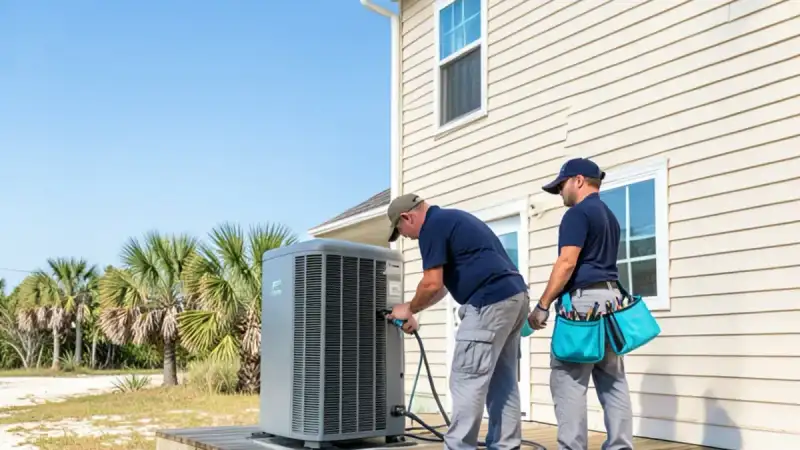
FEMA's 2020 flood brochure says to raise and anchor condensers and heat pumps on pedestals or platforms at least 1 foot above the potential flood elevation. For identified high-risk zones, it says to go to or above the regulatory elevation your community has adopted. Treat that as general guidance. Your local rule still controls.
Check each of these on a raised home:
- Outdoor unit. Sits on a platform or stand built for the weight and the wind. FEMA's retrofitting guide warns that pedestals can be more vulnerable to wind.
- Anchoring. The unit is fastened to the stand, and the stand is fastened to the structure or footing.
- Air handler. Above the flood height, with a safe drain route.
- Ductwork. The City of Charleston's guidance names ductwork, so under-floor runs deserve a hard look.
- Electrical. Disconnect and wiring are above the flood height. FEMA says to check with the utility for limits before raising service equipment.
- Access. A technician needs a safe way to reach the unit for service.
Does replacing your AC trigger the flood rule?
It can, and that surprises people. Charleston County's rule is written for replacement HVAC, so swapping a unit in a mapped zone is exactly when the height question comes up. An old pad at ground level does not settle it.
Ask these before you sign for an AC replacement:
- What height does the governing office require at this address?
- Does the quote include the stand, anchoring, longer line set and any electrical work?
- How is the permit handled, and who schedules the inspection?
- Is the new equipment still serviceable at that height?
If you have an Elevation Certificate, bring it. It is a surveyor's form with the building's key heights, and it can save a lot of guessing.
What do the flood zone letters on your map mean?
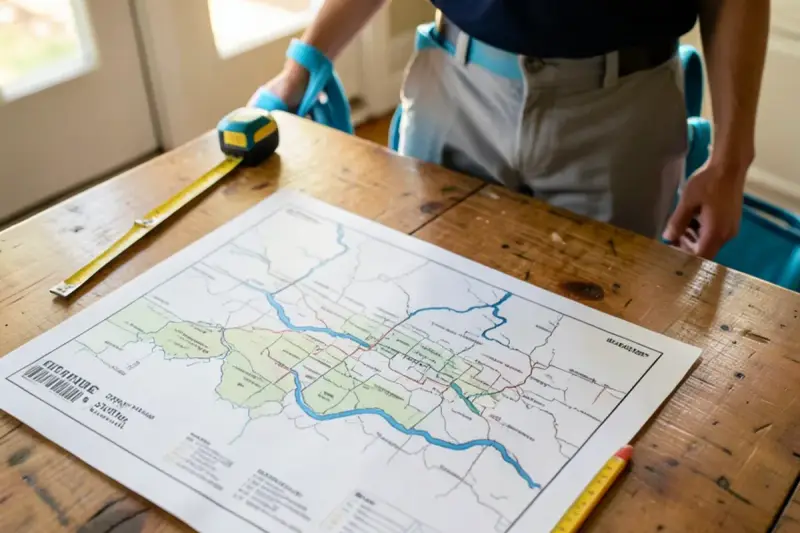
FEMA's letters tell you the kind of flood risk, so learn the ones you are likely to see around Charleston.
| Zone | What it means | What it means for your equipment |
|---|---|---|
| A, AE | High-risk area, and AE has a published base flood elevation | Expect a required height for HVAC |
| AH, AO | Shallow flooding or sheet flow | Check the depth or height on the map panel |
| VE | Coastal high hazard with wave action | Breakaway walls cannot carry equipment |
| X | Moderate or minimal risk | No federal requirement, but rain can still reach a low unit |
Zone X is not a promise. Much of the street flooding people remember comes from rain and tide that fall outside a mapped zone, so walk the lot as well as reading the map.
What is the Substantial Improvement test?
It is the rule that can turn a small job into a big one. Under the National Flood Insurance Program's standard, work costing 50 percent or more of a building's market value counts as Substantial Improvement or Substantial Damage, and the whole structure then has to meet current flood rules. Local offices apply the test, and some count permit values over several years. Folly Beach, for one, says the past ten years of permit values count.
An HVAC swap alone rarely reaches that line. A replacement folded into a remodel or storm rebuild can, so tell your contractor about any other work planned at the same time.
Keep the receipts and permit records for every project on the house, because a floodplain office may ask for them when the numbers get close. A clean file can settle the question quickly, and a missing one can slow down the job while the office rebuilds the history from its own records.
What changes when a unit goes higher?
Raising a condenser changes more than the stand. These are the items that get missed on a quote.
- Line set length. Longer lines may need a change in charge, so check the manufacturer's limits.
- Oil return. A tall vertical rise can need traps or a specific piping layout under the installation instructions.
- Disconnect and whip. The electrical must follow the unit up, within reach of the technician.
- Condensate. Indoor drain routes may change if the air handler moves.
- Service access. A stand with no safe platform can make every later visit slower and more costly.
What we ask before setting a unit on a low lot
We want four things: your flood zone, any elevation paperwork, where the water came to last time and photos of the current setup. That tells us more than a street address.
Raising a unit on a hunch is better than nothing, but it can miss the rule by a foot and leave you paying twice. So get the required number from the floodplain office first. We quote before work begins, and the quote should show the stand and the extras line by line.
If water has already reached your equipment, do not start it up. Our hurricane prep guide explains what to do after a flood, and our note on what home insurance covers explains why flood is usually a separate policy. Aero Air Techs is based in Charleston and serves Ladson and the surrounding areas. Call with your address and we will talk through the next step.
Related questions
Does Zone X mean my AC is safe from flooding?
No. It means the mapped risk is lower, so the strict rules may not apply. Rain does not read maps, and a low Ladson yard can still hold water around a pad. Check where water stood in the last heavy storm. If it came near the unit, raise the equipment even if no rule requires it.
Who decides how high my outdoor unit has to sit?
The floodplain office for your jurisdiction does. That is the county for unincorporated land and the town or city inside its limits. Ask them for your design flood elevation and how it applies to replacement equipment. Have that answer in hand before you accept any quote, because it can change the stand, wiring and line set.
Can a condenser go on a deck or a roof on a raised home?
Sometimes, if the structure can carry it, airflow stays open and a technician can reach it safely. Vibration and noise near bedrooms are the usual downsides. FEMA also says pedestals can be more exposed to wind, so anchoring matters at any height. Ask your local building office before you plan it.
Sources
- Charleston County, Building Inspection Services, flood plain page
- City of Charleston, Building Construction in Flood Zones
- FEMA, Flood Map Service Center
- FEMA, Protect Your Home from Flooding brochure, 2020
- FEMA, Homeowner's Guide to Retrofitting, Chapter 8
- Dorchester County, flood protection information
- Wikipedia, Ladson, South Carolina