
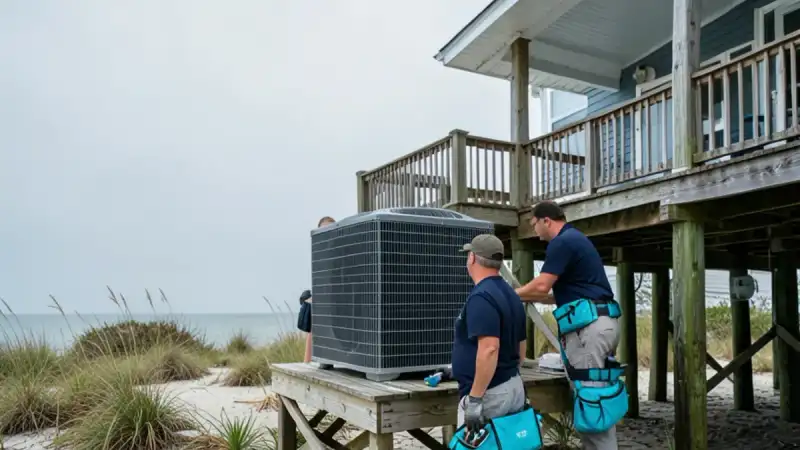
Does Home Insurance Cover a Broken HVAC System?
Usually only when a sudden covered event caused the damage, not when the system simply wore out. This is general information, not insurance advice, so read your own policy.
- 4.9★ on Google (16 reviews)
- Open 24 hours, 7 days
- Clear, upfront quotes
By the Aero Air Techs team. Published October 30, 2026, updated October 31, 2026.
Does home insurance cover HVAC? Usually only when a sudden, covered event damaged the system, such as lightning, fire or wind. A unit that wears out, burns up a compressor or simply stops after years of use is generally a maintenance cost, not a claim.
This is general information and not insurance advice. Policies differ, so read your own and ask your agent.
Does home insurance cover HVAC when it just breaks?
Generally no. Insurance is built for sudden events, and a breakdown is not one. The sample ISO HO-3 homeowners form published by the Insurance Information Institute excludes wear and tear, deterioration, mechanical breakdown and rust or other corrosion. Neglect is excluded too. Your policy may use different wording, but that form is the common starting point.
Here is how those rules tend to play out for heating and cooling equipment. Your insurer decides the real answer from your policy and the facts of the loss.
| What happened | How standard policies usually treat it | What to check in your policy |
|---|---|---|
| Compressor fails from age | Not covered, wear and mechanical breakdown | Any equipment breakdown endorsement |
| Lightning strike | Commonly covered, lightning is a listed peril | Your deductible and how the unit is valued |
| Tree or wind damages the condenser | Commonly covered, wind and hail are listed perils | Wind or hurricane deductible, or a wind exclusion |
| Flood or storm surge | Not covered by a standard policy | Whether you hold separate flood coverage |
| Salt corrosion over years | Usually excluded as corrosion | The exclusions section |
| Theft of a condenser or its copper | Theft is often covered | Limits and any vacancy rules |
| Power surge on the grid | Depends on the policy | Ask your agent how surge damage is handled |
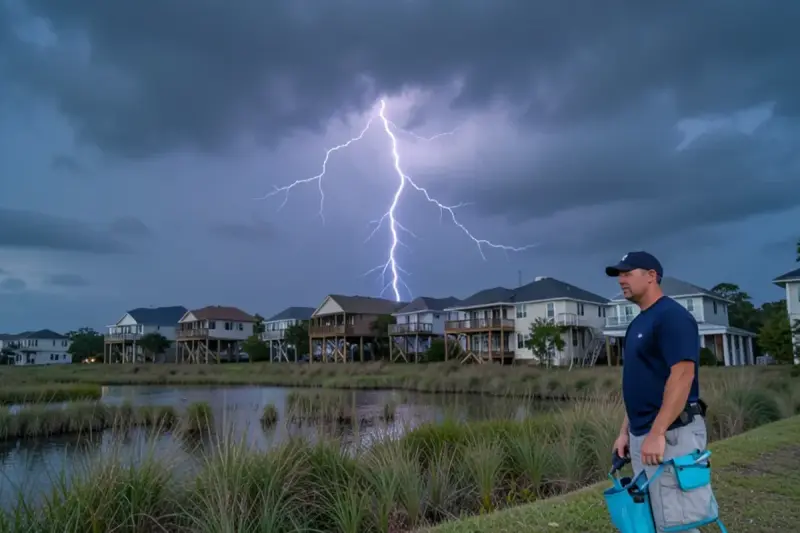
How does a breakdown get covered at all?
Two products sit outside the basic policy, and neither is automatic.
- Equipment breakdown endorsement. Some insurers sell this add-on. Progressive describes it as covering repair or replacement of systems such as heating and air conditioning equipment after certain breakdowns, while still leaving out normal wear and tear and poor maintenance. Availability varies by carrier.
- Home warranty. This is a service contract, not insurance. It may cover breakdowns from normal use, within its own terms, limits and service fees. Read what it excludes and whether it lets you pick your contractor.
Which storm damage is usually covered on the coast?
Wind and hail are normally listed perils, but coastal policies carry details that inland ones do not. Check these three before hurricane season, which runs June 1 to November 30 according to NOAA.
- Your deductible. The SC Department of Insurance explains that a deductible can be a flat dollar amount or a percentage of your insured value. Its example shows a 2% deductible on a home insured for $250,000 coming to $5,000, and that same policy math applies to any claim for a damaged condenser.
- Whether wind is on your policy. Some coastal homes carry wind and hail through a separate policy. The SC Wind and Hail Underwriting Association exists to provide that coverage in coastal areas, and it covers only those perils.
- How the unit is valued. The department's guide separates actual cash value, which subtracts depreciation, from replacement cost, which does not. On a 12-year-old system, that difference can be most of the check.
Why is flood a separate policy?
Because the standard homeowners policy leaves it out. The SC Department of Insurance's 2025 preparedness guide says the policy does not include flood damage, including storm surge, and that you need a separate flood policy. It points homeowners to the FEMA National Flood Insurance Program, or NFIP, and to private carriers. It also notes a 30-day waiting period before NFIP coverage takes effect, so buying one as a storm approaches will not help.
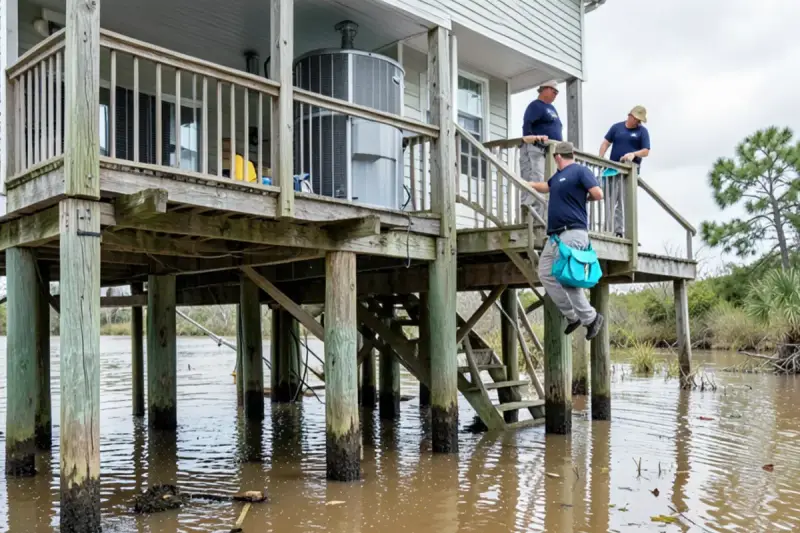
This matters in Folly Beach, where elevated houses keep their equipment on stands or platforms. FEMA's Dwelling Form lists central air conditioners, furnaces and heat pumps among building items, including in the limited coverage for areas below the lowest elevated floor of an elevated building, if they are installed in their working location. That form is dated 2015, so read your current policy.
Where the unit sits affects more than insurance. Charleston County's rule for replacement HVAC in flood zones is on its floodplain page, and incorporated towns set their own rules, so check with the City of Folly Beach before a replacement goes back on the same stand.
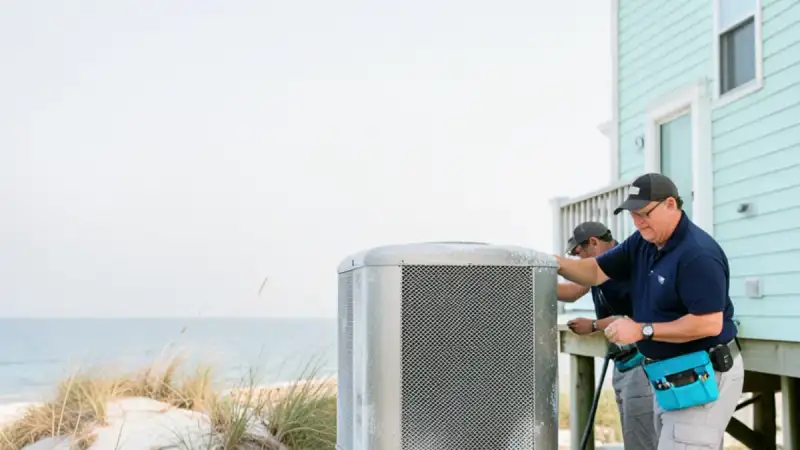
Is salt damage on a Folly Beach unit covered?
Expect no. Salt film eats coil fins and cabinet steel slowly, and the sample HO-3 form excludes rust or other corrosion. A storm may leave a unit soaked in salt water, but then the question becomes flood, not corrosion, and it goes to your flood policy.
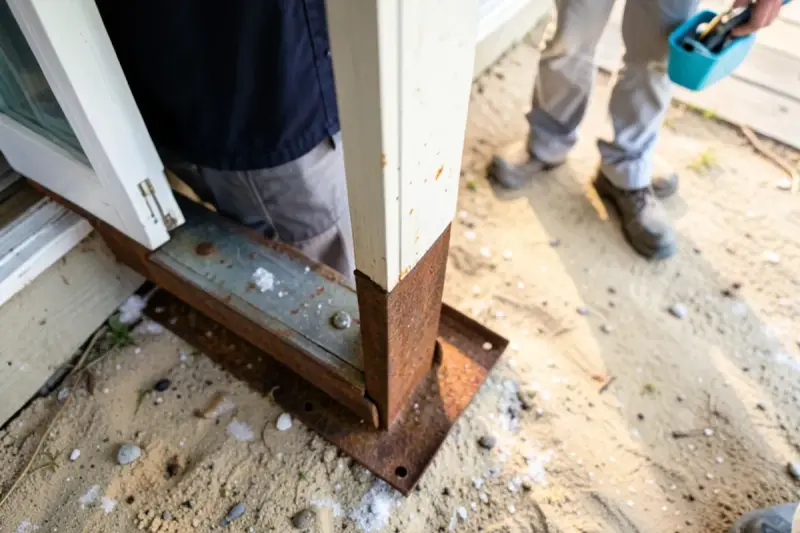
The part you can control is the rate of decay. Our coastal corrosion AC repair page covers what salt does to a system near the water, and a regular coil rinse is cheap compared with a new condenser.
What should you do right after the damage?
The department's claims guide gives a simple order. Stay safe first, then document, then protect the property.
- Shut the system off if it is wet, dented or has been underwater. Do not restart a flooded unit. Have it inspected first.
- Take photos and video of the damage before you clean up.
- Call your agent or company and ask about deductibles and next steps.
- Prevent further damage with essential temporary repairs, and keep every receipt, as the department advises.
- Get a written quote that names the failed parts and the cause you can show.
- Keep the damaged parts until the adjuster says you can discard them.
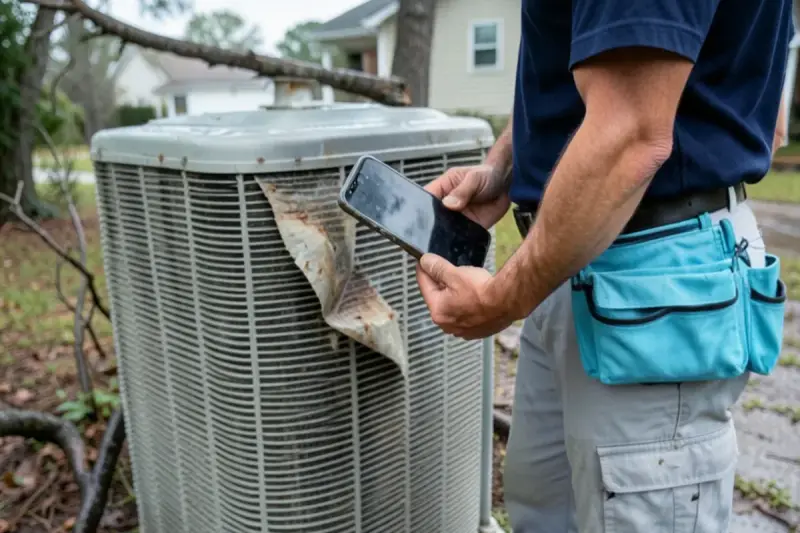
What should a technician's report show an adjuster?
Facts, in plain words. An adjuster usually wants to know what failed, what the technician saw and what it will take to put right. A good report covers these items, and none of them needs to argue your case.
- The equipment. Make, model, serial number and approximate age, read from the data plate.
- The condition found. A dented cabinet, a tree limb on the fan guard, a water line on the unit or a burned control board.
- The test results. Which parts were tested and what the readings showed.
- The repair or replacement scope. Parts, labor and any added work such as a stand, a disconnect or a new line set.
- Photos. Close views of the damage, plus a wide view that shows where the unit sits.
Age comes up more often than people expect. On an actual cash value policy, a 15-year-old unit is worth far less than a new one, even when the loss is clearly covered. Ask your agent how the settlement would be worked out before you agree to a replacement, and get the answer in writing.
What can you gather before storm season?
Claims go better when the paperwork exists before the storm. Take 15 minutes in May and put these in one folder, kept somewhere you can reach from your phone.
- Photos of the condenser, the air handler and both data plates
- The install date and the most recent service invoices
- Your policy, any wind and hail policy and any flood policy
- Your deductible amounts, including any percentage wind or hurricane deductible
Dated service invoices do a second job. They help show a loss was sudden, and not the result of long neglect that a policy can exclude, so keep them with the folder and add each new one as it comes.
What we say to customers holding a claim form
We fix equipment. We do not decide claims and we cannot tell you what your policy pays. That call belongs to your insurer, and the SC Department of Insurance can answer general questions if you get stuck.
What we can do is look at the system, tell you what failed and what we saw, and give you a clear, upfront quote before work begins. Do not ask anyone to reword a repair to fit a claim, and be wary of anyone who offers to. If the damage looks like plain wear, it is better to hear that from a contractor before you file.
We are based in Charleston and work in Folly Beach and the surrounding areas. Start with our air conditioning service page for the work we do, or our AC repair page if the system is down today.
Related questions
Will insurance pay for a new AC because mine is old?
Generally no. The sample ISO HO-3 form excludes wear and tear and mechanical breakdown, so age alone is not a covered cause. If a covered event damaged an older unit, read how your policy values it, because actual cash value deducts for depreciation. Your own policy and agent have the final word.
Does flood insurance cover my condenser on Folly Beach?
It may, under the right policy. FEMA's Standard Flood Insurance Policy dwelling form lists central air conditioners, furnaces and heat pumps as building property, with limits below the lowest elevated floor of an elevated building. Coverage depends on your form and how the unit is installed, so ask your flood agent.
Should I file a claim for a small HVAC repair?
Compare the quote to your deductible first. If the repair costs less than the deductible, a claim pays nothing. Coastal policies may also carry a separate percentage deductible for hurricanes or wind. Ask your agent how a claim could affect you before filing, since we cannot advise on that.
Sources
- Insurance Services Office, sample HO-3 policy form, via Insurance Information Institute
- SC Department of Insurance, 2025 preparedness guide
- SC Department of Insurance, post-disaster claims guide
- FEMA, NFIP Standard Flood Insurance Policy, Dwelling Form
- South Carolina Wind and Hail Underwriting Association
- Charleston County, flood plain management
- NOAA, tropical cyclone climatology
- Progressive, does home insurance cover HVAC
- Progressive, equipment breakdown coverage
Services this guide relates to
Air Conditioning
Repair, replacement, tune-ups and ductless cooling for Charleston homes and small businesses.
Coastal Corrosion AC Repair
Salt-damaged coils, cabinets and contacts inspected, repaired or ruled out.
AC Repair
Warm air, leaks, odd noises and short cycling, diagnosed and explained before work starts.