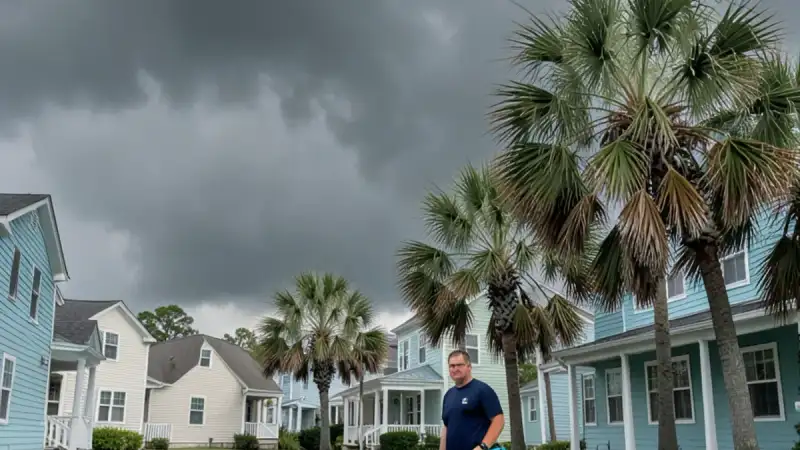
Hurricane Prep for Your AC Unit in South Carolina
Anchor the unit, shut it off at the breaker, leave it uncovered and keep it off after any flood until it has been inspected.
- 4.9★ on Google (16 reviews)
- Open 24 hours, 7 days
- Clear, upfront quotes
By the Aero Air Techs team. Published October 30, 2026, updated October 31, 2026.
Hurricane AC prep in South Carolina comes down to four jobs: anchor the outdoor unit, shut it off at the breaker before the storm arrives, leave it uncovered, and do not restart it after a flood until it has been inspected.
NOAA says the Atlantic hurricane season runs June 1 to November 30, so this belongs on your calendar before the first storm has a name.
None of it takes long, and most of it costs little. The expensive mistake usually comes afterward, when someone flips a wet system back on because the house is hot.
Your South Carolina hurricane AC prep timeline
Work down this list. The earlier items do the most good, and they are the ones nobody can do once a storm is close.
| When | What to do | Why it matters |
|---|---|---|
| Before the season | Trim branches over the unit and the roof | Trane warns that high wind can drop them on the condenser |
| Before the season | Check the mounting and the tie-downs | A loose unit can shift and stretch its lines |
| Before the season | Ask about a surge protector made for HVAC | Trane says to have one installed by an HVAC professional |
| Before the season | Review your flood coverage | Trane notes flood insurance is separate, and a policy must be in place 30 days before damage |
| A few days out | Clear loose items from the yard | Chairs and planters become debris |
| A few days out | Take dated photos of the unit | These help with any claim later |
| Day of the storm | Lower the thermostat, close the blinds | Trane suggests pre-cooling before the power may fail |
| Before the wind arrives | Thermostat off, breakers off | Protects against surges and debris |
| After the storm | Inspect before you restart | Running a damaged unit can make it worse |
How do you shut the AC off safely?
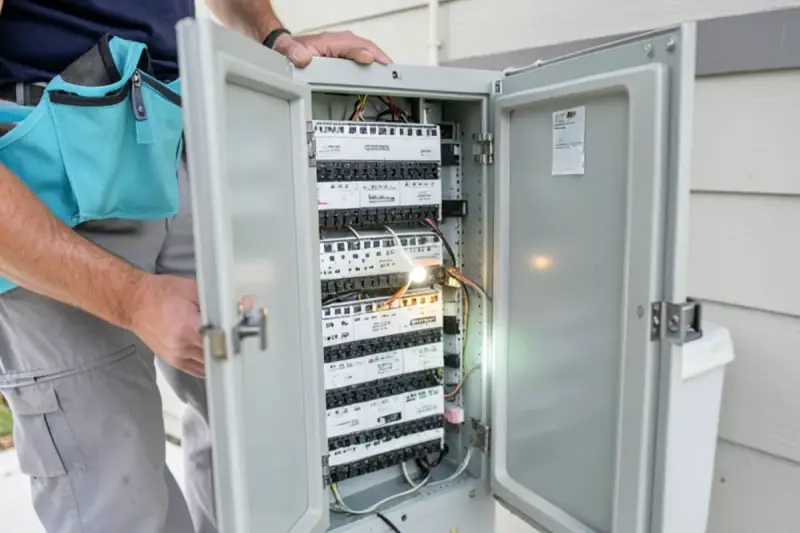
Use the thermostat first, then the breaker. Trane says to cut power at both, right before or during the storm. Rheem says to cut the energy supply at the circuit breaker as soon as a natural disaster is expected. Their reasons are power surges, plus the chance that debris jams the outdoor fan and burns out the motor.
- Set the thermostat to Off.
- Turn off the breaker for the outdoor unit.
- Turn off the breaker for the air handler or furnace. Many homes have two.
- Leave them off until the storm has passed and you have checked the equipment.
Do this before the wind picks up. Do not go outside to reach a disconnect in a storm, and never touch a panel or a switch while you are standing in water or the floor is wet.
Should you cover the outdoor unit?
No. Do not cover a unit that may run. The condenser needs open airflow on all sides to shed heat, and a cover on a running unit can overheat it fast. If the breaker goes back on with a cover still in place, the unit can overheat.
Wind is the other problem. A tarp in hurricane wind pulls loose, tears and turns into one more piece of debris. Spend the time on straps and a clear yard.
How do you secure a condenser against wind?
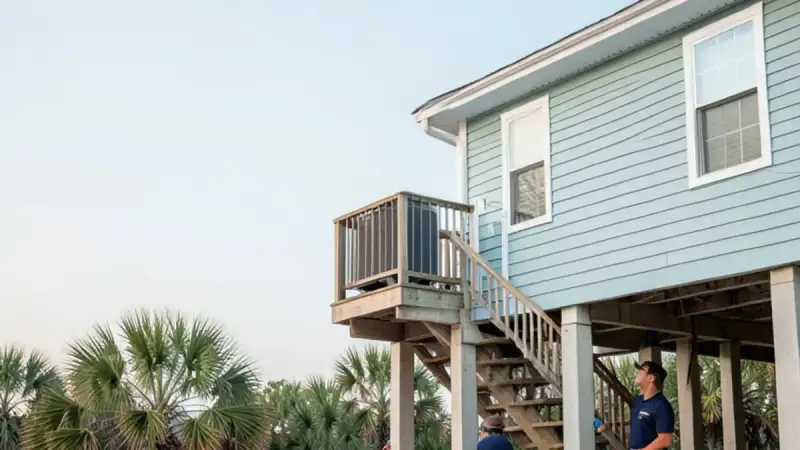
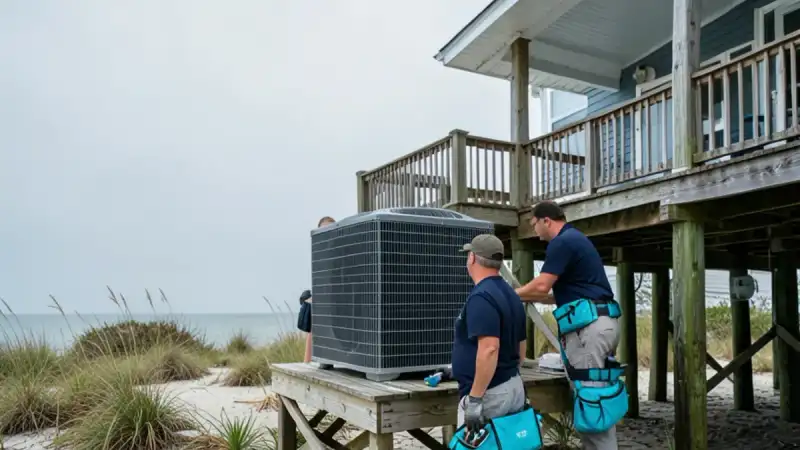
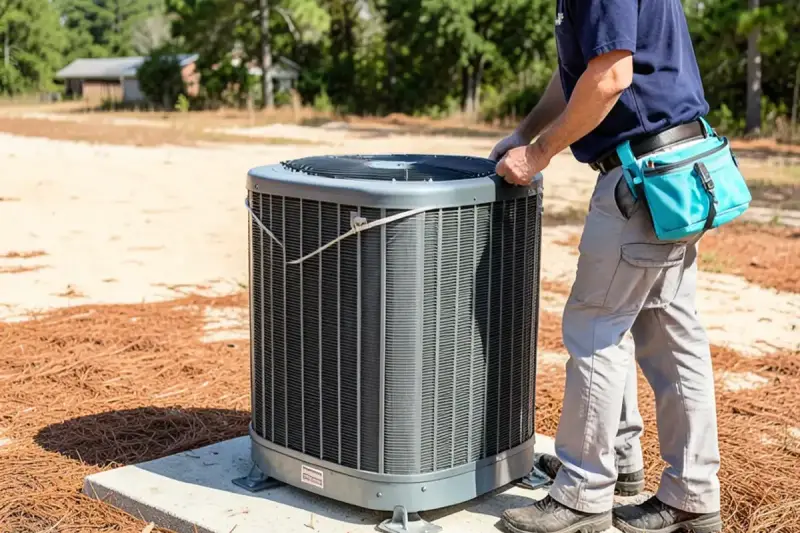
Anchor it to something that will not move. Rheem suggests hurricane straps, which tie the unit to its platform or base. Trane recommends straps on elevated units in particular, and says people in flood-prone areas should consider having a professional raise the unit.
Check these on a calm day:
- Is the unit bolted or strapped to its pad or stand?
- Is the pad or stand itself solid, with no tilt or washed-out soil?
- Are the panels and screws tight?
- Are the line set and wiring secured so that they cannot whip around?
Local requirements vary, so ask your building office what applies at your address. If your home is raised or low-lying, our guide on HVAC in flood zones covers the height rules.
What should you check after the storm?
Look before you touch anything. Trane says to check for damage before you turn the air back on, because storm winds can loosen connections and cause refrigerant leaks.
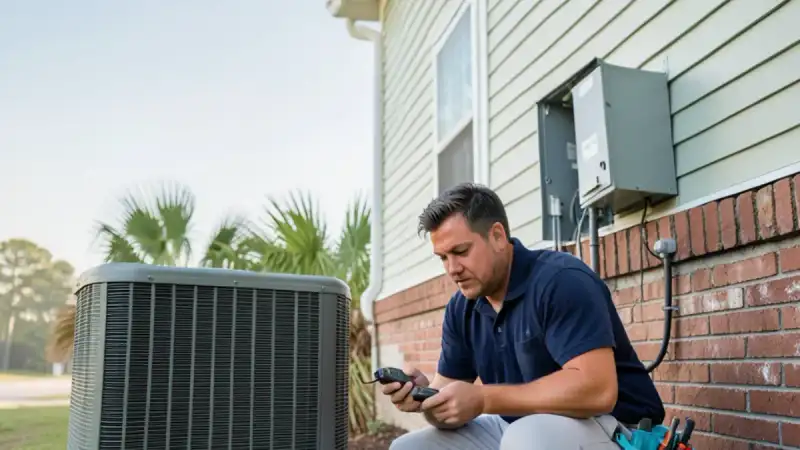
Walk around the unit in daylight, with the power still off:
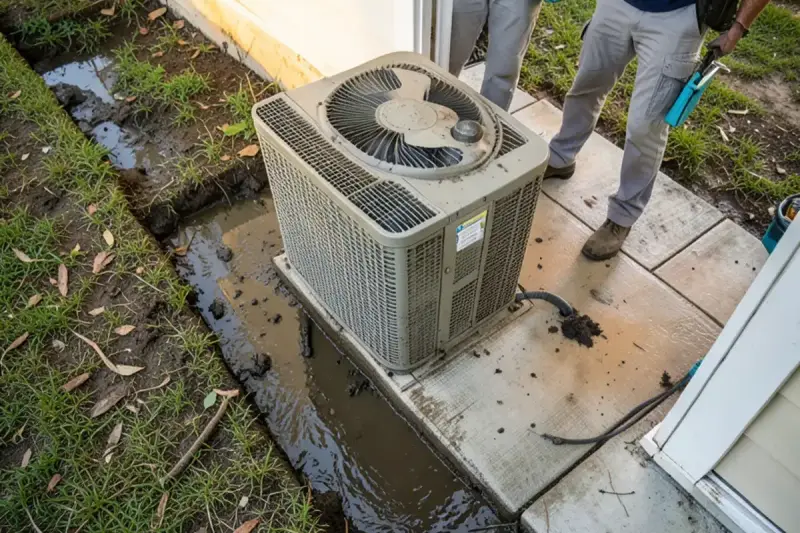
- Water. Is there a mud line on the cabinet, or silt on the pad? If so, stop here.
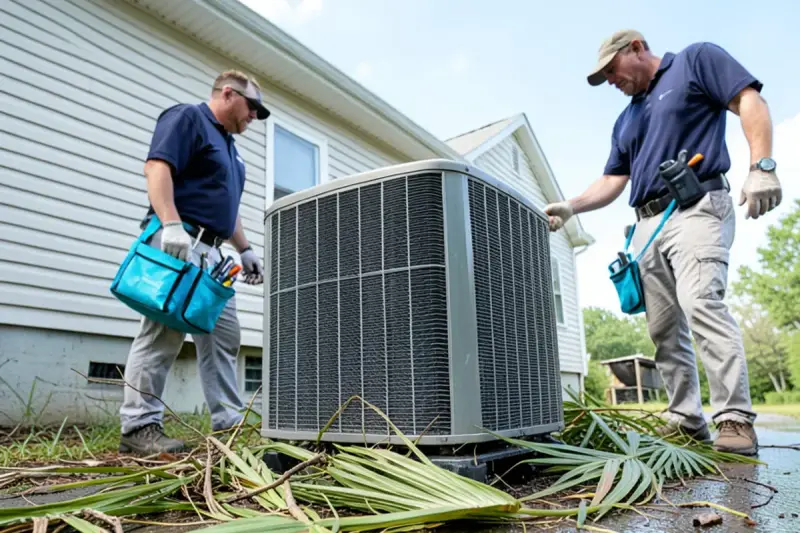
- Debris. Clear branches and fronds by hand from around the unit.
- Position. Has the unit moved, tilted or pulled at its lines?
- Cabinet and fins. Look for dents, bent fins or a torn panel.
- Indoors. Check the air handler or furnace for any sign of water.
If everything looks right, turn the breakers on, then the thermostat, and listen. Shut it down if you hear grinding, or if the air stays warm. After an onshore blow, a gentle freshwater rinse with the power off helps take salt off the coil.
Why should a flooded AC stay off?
Because water can do damage you cannot see. ACCA, the HVAC contractors' trade group, tells owners not to restart systems in flooded areas until a licensed HVACR professional has advised them. It warns that waterlogged parts can short out or burn up and create a fire hazard, and that silt, bacteria and fungi can spread through ductwork if the system runs uncleaned.
This covers any flood water that reached the outdoor unit, air handler, furnace or ducts. ACCA says replacement is often the safest option. Take photos before anything is moved. Our article on home insurance and HVAC explains why flood is usually a separate claim.
Ask any contractor for a license number, and check it on the SC LLR lookup.
Does this matter away from the beach?
Yes. North Charleston is not on the ocean, but it sits between the Ashley and Cooper rivers. NOAA's storm surge risk maps show that in some areas surge risk extends many miles inland, and NOAA says you do not have to live in a floodplain to experience it. Heavy rain adds its own flooding, far from any shoreline.
Wind is not picky either. A pine limb can flatten a condenser in a subdivision just as easily as on the islands.
When is it safe to turn the AC back on?
Wait for three things: stable power, a dry unit and a look at the equipment. After a long outage, the grid can flicker as crews bring lines back, and those swings are hard on compressors and control boards.
- Wait until the power has held steady for a while. Many homeowners give it half an hour once the lights stop flickering.
- Walk around the outdoor unit. Look for bent fins, a tilted stand, debris in the fan and loose wiring.
- Check the indoor side. Look for a wet air handler closet, a full drain pan or a stained ceiling.
- Clear the base. Remove leaves, branches and sand, and do not reach inside the fan guard.
- Turn on the breakers, then the thermostat. Listen for grinding or buzzing, and shut down at once if you hear it.
Anything that was under water stays off until it has been inspected, whatever the lights are doing.
What if you run a generator?
Keep it outdoors and well away from the house. CPSC says at least 20 feet, with the exhaust pointed away from windows and doors. Never plug a portable unit into a wall outlet, because backfeed can kill a line worker.
Most portable generators cannot start a central AC, so a window unit or a fan in one room is the realistic plan. If you want whole-house backup, a licensed electrician should size it and fit a transfer switch before the season starts.
What if you rent or own a condo?
Find out who owns the equipment. In most rentals, the landlord handles the unit, so send your photos to them and do not arrange repairs on your own. Condo associations often control anything on a roof or a common stand, so ask about their plan before June.
Our short list when a storm gets a name
Do the easy things early. Label your breakers now. Photograph the unit and the model tag, and keep those photos on your phone.
After a storm, every contractor's phone rings at once, and we will not promise a date we cannot keep. Tell us if water reached the unit, and what you can see. We will go through the safe next step, and you get a clear, upfront quote before repairs start.
Aero Air Techs is based in Charleston and serves the surrounding areas. Our air conditioning pages cover what we do. If your system fails once it is safe to run, AC repair is the place to start.
Related questions
Should I cover my AC unit before a hurricane?
No. Never cover a unit that might run, because it needs open airflow to shed heat. A tarp in hurricane wind also tends to tear loose, and a strapped cover can hold moisture against the coil. Anchor the unit, clear the yard around it and shut it off at the breaker instead.
Can I turn the AC back on when the power returns?
Only after you walk around the unit in daylight and find no water line, debris or damage. Wait until the power has been steady, then turn on the breaker and the thermostat. If flood water reached the outdoor unit or air handler in your South Carolina home, leave it off until it has been inspected.
Does flood water always mean a new unit?
Not always, but often. ACCA says replacement is frequently the safest option because flooded equipment faces rust, mold and early electrical failure. Some systems can be salvaged, and ACCA points to its Standard 6 for post-flood cleaning. A technician needs to open the equipment and check it before anyone makes that call.