
How Much Does AC Repair Cost in Charleston?
Small electrical repairs usually land in the hundreds and compressors in the thousands. Here are third-party ranges, what moves them and how to read a quote.
- 4.9★ on Google (16 reviews)
- Open 24 hours, 7 days
- Clear, upfront quotes
By the Aero Air Techs team. Published October 30, 2026, updated October 31, 2026.
AC repair cost in Charleston usually runs from the low hundreds for a small electrical part to a few thousand for a compressor. Homeowner Henry's 2026 Charleston guide reports homeowner quotes of $150 to $400 for a capacitor or contactor and $1,300 to $2,800 for a compressor, and those are third-party figures, not our prices.
Use the numbers below to judge a quote, not to predict one. The same symptom can have a $200 answer or a $2,000 answer, according to those same reported ranges, and only testing tells you which. We did not find a price survey for any single town in the area, so read these as Charleston-wide.
What does AC repair cost in Charleston in 2026?
This table uses Homeowner Henry's 2026 Charleston pages, which describe the ranges as general estimates gathered from homeowner-reported quotes. They are not our prices and they are not an offer from anyone.
| Repair | Homeowner Henry, 2026 (not our prices) | What the job involves |
|---|---|---|
| Service call or diagnostic | $89 to $175 reported | Finding the fault |
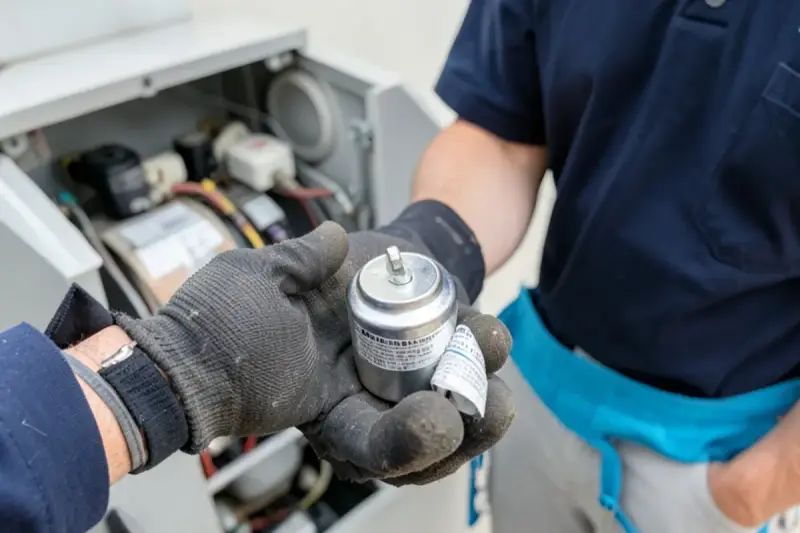
| Capacitor or contactor | $150 to $400 reported | Small electrical part at the condenser |
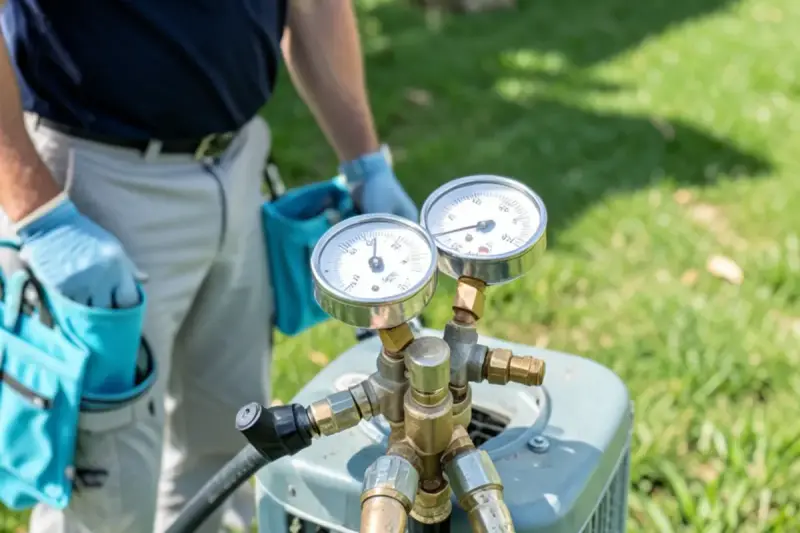
| Refrigerant recharge, R-410A | $250 to $700 reported | Recharge, with the guide noting a leak fix |
| Condenser fan motor | $350 to $650 reported | Motor swap at the outdoor unit |
| Evaporator coil | $1,200 to $2,600 reported | Indoor coil replacement |
| Compressor | $1,300 to $2,800 reported | Largest single part in the system |
ConsumerAffairs put a capacitor at $150 to $300 in its 2026 Charleston guide, which also is not our pricing. The two sources roughly agree on that part, and the gap at the top shows how much local quotes can spread.
Why do two quotes for the same problem differ?
A low quote and a high quote may not describe the same repair. Five things do most of the moving.
- The actual fault. A capacitor and a failing compressor can both show up as warm air. A quote without testing is a guess.
- Refrigerant. Older systems use R-410A. New residential systems moved toward lower-GWP refrigerants such as R-454B and R-32 under the EPA Technology Transitions rule from January 1, 2025. Existing R-410A systems can keep running and be serviced, but ask what your refrigerant costs per pound.
- Finding the leak. Adding refrigerant is quick. Tracing where it went takes time, and that labor belongs on the quote.
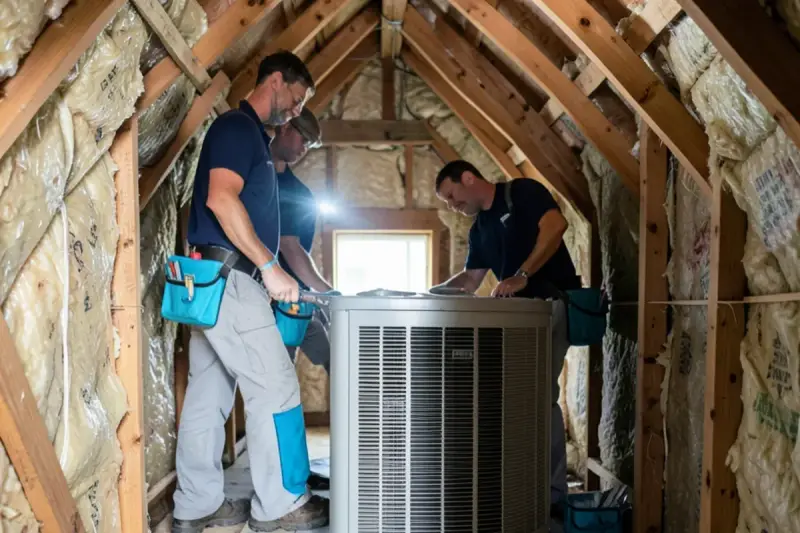
- Access. A condenser at ground level is simple. An air handler in a tight attic, or a unit on a roof, adds hours.
- Timing. Homeowner Henry's Charleston pages mention emergency fees without giving a figure, so ask what any after-hours visit adds before you agree to it.
Does a Johns Island repair cost more?
We found no source that prices Johns Island separately, so we will not invent a surcharge. The island does change which questions you should ask.
Many homes there are newer builds, which raises the warranty question first. If your system is only a few years old, look up the manufacturer's parts coverage before you pay for a part. Parts coverage often has registration rules, and it often leaves labor to you, so read the paperwork.
Salt and marsh air matter too, depending on how close you are to the water. Corroded fins and contacts make electrical repairs more frequent, and they can make a coil repair a poor bet. A newer home also may have attic equipment on long, narrow runs, and that shows up in labor.
When does a big repair stop making sense?
Stop and compare once the quote moves into coil or compressor money. Homeowner Henry's 2026 Charleston guide says repair usually makes sense when the estimate is under 30% of a new system's cost. It also says a compressor job often runs 60% to 70% of a full swap.
Replacement figures give you the other side of that sum. Homeowner Henry reported $4,800 to $7,800 for a 3-ton AC in Charleston in 2026, and ConsumerAffairs reported $5,000 to $12,000 for a full replacement in 2026, and neither figure is our price.
Take those rules as a starting point. Age, salt damage, how long you plan to stay and any manufacturer's coverage all change the answer. A compressor under parts coverage on a young system is an easy repair. The same job on an old, corroded unit is a harder call, and our AC replacement page lays out what that path involves.
What keeps the next repair bill small?
The easiest repair to pay for is the one you never need. Three habits cover most of it.
- Change the filter on schedule. Restricted airflow freezes coils and overworks the blower.
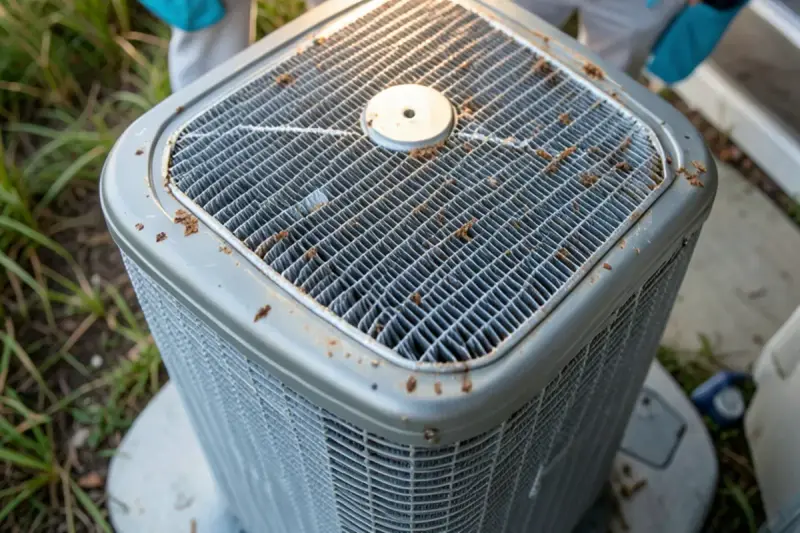
- Keep the condenser clear. Leave a couple of feet of open space around it, and rinse the coil gently if you live near salt water.
- Treat the drain. Our humidity feeds algae in the condensate line, and a clogged line can shut the system down in August.
A spring AC maintenance visit also tests the capacitor and contactor before the heat arrives. Homeowner Henry reported maintenance plans at $180 to $350 a year in Charleston in 2026, and that is not our pricing, so ask any contractor exactly what a visit includes.
What can you check before paying for a visit?
Some calls end with a simple fix, so spend ten minutes first. None of these steps involve opening the unit.
- Check the thermostat. Confirm it is on Cool, set below room temperature, with fresh batteries.
- Check the breaker and the outdoor disconnect. Reset a tripped breaker once. If it trips again, leave it off.
- Pull the filter. A blocked filter can freeze the coil and stop cooling.
- Look at the drain. If the pan is full, a float switch may have shut the system down.
- Look at the copper line. If it is iced, turn the system off and let it thaw before anyone tests it.
If one of those solves it, you have saved a service call, as long as the fault does not come back. If it does return, tell the technician what you tried, because a repeat trip or a freeze narrows the search and shortens the visit.
Who pays when a part is under warranty?
Often you pay something, even with coverage. Manufacturer coverage usually pays for the part and leaves labor to you, so a free compressor can still mean a real bill. Registration rules and proof of maintenance can decide whether the part qualifies at all.
Before you approve the work, gather these three items.
- The model and serial number from the outdoor unit's data plate
- The install date, from an invoice or a home inspection report
- Proof the system was registered, if a previous owner or builder handled it
Ask the manufacturer directly, because terms differ. A home warranty is a different product with its own service fee and exclusions, so read that contract before calling, since some plans send their own contractor.
How does your refrigerant affect the price?
Older systems sit in an awkward spot. R-410A can still be used to service existing equipment, but new systems have moved on, and that can affect what a recharge is worth on an aging unit. R-22 systems are harder still, because supply is limited to recovered stock.
Pay attention to the word recharge on a quote. Refrigerant does not get used up, so a low charge means a leak. Ask whether the price covers finding it, and what you would pay to fix it.
How we suggest you read any repair quote
Ask the same questions of everyone, including us. A good quote answers these on paper.
- What failed, and how was it tested? You should be able to see the part or the reading.
- What is included? Parts, labor, refrigerant by the pound and any return trip.
- Is this the fix or a stopgap? A top-off and a leak repair are not the same job.
- What is covered afterward? Ask about the manufacturer's coverage on the part and about any workmanship terms, in writing.
- What happens if the first repair does not solve it? Ask before work starts.
- Who handles the refrigerant? Under EPA Section 608, technicians who handle refrigerant must be certified, so ask any contractor about it.
We quote before work begins, and we would rather you compare than guess. One reviewer wrote that the crew "clearly explained the necessary work," and another noted that "price were as quoted." That is the standard to hold anyone to, and if a number feels high, ask what is driving it.
If your AC is down now, start with our AC repair page, or read the steps for emergency AC repair when it cannot wait. Johns Island is part of the area we serve from our Charleston base.
Related questions
Is a service call fee normal for AC repair?
Yes, most contractors charge one to diagnose the system. Homeowner Henry's 2026 Charleston guide reports service calls of $89 to $175 and says the fee is often credited toward the repair, and those are not our prices. Ask any contractor up front what the fee covers and whether it applies to the job.
Should I pay for a refrigerant recharge without a leak repair?
Usually not as a long-term fix. Refrigerant runs in a closed loop, so a low charge means it escaped somewhere. A top-off can get you through a hot week, but it will leak out again. Ask what it costs to find the leak, and compare that against the age of the system.
What do you charge for AC repair?
We do not publish flat prices, because the failed part and the access change the job. We look at the system, explain what we found and give you a clear, upfront quote before work begins. Call with your address, including Johns Island, and ask what applies to a visit.