Why Your Heat Pump Is Freezing Up
Light frost is part of normal winter running. Solid ice is not. Here is how to tell them apart and what to do next.
- 4.9★ on Google (16 reviews)
- Open 24 hours, 7 days
- Clear, upfront quotes
By the Aero Air Techs team. Published October 30, 2026, updated October 31, 2026.
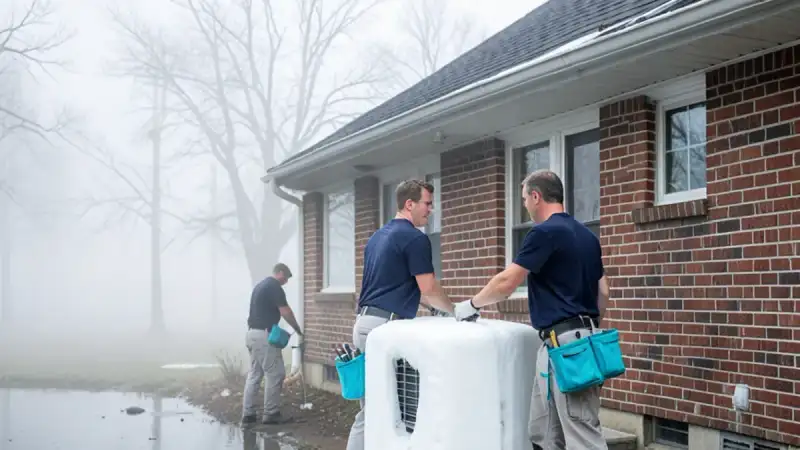
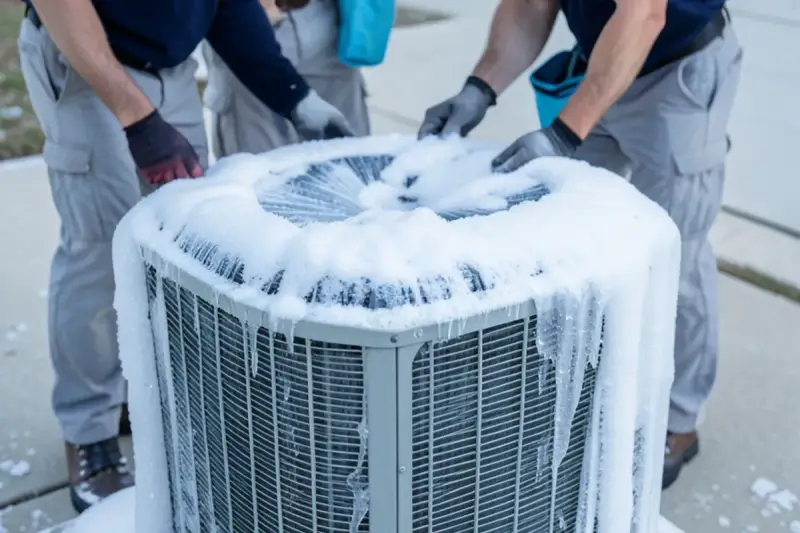
A heat pump freezing up in winter is only a problem when the ice stays. A thin, even coat of frost on the outdoor coil is normal, and the unit clears it with a defrost cycle. Solid ice that hides the fins, or frost that never clears, means something is wrong with defrost, airflow or refrigerant.
Turn the system off or to emergency heat and do not chip at the ice.
In summer the same word means a different fault. Ice on the indoor coil or copper lines during cooling season usually means weak airflow or low refrigerant. Both versions are covered below.
Is the ice on your heat pump normal?
Look at the outdoor unit for a minute. In heating mode, the outdoor coil runs colder than the air around it, so moisture collects on it as frost. Every so often the unit reverses itself for a few minutes to melt that frost off.
| What you see | Normal? | What to do |
|---|---|---|
| Light, even frost on the coil | Yes | Nothing |
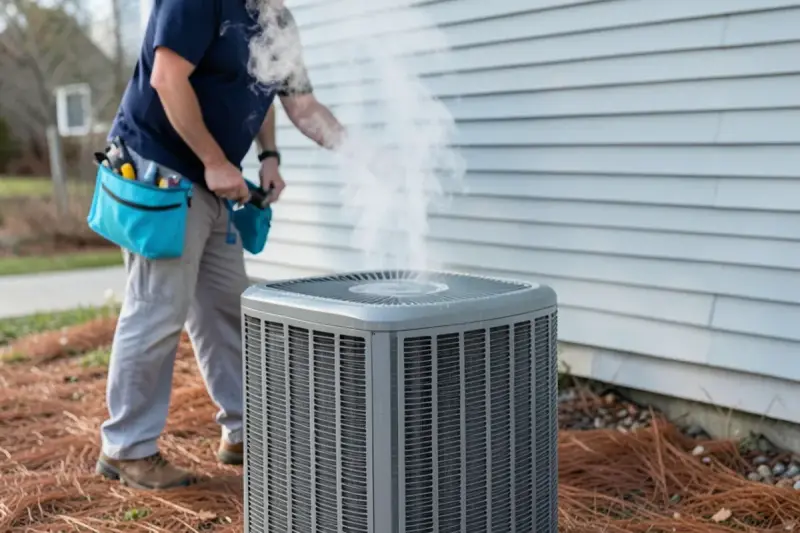
| Steam, a whoosh, the fan pausing | Yes, that is defrost | Wait a few minutes |
| Water around the base after defrost | Yes | Keep the drain path clear |
| Frost thickening for hours | No | Switch off and call |
| Fins hidden under solid ice | No | Switch off and call |
| Ice on the top of the unit or the fan | No | Shut it down and call |
| Fan not turning | No | Shut it down and call |
Why is your heat pump freezing up in winter?
When a unit keeps icing over, a technician usually works through these causes. The first two are things you can spot from the yard.
- Blocked airflow. Leaves, pine straw or shrubs against the coil trap cold, damp air and slow the defrost.
- Water falling on the unit. A leaking gutter or roof edge above can drip onto the top and freeze there.
- Failed defrost control. The board or timer that starts the cycle can stop working, so the frost just builds.
- Bad coil sensor. If the sensor misreads the coil temperature, the unit never knows it needs to defrost.
- Stuck reversing valve. This valve flips the system into defrost. If it sticks, the coil stays cold.
- Outdoor fan problem. A weak motor or a failed capacitor cuts the air moving across the coil.
- Low refrigerant. A leak makes the coil run colder than it should, and ice forms quickly. EPA Section 608 requires anyone handling refrigerant to be certified, so a leak repair is not a homeowner fix.
Why does Hanahan weather make icing look worse?
Frost builds fastest when the air is cold and wet, and a heat pump can actually collect more of it on a raw, damp morning than on a colder, drier night. That is the usual kind of winter weather around here. Hanahan has the Goose Creek Reservoir in the middle of the city and tidal water behind several neighborhoods, so damp air sits close to many outdoor units.
The point for homeowners is simple. Repeated frost on a wet morning near freezing can be normal. The same unit may defrost several times before lunch and look fine by afternoon. Judge it by the trend. If the frost clears, the system is working. If it grows, it is not.
Placement matters too. Units tucked under a deck, in a tight side yard or against a fence get less airflow and catch more runoff. If your unit ices up again and again, placement may be part of the reason, and it is worth raising before your next heat pump repair or replacement.
What should you do with a frozen unit right now?
Four steps, in this order:
- Move the thermostat to emergency heat, or to Off. Emergency heat uses the electric strips and rests the outdoor unit. Running a frozen unit can damage the fan or the compressor.
- Clear what you can reach by hand. Pull away leaves and debris, but only from around the unit. Leave the ice itself alone.
- Check the filter. Low indoor airflow affects a heat pump in both seasons.
- Take a photo and note the time. That helps show whether the ice is growing or shrinking.
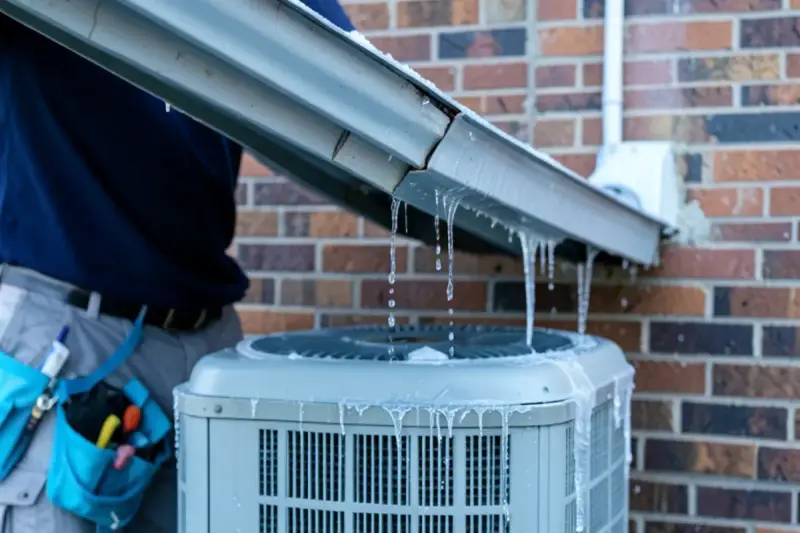
Do not chip, scrape, pry or use a heat gun. Do not pour hot water over the coil. The fins are thin aluminum, and the tubes behind them hold pressurized refrigerant. One slip can turn a defrost repair into a coil replacement.
Why would a heat pump freeze in summer?
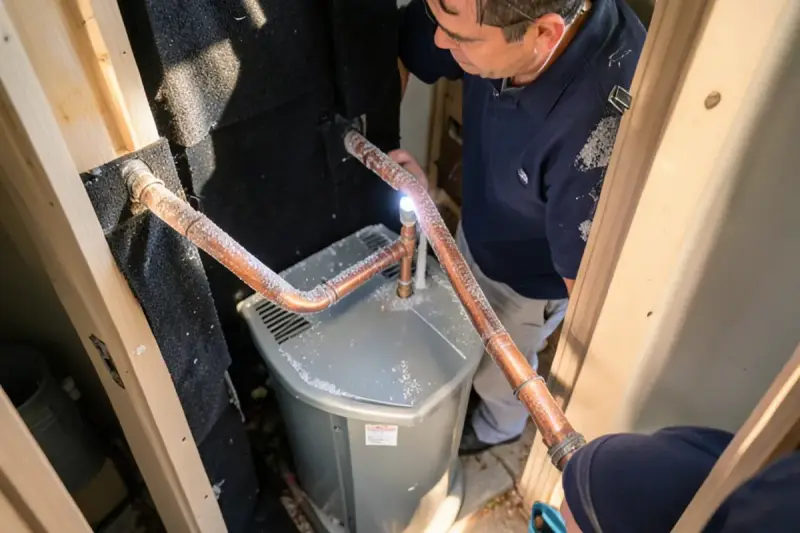
Because in cooling mode the cold coil is indoors. When air stops moving across it, or the system runs low on refrigerant, moisture from our humid air freezes on that coil. The ice can then spread along the copper line to the outdoor unit.
Check for a clogged filter and closed registers. Then shut it down, or run just the blower if you want a faster melt, and watch for water as it thaws, because the drain pan may overflow. If it freezes again after a fresh filter and a full thaw, call for a service visit. Refrigerant or the blower is the likely next stop.
How does a defrost cycle actually work?
A heat pump clears its own frost by running backward for a few minutes. In heating mode, the outdoor coil runs colder than the air, so moisture freezes on it. When the control board decides enough has built up, the reversing valve switches the system to cooling, which sends heat to the outdoor coil.
You will notice a few things when that happens.
- The outdoor fan stops. This lets the coil warm up faster.
- Steam rises from the unit. That is melting frost and not smoke.
- You may hear a whoosh. The valve shifting makes a brief sound.
- Backup strips may run. They keep the air indoors from turning cool during the cycle.
- The fan restarts. Normal heating returns, usually within about 5 to 15 minutes.
If that cycle never starts, or it repeats with almost no break, the frost keeps building. That is the point at which to call.
Which parts cause a failed defrost?
A few small parts run the whole process, and each one fails in its own way.
| Part | What it does | What failure looks like |
|---|---|---|
| Defrost board | Times and starts the cycle | Heavy ice and no defrost at all |
| Coil sensor or thermostat | Tells the board the coil is cold | Defrost never starts, or ends too soon |
| Reversing valve | Switches the direction of refrigerant | Stuck in one mode, weak heat |
| Outdoor fan relay | Stops the fan during defrost | Fan keeps running and ice stays |
| Refrigerant charge | Sets coil temperature | Ice on part of the coil only |
Testing matters here, because a board is often blamed when a sensor was the real fault. Ask what was measured before a part gets ordered.
How can you keep ice off through the winter?
Airflow and drainage do most of the work.
- Keep two feet clear on every side. Leaves and pine straw hold moisture against the coil.
- Raise the unit off the ground. A stand or riser lets defrost water drain away and not refreeze at the base.
- Watch the roof line. A gutter dripping onto the top of the unit can build a solid cap of ice, so fix the leak.
- Change the filter. Low indoor airflow affects defrost timing too.
- Book a fall check. A technician can test the defrost cycle while the weather is mild.
What we tell heat pump owners on icy mornings
Do not panic over steam. Plenty of people see a cloud rising from the unit and assume it is on fire. On a cold morning that is usually a normal defrost.
Do act on the ice that does not leave. A heat pump left to run under solid ice may keep the house warm on backup strips, so the problem hides until the power bill arrives. The sooner the cause is found, the smaller the job tends to be.
Book your check before the cold, not during it. ENERGY STAR advises having the heating system checked in the fall, and for a heat pump that visit can include the coil, the airflow and the controls. Hanahan is one of the places we serve from Charleston, and we quote before work begins. If the unit is old and has iced up more than once, ask about both repair and heat pump installation so you can compare them properly.
Related questions
How long should a heat pump defrost cycle last?
Often about 5 to 15 minutes, and the exact timing varies by model and weather. During the cycle the outdoor fan may stop and you may see steam. On a damp morning near freezing it may repeat several times. If frost keeps building over a few hours despite those cycles, have the system checked.
Can I pour hot water on a frozen heat pump?
No. The runoff can refreeze on the pad and around the base, and it does nothing about the cause. Chipping at the ice is worse, because the fins and tubing bend and puncture easily. Switch the system off or to emergency heat, keep debris clear and let the ice melt on its own.
Is it safe to run emergency heat until repairs happen?
Yes, for a short stretch, if your thermostat has that setting. It keeps the house warm with electric strips while the outdoor unit rests, and it uses more power, so expect a higher bill. Shut it off if you smell burning. In a Hanahan cold snap, note the day you switched so the technician knows.
Sources
Services this guide relates to
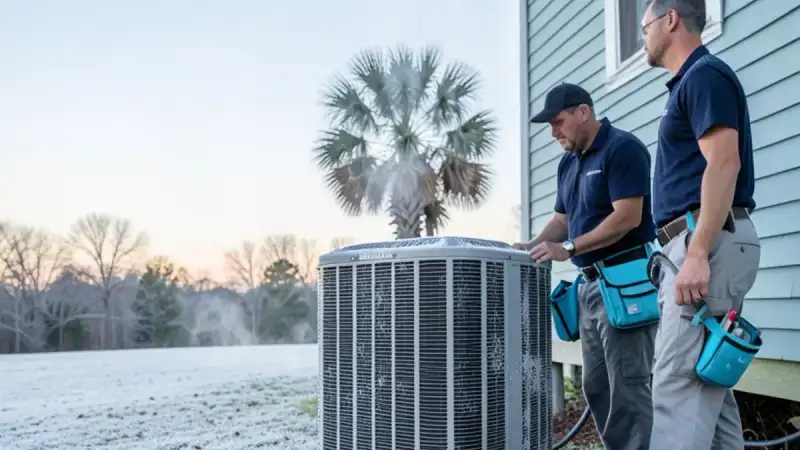
Heat Pump Repair
Frozen coils, weak heat, failed defrost and backup strips, tested and explained first.
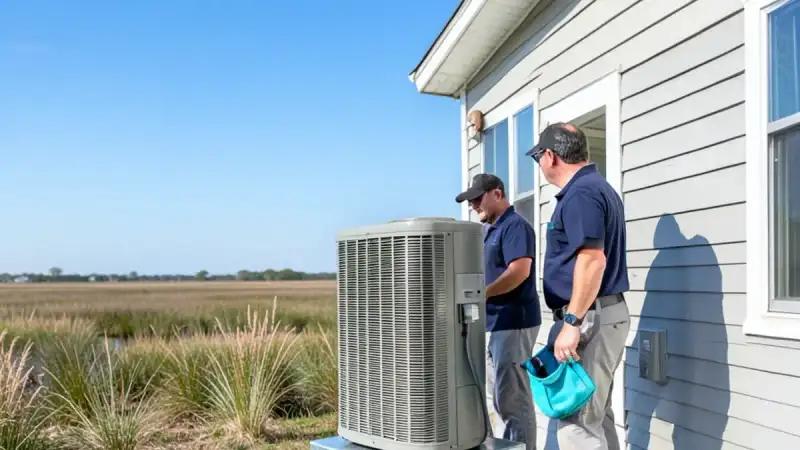
Heat Pump Installation
Year-round heating and cooling, sized for the house and sited for salt and flood.
Furnace Maintenance
A fall safety check, burner cleaning and tune-up before the first cold night.